Identification and Control Methods of Tomato Late Blight
Tomato late blight, which vegetable growers call persimmon blight, is a devastating disease of tomatoes. - Symptom identification: The disease can occur in both seedlings and adult plants. When seedlings are affected, dark green water-soaked lesions appear on the leaves and quickly spread to the petioles and stems, making them thinner and dark brown, causing the whole plant to wilt or break at the stem. When humidity is high, the diseased area...
Tomato late blight, which vegetable growers call persimmon blight, is a devastating disease of tomatoes. -
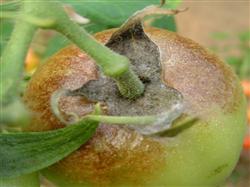
Symptom identification The disease can occur in both seedlings and adult plants. When seedlings are affected, dark green water-soaked lesions appear on the leaves and quickly spread to the petioles and stems, making them thinner and dark brown, causing the whole plant to wilt or break at the stem. When humidity is high, white mold grows on the surface of the diseased area. When adult plants are affected, the leaves and fruits are mainly harmed. When leaves are affected, irregular dark green water-soaked lesions mostly appear starting from the leaf tip or leaf edge, later turning brown. On rainy days or when humidity is high, the disease develops extremely quickly, rapidly spreading to half a leaf or the whole leaf, and a ring of white mold grows at the boundary between the diseased and healthy tissue at the edge of the lesion, called a "mold ring," and the diseased leaves quickly rot. When it is relatively dry, the disease stops developing, and the diseased area becomes pale white and dry, brittle and easily broken. Lesions on the stems are dark brown, slightly sunken, with unclear edges, and when humidity is high a small amount of white mold grows, and finally the epidermis rots, and the plant easily bends and breaks at the rotted part of the diseased area. The fruits are mostly affected when green, producing large brown cloud-patterned lesions with irregular edges on the fruit surface, and when humidity is high, sparse white mold grows at the edges of the lesions. Diseased fruits are initially firm and do not rot, but later the diseased fruits rot. -
Pathogen It is called Phytophthora infestans, a fungus belonging to the Mastigomycotina. The mycelium of the pathogen is slender, colorless, and nonseptate. The sporangiophores emerge singly or in clusters from the stomata, are slender, and have nodular swellings on the branches, with sporangia borne laterally or terminally. The sporangia are single-celled, colorless, oval or lemon-shaped, with a papilla at the top. -
The late blight pathogen can also harm potatoes. However, the pathogens on tomatoes and potatoes belong to different physiological races. -
Disease occurrence pattern The pathogen mainly overwinters in the soil as mycelium with diseased residues, and can also harm and overwinter on tomatoes grown in greenhouses in winter, becoming the source of primary infection the following year. If late blight occurs on potatoes grown in spring, it can also infect tomatoes. The overwintering pathogen produces sporangia, which are splashed by rain onto the lower leaves and fruits of the plant and cause disease, forming a central diseased plant. After diseased plants form in the field, a large number of sporangia are produced from the central diseased plant and spread by airflow and rain, causing the disease to rapidly expand and spread around. The sporangia complete germination under suitable temperature and humidity conditions within 2 hours, invading through stomata or directly penetrating the epidermis, with an incubation period of 3-4 days. Therefore, once a central diseased plant appears in the field, the entire field of tomatoes will often become generally diseased within 10 or more days. -
The pathogen prefers relatively low temperatures and high humidity conditions. The temperature range for pathogen growth is 10-25°C, with an optimum of about 20°C; the temperature range for sporangium formation is 7-25°C, with an optimum of 18-20°C; the temperature range for sporangia to germinate and produce zoospores is 6-15°C, with an optimum of 10-13°C. Only when relative humidity is above 85% can sporangiophores be produced, and only when relative humidity is 95-97% are sporangia formed. Sporangium germination requires the presence of water droplets. Therefore, relatively low temperature and relatively high humidity are important conditions for disease occurrence, and in particular whether there is saturated relative humidity or water droplets on the leaf surface is the decisive condition for disease occurrence. The timing of disease occurrence in the field and the speed of disease development are directly related to the timing and amount of rainfall. Generally, when the day and night temperatures do not exceed 24°C, the night is cool but not lower than 10°C, there is heavy fog and dew in the morning and evening or continuous rainy days, and relative humidity remains at 75-100% for a long time, late blight will become epidemic. In cultivation, disease is also likely to occur wherever the terrain is low-lying, drainage is poor, plants are dense, and trellising is not timely. Excessive application of nitrogen fertilizer causing excessive vegetative growth, or poor soil causing plant decline, will reduce resistance to the disease and aggravate its occurrence. There are also differences in disease resistance among tomato varieties. -
Control measures -
(1) Plant resistant (tolerant) varieties. -
(2) Carry out crop rotation with non-solanaceous vegetables for more than 3 years. -
(3) Do not plant too densely, set up trellises early, prune in time, appropriately remove old leaves from the lower part of the plants, and improve ventilation and light conditions. -
(4) For tomatoes in protected cultivation, control water moderately in the early stage, ventilate promptly after the weather turns warm, and gradually increase the amount of ventilation to reduce humidity in the protected area and control the occurrence of late blight. -
(5) Chemical control. -
(6) Grafting: DW21-1 tomato hybrid special rootstock can be selected for grafting, which not only increases the plant's disease resistance but also greatly improves yield and economic benefits.