What are the control methods for potassium deficiency in pear trees
Villagers reported that in a pear orchard in a mountain village, some pear tree branches were found to have shortened internodes, smaller leaves that were yellow-green in color, with leaf margins curling upward, browning, and scorching; in severe cases, the entire tree's leaves were like this, resembling fire damage, and it was even more severe on trees in poor, thin soil with exposed roots, affecting tree vigor and yield. Many fruit growers could not figure out...
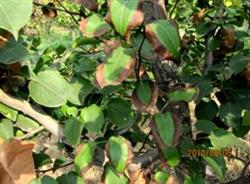
Villagers reported that in a pear orchard in a mountain village, some pear tree branches were found to have shortened internodes, smaller leaves that were yellow-green in color, with leaf margins curling upward, browning, and scorching; in severe cases, the entire tree's leaves were like this, resembling fire damage, and it was even more severe on trees in poor, thin soil with exposed roots, affecting tree vigor and yield. Many fruit growers could not figure out what was going on and thought it was pesticide damage or a disease such as leaf spot. In fact, this is a typical physiological disease caused by severe potassium deficiency. Because in the pear orchard, fruit growers had long intercropped large amounts of potassium-demanding crops such as sweet potato, peanut, and yellow tobacco, yet when fertilizing they emphasized nitrogen and phosphorus fertilizers and neglected potassium fertilizer. Doing this for a long time caused severe potassium deficiency in the pear trees and produced the above symptoms. The following measures must therefore be taken:
Timely foliar spraying Spray 2~3 times in a timely manner with a mixed solution of 0.3%~0.5% monopotassium phosphate and urea to replenish nutrients as quickly as possible and restore tree vigor.
Topdressing to maintain vigor Apply quick-acting fertilizers such as monopotassium phosphate and urea in a timely manner, together with multi-element slow-release compound fertilizers such as special fruit tree fertilizer, to ensure healthy and vigorous plant growth.
Thinning fruit to reduce consumption Thin out part of the fruit to reduce nutrient consumption and promote vegetative growth.
Change old practices Change the long-standing habit of intercropping large amounts of potassium-demanding crops.