Pest and Disease Control Methods for Pear Trees Before Bagging in Early Spring
The period before and after bud break in early spring is when diseases and pests begin their activity, and once the pear orchard is bagged, spraying becomes considerably more difficult. Therefore, pest and disease control before bagging is the key to pest and disease management in bagged pear orchards. During this period, the focus should be on strengthening control of the pear psylla (Psylla pyrisuga), pear aphid, and red spider mite, among others. (1) Strengthen soil, fertilizer, and water...
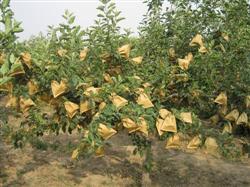
The period before and after bud break in early spring is when diseases and pests begin their activity, and once the pear orchard is bagged, spraying becomes considerably more difficult. Therefore, pest and disease control before bagging is the key to pest and disease management in bagged pear orchards. During this period, the focus should be on strengthening control of the pear psylla (Psylla pyrisuga), pear aphid, and red spider mite, among others.
(1) Strengthen soil, fertilizer, and water management. Developing a high-yielding, stable-yielding, moderately vigorous tree condition to enhance tree disease resistance, along with rational shaping and pruning to ensure good ventilation and light penetration in the orchard, forms the foundation of pest and disease control in bagged pear orchards.
(2) Around mid-February. Using the standard of removing black areas while exposing red but not white tissue, carefully scrape off the rough bark, scaly bark, and diseased bark from the trunk and branch forks. Place a plastic sheet on the ground to catch the scraped rough and diseased bark, then take it out of the orchard for centralized burning or deep burial to prevent it from falling on the ground or being scattered by wind. After scraping, apply a 50-fold dilution of 40% asomate wettable powder + 2% Pingpingjia adjuvant, 843 Rehabilitation Agent concentrate, or Fubiqing concentrate to control branch ring rot, canker, and other diseases.
(3) When pear buds "show white" in early spring. Spray 3°-5°Be lime-sulfur mixture, which can kill various overwintering pathogens and pests, with particularly obvious effects on yellow mealworm (yellow mealybug), Kondo mealybug (Pseudococcus comstocki), and red spider mite. Where black spot disease is severe, spray a mixture of lime-sulfur mixture and 0.3% sodium pentachlorophenate. This period is the peak emergence time of overwintering-generation adult pear psylla and the beginning of first-generation egg hatching. Pear leaves have not yet emerged, so adults and eggs are both exposed on the branches and the insects are weak, making this the first critical period for pear psylla control. Starting from late February, observe emergence conditions in the field. Spray immediately upon detecting emergence. If overwintering-generation adults are still found active after 5-7 days, continuous spraying is needed. Practice has shown that spraying 2-3 times consecutively gives good results. Effective insecticides against overwintering-generation adult pear psylla include 28% thiocyanate emulsifiable concentrate at 2000-fold dilution, 25% buprofezin wettable powder at 1500-fold dilution + 40% omethoate emulsifiable concentrate at 800-fold dilution, 95% jiemanling emulsifiable concentrate at 80-100-fold dilution, 2.5% deltamethrin at 3000-fold dilution, 10% miebike at 2000-fold dilution, 20% fenvalerate at 2000-fold dilution, etc.
(4) From flower cluster separation to the small ball stage. Spray insecticides to control hatched pear psylla and yellow mealybug nymphs, as well as pear aphids, red spider mites, and other pests. Agents used include 0.5°Be lime-sulfur mixture, methamidophos, isocarbophos, etc.
(5) When 80%-90% of petals have fallen, spray insecticides and fungicides. This is the peak occurrence period of first-generation pear psylla nymphs and the second critical period for pear psylla control. Killing first-generation nymphs is crucial for subsequent pear psylla control. Effective insecticides against pear psylla nymphs include 28% thiocyanate emulsifiable concentrate at 2000-fold dilution, 25% cypermethrin emulsifiable concentrate at 1500-fold dilution, 20% amitraz at 1000-fold dilution, etc. For controlling pear scab, black spot, and other orchard diseases during this period, use 10% duoxiaoling at 200-400-fold dilution or junduqing at 600-fold dilution, etc. In orchards affected by pear leaf rust mite, spray 2% miediejing at 3000-4000-fold dilution or 50% sulfur suspension concentrate at 600-fold dilution for control.
(6) Spraying before bagging. To prevent diseases and pests that damage fruit, such as ring rot, pear scab, yellow mealybug, and Kondo mealybug, from being enclosed inside the bags and increasing control difficulty, a thorough application of insecticides and fungicides must be made before bagging. This is crucial for controlling fruit diseases and pests after bagging. The types of agents used should mainly target fruit-damaging diseases and pests, while also selecting high-efficiency insecticides and fungicides that are unlikely to cause phytotoxicity. High-efficiency fungicides can include Xinxing, Dason, and diniconazole, etc. Pesticides with strong irritation to fruit skin such as Bordeaux mixture and inorganic sulfur are strictly prohibited. Insecticides can include pyrethroid pesticides, parathion, dichlorvos, omethoate, etc. In orchards with severe yellow mealybug and Kondo mealybug, it is advisable to use two or more insecticides. Omethoate and dichlorvos emulsifiable concentrates both have good killing effects on yellow mealybug and Kondo mealybug. To reduce the number of spray applications and labor costs in the orchard, insecticides and fungicides should be mixed and sprayed together, such as 70% thiophanate-methyl at 800-fold dilution + methomyl at 1000-fold dilution, or 12.5% diniconazole wettable powder at 2500-fold dilution + 25% deltamethrin emulsifiable concentrate at 3000-fold dilution.
When spraying before bagging, focus on spraying the fruit surface, but do not hold the nozzle too close to the fruit surface, otherwise excessive pressure can easily cause rust spots or phytotoxicity. Spray the solution as a fine mist evenly distributed over the fruit, and spray until it reaches a washed appearance. After spraying, wait for the solution to dry before bagging. It is strictly prohibited to bag while the solution is still wet, otherwise phytotoxicity will occur. One spray application allows bagging for 2-3 days; after 2-3 days the effect is greatly reduced, so bagging can be done while spraying.