Control Methods for Pear Aphid Pests on Pear Trees
Pear aphid, also known as pear two-branched aphid or pear leaf-curling aphid, commonly called "greasy bug," occurs in pear-growing areas throughout the country and is one of the major pests of pear trees. When damage is severe, it causes early defoliation, affecting both the current year's yield and flower bud differentiation. This insect belongs to the order Homoptera, family Aphididae. 1. Damage symptoms: Adults and nymphs gather in colonies on buds, leaves, and tender shoots to suck...
Pear aphid, also known as pear two-branched aphid or pear leaf-curling aphid, commonly called "greasy bug," occurs in pear-growing areas throughout the country and is one of the major pests of pear trees. When damage is severe, it causes early defoliation, affecting both the current year's yield and flower bud differentiation. This insect belongs to the order Homoptera, family Aphididae.
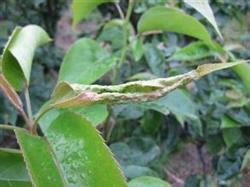
1. Damage symptoms: Adults and nymphs gather in colonies on buds, leaves, and tender shoots to suck plant sap. When buds are severely damaged, they cannot open normally. After pear leaves are damaged, they become deformed, curling longitudinally downward into a tube shape.
2. Morphological characteristics: The wingless parthenogenetic female aphid has an oval body, green to yellow-green, with a body length of about 2 mm and a width of 1.1 mm. The mouthparts are black, the compound eyes are reddish-brown, and the tips of the antennae are black. The cornicles are black at the tips and cylindrical. The winged parthenogenetic female aphid has an elongated oval shape, with a body length of 1.8 mm and a width of 0.75 mm. The head and thorax are black, and the antennae have 6 segments that are pale black. The wings are transparent, and the middle vein of the forewing forks into two branches. The cornicles are cylindrical with black tips.
Egg: About 0.7 mm long, oval, black and glossy.
Nymph: Green, similar to the wingless aphid, only smaller in size.
3. Life history and habits: It produces 10-20 generations per year, overwintering as eggs in the axils of buds on small branches, on fruit spurs, and in the wrinkled bark crevices at branch forks. Hatching begins in early to mid-April when flower buds start to swell, with the peak hatching period in mid to late April. The young aphids gather on buds to cause damage, and after leaves unfold they move onto the leaves to cause damage, causing the leaves to curl longitudinally upward into a tube shape. During this period, if temperatures are high and humidity is excessive, the damage is severe. After petal fall, winged aphids begin to appear, and some winged aphids leave the pear tree and migrate to weeds to continue reproducing. In autumn, from September to October, winged aphids migrate back to pear trees to reproduce and cause damage, but the damage is relatively light. At this time, sexual aphids are produced, and the sexual aphids mate and lay eggs to overwinter.
4. Control methods:
(1) In conjunction with orchard management, promptly remove damaged curled leaves and dispose of them centrally.
(2) In mid-April, from the stage when flower buds swell to the stage when flower buds separate, after winter eggs hatch but before the aphids have dispersed to cause damage, spray promptly for control. You can spray 40% dimethoate emulsifiable concentrate at 1000x dilution, 50% phoxim emulsifiable concentrate at 1000x dilution, 50% phoxim emulsifiable concentrate at 1000x dilution, or 2.5% deltamethrin at 4000-6000x dilution.
(3) If aphid control is not timely and the leaves have already curled, the trunk painting method can be used. First, use a bark scraper to scrape out a ring around the main trunk for applying the pesticide. For a pear tree about 10 years old, a ring width of about 6 cm is sufficient. Scrape off the coarse bark on the ring to expose the tender bark, then prepare a diluted solution of 40% dimethoate emulsifiable concentrate or omethoate emulsifiable concentrate at a ratio of one part pesticide to two parts water, apply it to the ring with a brush, and finally wrap it with plastic film or waste paper. Generally, the aphids are poisoned within about 5 days and all die within about 7 days, but leaves that have already curled will not flatten out. Therefore, when using the trunk painting method to control aphids, it is better to act early than late. After the aphids are killed by the poison, the wrapping should be removed as soon as possible to avoid poisoning the tree or causing the wound to rot.