How to control fruit flies on Chinese bayberry? Introduction to practical control methods
In recent years, the occurrence of fruit flies has reduced the yield and quality of Chinese bayberry, seriously affecting the economic development of the Chinese bayberry industry. In order to explore the occurrence patterns and control techniques of fruit flies on Chinese bayberry, the author has observed this pest since 2008, and has now basically clarified its occurrence situation in our county and summarized the corresponding control techniques. Fruit flies...
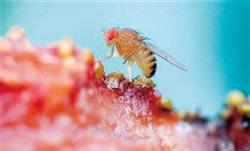
In recent years, the occurrence of fruit flies has reduced the yield and quality of Chinese bayberry, seriously affecting the economic development of the Chinese bayberry industry. In order to explore the occurrence patterns and control techniques of fruit flies on Chinese bayberry, the author has observed this pest since 2008, and has now basically clarified its occurrence situation in our county and summarized the corresponding control techniques. Fruit flies belong to the order Diptera, family Drosophilidae, genus Drosophila, and are one of the main pests of Chinese bayberry. They occur in Chinese bayberry orchards and their surrounding environments, and are widely distributed.
Morphological characteristics of fruit flies
The adult is relatively plump, with a semi-transparent body surface that gradually darkens and hardens. The female adult is larger than the male, with a slightly pointed abdominal tip and lighter color, 5 black stripes on the dorsal abdomen, 1 distinct black spot on the ventral abdomen, and 6 abdominal plates. The male adult has a black blunt-rounded abdominal tip, 3 stripes on the dorsal abdomen with the last one extremely wide, a sex comb at the base of the tarsus of the first pair of legs, and 4 abdominal plates. The pupa is diamond-shaped, gradually hardening from pale yellow and soft to dark brown. The larva has a pointed head and blunt tail, with 1 black hook-shaped mouthpart on the head, and has a total of 3 instars. The egg is about 0.5 mm long, white and oval, with 1 filament extending from the front dorsal side, capable of attaching to food.
Life history and occurrence patterns of fruit flies
① Life history. Chinese bayberry fruit flies have overlapping generations in the field, making it difficult to distinguish generations, and there is no strict overwintering process. All stages coexist simultaneously, and adults appear when the temperature is above 10°C. At a temperature of 21-25°C and relative humidity of 75%-85%, 1 generation takes 4-7 days. At 25°C, fruit flies need only about 9 days to develop from egg to adult, and adults can live 26-33 days.
② Occurrence patterns. After Chinese bayberry enters the ripening stage, the fruit softens, and this period is the peak occurrence period for fruit flies. As harvesting of Chinese bayberry continues, the fruit gradually decreases, and the fruit fly population declines accordingly. Because fruit flies mainly inhabit ecological environments with fermented materials that are moist and cool, after Chinese bayberry harvest, when residual and defective fruit on the trees and fallen fruit on the ground rot, another peak occurrence period appears, and as residual and defective fruit and fallen fruit gradually disappear, the population declines again with the lack of food. Overall, the peak occurrence periods of fruit flies are in mid-to-late June and mid-to-late July, and the occurrence and damage in mid-to-late June cause economic losses. Dawn and dusk are the peak periods of daily activity for adults. There are significant differences in the degree of damage and spatial distribution of fruit flies on different Chinese bayberry varieties.
Control methods for fruit flies
Based on the occurrence patterns of fruit flies and the characteristics of Chinese bayberry, the following integrated control measures can achieve ideal results.
① Strengthen orchard management. Apply fertilizer and irrigate reasonably to enhance tree vigor and improve tree resistance; prune scientifically, cutting out diseased and dead branches and dense branches to ensure ventilation and light penetration in the orchard; maintain appropriate temperature and humidity in the orchard, and clean the orchard in combination with pruning, especially removing rotting debris and fermented materials; reduce pest sources.
② Clean up fallen fruit promptly. In the early stage of Chinese bayberry ripening, the fruit fly population is not large. As the fruit ripening period progresses, fallen fruit increases, and female flies lay large numbers of eggs and reproduce on fallen fruit. Therefore, promptly and thoroughly cleaning up fallen fruit is one of the more effective control methods.
③ Poison bait trapping. After Chinese bayberry flowers drop, use trichlorfon, banana, honey, and vinegar in a ratio of 10:10:6:3 to prepare a mixed bait slurry, and place 10 portions per mu to trap and kill adults. This can achieve a good fruit rate of over 95%, and the control effect is relatively ideal.
④ Spray fallen fruit with pesticide. Since Chinese bayberry is a berry, directly spraying pesticide on the tree or fruit makes the pesticide residue on the fruit difficult to wash off. Therefore, chemical pesticide control should not be used during the ripening period of Chinese bayberry. However, before the ripening period (that is, in mid-May), low-toxicity and low-residue 1.8% abamectin can be used to spray fallen fruit, and the fallen fruit should be cleaned up promptly after spraying, generally giving good control results.