Methods for Controlling Pests and Diseases of Lychee and Longan in Autumn and Winter
I. Pest species during the autumn shoot stage and their control. Autumn shoots are next year's fruiting branches; if they are eaten bare by pests, it will seriously affect next year's flower bud formation. The main pests of autumn shoots are leaf-eating types, including various geometrid moths and various leaf-rolling insects. Among them, the eriophyid mite (felt disease) and the longan psyllid, etc., cause the most serious damage from September to November each year...
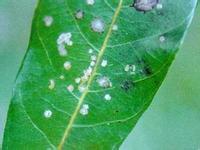
I. Pest species during the autumn shoot stage and their control.
Autumn shoots are next year's fruiting branches; if they are eaten bare by pests, it will seriously affect next year's flower bud formation. The main pests of autumn shoots are leaf-eating types, including various geometrid moths and various leaf-rolling insects. Among them, the eriophyid mite (felt disease) and the longan psyllid, etc., cause the most serious damage from September to November each year. Therefore, during this period, the orchard should be patrolled frequently, especially when the tender shoots have just emerged and until the leaves turn red. To control these pests, "Miechongbao" emulsifiable concentrate can be diluted 1500 times with water and sprayed; one bottle with a capacity of half a jin of the pesticide can be diluted in 350 kg of water, and the effect is quite ideal. 5% high-efficiency Miebaike emulsifiable concentrate, Sulai Shading, etc. can also be diluted 1500 times with water, and the effect is also relatively good.
II. Control of pests during the winter period.
1. Citrus longhorned beetle: It causes very serious damage to some old lychee and longan trees 30-50 years old, and quite a few branches die. The citrus longhorned beetle has one generation per year. Adults emerge in large numbers in July, lay large numbers of eggs in August on thumb-sized branches, eggs begin to hatch in large numbers into first-instar larvae in September, and a few turn into second-instar larvae in December. From October to December is the most ideal time to use pesticide to control young larvae; chemical control or manual capture can be used.
2. Leaf gall midge: At present, it causes very serious damage in various places. This insect invades starting from tender leaves; by the time the leaves turn green, the entire leaf is damaged, greatly affecting leaf photosynthesis, weakening the vigor of the whole tree, and having a great impact on yield. Because the leaf gall midge has 7 generations per year, with generations overlapping, when tender leaves have just emerged and are slightly larger than a grain of rice, adults can lay eggs on the leaves, and they can continue to invade and cause damage until the leaves turn green.
In recent years, based on the living habits of the leaf gall midge, we took advantage of the period from late February to early March each year, when overwintering mature larvae crawl out of the leaf galls, enter the soil, and pupate. At this time, around the tree canopy, we used 3% isofenphos-methyl granules, 5 kg per mu, added 20 kg of fine sand or muddy sand and mixed evenly, and from late February to early March each year, evenly broadcast the pesticide into the soil around the canopy, then lightly covered it with 1-2 cm of soil. Under covered-soil conditions, this pesticide can maintain its efficacy for 30-40 days. It can kill the larvae when they enter the soil and the adults when they emerge from the soil from late March to April. This method was applied on nearly ten thousand 50-year-old lychee trees in Yuanshanbei, Dongguan City and Qingxi Town, and the control effect reached more than 93.78%. Only one application per year is needed, and the effect for the whole year can be achieved.
3. Leaf mite (felt disease): When the tender autumn shoots emerge, spray dicofol 800 times; 1-2 sprays are sufficient. Leaf mites first invade tender leaves. If winter shoots are well controlled in winter and shoot-killing flower-promoting agent is sprayed in time to kill winter shoots, the occurrence of leaf mites can be reduced.
III. Control of lychee diseases during the winter period.
The pathogen of lychee downy blight overwinters in diseased leaves and diseased branches on the tree, fallen leaves under the tree, dead branches and residual leaves, and the soil under and around the tree. Eliminating overwintering pathogens can reduce outbreaks and epidemics of this disease in early spring. In early to mid-March each year, before lychee flowering, use copper oxychloride 500-600 times, or 0.5% lime equivalent Bordeaux mixture, and spray once thoroughly on the canopy branches and leaves, under the tree, and the surrounding soil surface to kill the pathogen. Wherever there has been a serious history of downy blight, winter control should be carried out once.
Lychee anthracnose often occurs on weak trees. Using 80% Penke powder 600-800 times or thiophanate-methyl 800 times plus 1% urea together diluted with water for spraying can effectively control the occurrence of anthracnose.
IV. Apply organic fertilizer heavily,
improve the soil, so that when lychee sends out panicles and flowers and sets fruit, there can be sufficient fertilizer to supply the tree's nutrition.
Apply organic fertilizers such as chicken manure, pig manure, human excreta and urine, garbage, green manure, etc. For each tree bearing 50 kg of fruit, dig a ring-shaped trench along the drip line around the canopy and apply the fertilizer. Apply 25-40 kg of chicken manure, pig manure, or decomposed garbage fertilizer per tree; if using human excreta and urine or peanut bran water fertilizer, apply 50 kg; if using green manure, apply 100 kg, and at the same time add 0.5-1.0 kg of superphosphate and 0.5 kg of lime. However, organic fertilizer must be applied no later than mid-November; if too late, it will cause adverse effects. To enable continuous yield increases in lychee and longan, the habit of applying only chemical fertilizers should be changed, as this plays an important role in continuously increasing the yield of fruit trees.