-
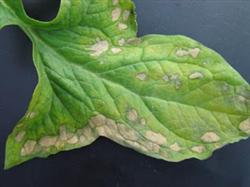
Detailed Guide to Identifying and Controlling Downy Mildew in Spinach
Downy mildew is a common disease of spinach, with severity varying from year to year. The spinach downy mildew pathogen is an obligate parasite that only infects spinach. I. Symptoms Spinach downy mildew can locally infect leaves and can also cause systemic infection. When leaves are locally infected, the affected areas first appear as pale green, water-soaked round spots, which then expand...
-
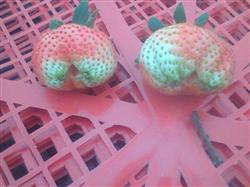
What are the methods for preventing and controlling deformed strawberries in greenhouses?
Using greenhouse cultivation is a good way to increase strawberry yields and income. However, because greenhouse cultivation is highly technical, especially during winter and early spring, when temperatures are low, light is weak, and the climate is changeable, improper management often leads to many abnormal fruits that are too thin, too fat, curved, flat in shape, or uneven on the surface...
-
Comprehensive Management and Control Methods for Spinach Downy Mildew
Comprehensive management of spinach downy mildew means integrated management of spinach downy mildew. 1. Fertilizer and water management. Spinach prefers fertile, moist, cool conditions and dislikes drought and waterlogging; it is a fast-growing vegetable. Therefore, during the growing period, sufficient fertilizer and water must be supplied in a timely manner. From sowing to full emergence, the soil must be kept moist to ensure full emergence. At the 3-leaf stage, cultivate and weed, ...
-
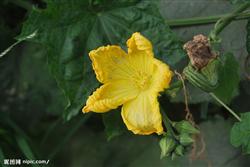
How to Prevent and Control Luffa Flower Rot? A Comprehensive Multi-Measure Prevention and Control Guide
Luffa flower rot is closely related to nutrient deficiency in the plant. Boron deficiency causes the stigma of luffa to turn black, and many vegetable growers mistake it for an infectious disease and treat it as such. Once the floral organs are damaged, there is no way to remedy it, so prevention must be done in advance. Before luffa flowering, spray with a 500-fold dilution of borax or a 1500-fold dilution of "Zhixin" boron fertilizer to prevent blackening of the stigma caused by boron deficiency....
-
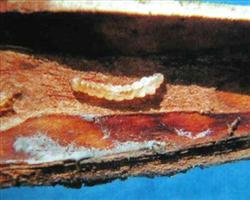
5 Control Methods for the Apple Flatheaded Borer
Nursery stock quarantine: The apple flatheaded borer is a quarantine pest and can be spread to new areas with nursery stock. Therefore, quarantine work at the time of nursery stock shipment must be strictly strengthened to prevent its spread. Protecting natural enemies: During the mature larval and pupal stages, the apple flatheaded borer has two species of parasitic wasps and one species of parasitic fly; in orchards that are not frequently sprayed with pesticides, the parasitism rate can reach 36...
-
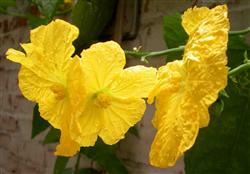
What are the causes of loofah flower rot? Detailed explanation of prevention and control methods
Preparation ratio of flower-dipping solution: The flower-dipping agent generally uses zuogualing, naphthaleneacetic acid (NAA) and 2,4-D as the main agents, plus an appropriate amount of nutrient solution and a fungicide for controlling gray mold for flower dipping, and the effect is very ideal. Smoke fumigation method for controlling flower rot: Smoke fumigation is one method for controlling loofah flower rot. Usually 3-4 days after flower dipping is the...
-
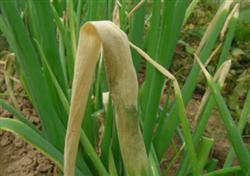
Identification and Control Methods for Dry Tips on Welsh Onions
Welsh onion dry tips fall into two types: physiological dry tips and pathological dry tips, and among the latter, "white dry" and "green dry" often leave onion farmers unable to tell them apart, making it hard to target the right treatment, which leads to missing the best window for control. Here, a brief explanation of the causes and control measures for the two symptoms. White dry is caused by late blight, occurring under high temperature and high humidity conditions...
-
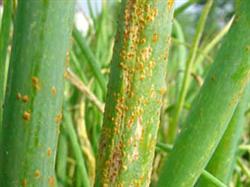
How to prevent and control rust disease in Welsh onions during continuous rainy weather
In summer and autumn, with high temperatures and abundant rain, Welsh onions are prone to rust disease if continuous rainy weather occurs. Farmers should promptly take effective measures and strengthen prevention and control. Apply timely medication for prevention and control. In summer and autumn, especially after 2-3 days of continuous rainy weather, promptly check the occurrence of rust disease in Welsh onions. If brown-green...
-
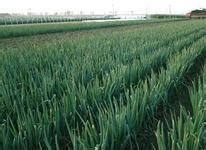
Key Points of Pollution-Free Pest Control Techniques in Welsh Onion Fields
I. Onion thrips, also known as small white insect or tobacco thrips. Adults and nymphs use their rasping-sucking mouthparts to suck sap from within the leaves, causing many fine, dense, long yellowish-white spots to form on the onion leaves. In severe cases, the leaves turn yellow and white, twist, die, and droop, seriously affecting the yield and quality of welsh onion. 1. Occurrence pattern. Onion thrips...
-
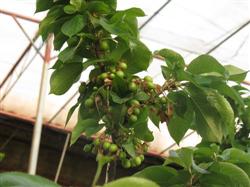
Detailed Explanation of Humidity Control Techniques for Greenhouse Cherries
From covering the greenhouse to harvest, the soil relative humidity is required to be 60%-80%; from the early germination stage to before initial flowering, 80% is optimal; during the germination stage, the humidity of the soil at 20-40 cm should be such that when soil is squeezed in the hand it forms a ball, and when the hand is released it crumbles. After the flowering stage, the soil relative humidity should be 60%-70%. For air humidity, from covering the greenhouse to the germination stage, maintain relative...
条件筛选