How to prevent and control kiwifruit bacterial canker in autumn? Remember these key points
Kiwifruit bacterial canker is the most serious disease affecting kiwifruit. As the weather turns cooler, temperatures drop and rainy days increase, favorable conditions are created for the occurrence and infection of this disease. Prevention and control of kiwifruit bacterial canker should be carried out early. The technical key points are as follows: Strengthen cultivation management. In autumn, increase the application of organic fertilizer, apply medium and trace element fertilizers in a balanced way...
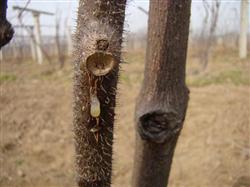
Kiwifruit bacterial canker is the most serious disease affecting kiwifruit. As the weather turns cooler, temperatures drop and rainy days increase, favorable conditions are created for the occurrence and infection of this disease. Prevention and control of kiwifruit bacterial canker should be carried out early. The technical key points are as follows:
Strengthen cultivation management. In autumn, increase the application of organic fertilizer, apply medium and trace element fertilizers in a balanced way, improve soil aggregate structure, expand root activity capacity, and strive to improve the disease resistance of the tree body.
Reduce sources of inoculum. Do a good job of clearing the orchard. After leaf fall, promptly sweep up dead branches and fallen leaves, take them out of the field and burn them, or dig pits in the field and bury them deeply to reduce the overwintering base of pests and diseases; combined with winter pruning and vine tying, carefully inspect and promptly prune diseased branches.
Reduce invasion pathways. It is strictly prohibited to plant infected seedlings and collect scions from diseased orchards, so as to eliminate the disease from the source; do a good job of controlling disease-transmitting insects such as leafhoppers; when pruning diseased orchards, pruning tools must be strictly disinfected to prevent human transmission.
Chemical prevention and treatment. Spray control can be carried out from late August to September. When spraying the whole orchard for prevention, the trunk, branches and leaves should be covered uniformly and thoroughly, with an interval of 10 to 15 days between sprays, for 2 to 3 consecutive sprays. For control agents, agricultural streptomycin, thiodiazole-copper, Kasumin, kasugamycin, etc. can be selected for spraying or smearing. The timing and dilution should strictly follow the instructions.
Precautions. Pruned diseased branches and scraped diseased tissue must be promptly taken out of the field and burned or deeply buried to reduce invading pathogens. They must never be randomly discarded or piled at the edges of fields, which would cause them to become a source of infection; carry out unified and thorough prevention and control by zones and sections, eliminate sources of infection, and prevent mutual spread between orchards; there are many copper preparations among the agents for controlling bacterial canker, and attention should be paid that they cannot be used at high temperatures above 30 degrees or during the rainy season, so as to avoid phytotoxicity.