What is garland chrysanthemum leaf blight? A complete guide to this disease
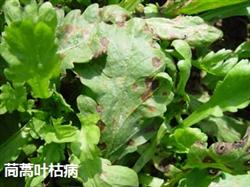
What is garland chrysanthemum leaf blight? An introduction to its causes and control methods. Garland chrysanthemum leaf blight infects only the leaves; the lesions are round or irregular, light gray in the center with brown edges. When humidity is high, a black mist-like growth appears on both the upper and lower surfaces. In the later stages, the lesions merge into patches, causing the leaves to wither and die. The main cause of garland chrysanthemum leaf blight is...
 What is garland chrysanthemum leaf blight? An introduction to its causes and control methods
Garland chrysanthemum leaf blight infects only the leaves; the lesions are round or irregular, light gray in the center with brown edges. When humidity is high, a black mist-like growth appears on both the upper and lower surfaces. In the later stages, the lesions merge into patches, causing the leaves to wither and die. The main cause of garland chrysanthemum leaf blight is that the pathogen survives on the leaves; when humidity is high, dew forms on the leaf surface, and the disease occurs easily. The pathogen spreads through airflow.
Control of garland chrysanthemum leaf blight: at the early stage of the disease, spray 70% thiophanate-methyl wettable powder at 500 times dilution, or 50% iprodione wettable powder at 1500 times dilution. Apply once every 5-7 days, for 2-3 consecutive sprays.
In addition, garland chrysanthemum is also prone to downy mildew and viral diseases; the control measures are the same as for other vegetables.
Click to get more garland chrysanthemum growing techniques
Click to get more vegetable growing techniques