What are the control methods for wheat head blight (Fusarium head blight)?
What methods are used to control wheat head blight? Please provide guidance. Due to the continuous increase in the degree of mechanized wheat harvesting, large amounts of straw returned to the field, and wheat chaff blown and scattered across the field, the occurrence of wheat head blight has gradually worsened. Head blight is one of the major diseases harming wheat; the affected wheat heads turn pink, which is why it is called head blight...
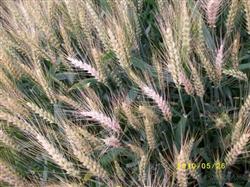
What methods are used to control wheat head blight? Please provide guidance
Due to the continuous increase in the degree of mechanized wheat harvesting, large amounts of straw returned to the field, and wheat chaff blown and scattered across the field, the occurrence of wheat head blight has gradually worsened. Head blight is one of the major diseases harming wheat; the affected wheat heads turn pink, which is why it is called head blight. According to observations, under drought conditions, most wheat varieties are susceptible to head blight. High-water and high-fertilizer plots are especially prone to frequent outbreaks, and varieties of the Wenmai and Xinmai series are even more severely infected. For Zhoumai 16 and Bainong Aikang 58, the rate of diseased heads can reach 10%. Head blight not only affects wheat yield but also causes wheat grains to rot and deteriorate. The toxins secreted by the pathogen of this disease can also poison humans and livestock.
Wheat head blight is a disease that is difficult to completely control. Most farmers do not choose disease-resistant varieties when sowing, and if control is not timely, they will suffer relatively large losses. According to observations at our farm over the past two years, wheat head blight rarely occurs from the jointing stage to the booting stage; it mainly harms the wheat heads from the heading stage to the full flowering stage. During this period, temperatures are relatively high, so it spreads very quickly. Most farmers know relatively little about head blight and do not attach enough importance to it. In the early stage of the disease, it is difficult to notice without careful observation. If control is not timely and continuous rainy weather occurs during the full flowering stage, a large number of blighted white heads will appear in the field within a few days, and by then it will be difficult to control even with supplemental spraying. In contrast, wheat fields with timely control have significantly milder disease occurrence. Because the window for control is relatively short, when individual glumes on the heads are seen turning white and dry and red spots are present, spraying should be carried out promptly for control. It is also possible to act according to weather changes, preferring to spray early rather than late. Since wheat head blight is a fungal disease, at the late booting to early heading stage of wheat, spraying per mu with 100 grams of carbendazim or 50 grams of diniconazole (Heguoli) mixed with 30 kg of water gives relatively good control results. Because head blight mainly harms the wheat heads, a sprayer with good atomization must be used, and the spray boom should be raised as much as possible, focusing on spraying the heads so that the wheat heads receive the pesticide evenly. Also, depending on weather conditions, with an interval of at most 7 days, a second control treatment should be carried out when wheat is at full heading and flowering heavily. If the weather is continuously overcast and the disease is severe, one more control treatment is still needed in the early grain-filling stage of wheat to achieve a relatively good control effect. According to observations at our farm, when control was performed only once from the heading stage to the grain-filling stage of wheat, even a relatively large spray amount did not achieve a relatively good effect. Therefore, the author suggests that farmers must seize the timing during control, raise awareness, not be afraid of trouble, overcome the mindset of relying on the heavens for a harvest, and control the disease as much as possible in order to achieve increased yield and income.
Click to get more wheat cultivation techniques
Click to get more grain cultivation techniques