How to prevent and control mulberry shoot-blight disease? Simply remove the mulberry flowers and fruits
Mulberry shoot-blight disease, also known as branch-blight disease or white mulberry fruit disease. Shoot-blight is a mulberry disease that has become widespread in recent years. It is caused by the pathogen Sclerotinia minor, which infects new shoots through the fruit stalk, causing the base of the new shoot to rot and break off. Its characteristic is that mulberry trees bearing female flowers, or both male and female flowers on the same tree, are prone to this disease, with a shoot-blight rate of...
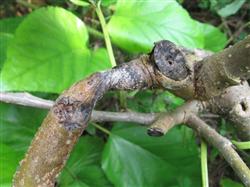
Mulberry shoot-blight disease, also known as branch-blight disease or white mulberry fruit disease. Shoot-blight is a mulberry disease that has become widespread in recent years. It is caused by the pathogen Sclerotinia minor, which infects new shoots through the fruit stalk, causing the base of the new shoot to rot and break off. Its characteristic is that mulberry trees bearing female flowers, or both male and female flowers on the same tree, are prone to this disease, with a shoot-blight rate ranging from 10-30%. The disease can easily run rampant in mulberry orchards, seriously affecting the leaves used for spring silkworm rearing.
To effectively control and eliminate the occurrence and spread of this disease, based on the characteristic that shoot-blight only occurs on mulberry trees bearing female flowers, sericulture technicians should go to the grassroots level and guide silkworm farmers to remove female mulberry flowers and mulberry fruits in March and April. Given the reality that most silkworm farmers have difficulty distinguishing male from female mulberry flowers, for mulberry orchards where this disease has occurred, it is recommended that farmers remove all mulberry flowers and fruits, following the principle of "pick every flower you see" and "remove every fruit you see," cutting off the transmission route of the pathogen, reducing the consumption of mulberry tree nutrients by flowers and fruits, strengthening the vigor of mulberry trees, and increasing mulberry leaf yield. Years of practice have proven that by picking mulberry flowers and fruits before the fruits turn white, the occurrence of shoot-blight can be effectively eliminated, and removing them for two consecutive years can completely eradicate it. This is the most economical and environmentally friendly control method.