What are the control methods for mulberry rotten head blight?
Mulberry bacterial blight, commonly known as "rotten head blight", is one of the serious mulberry diseases. Symptoms: (1) black withered buds - affected buds and leaves lose their luster at the early stage of disease and die rapidly; (2) new shoot stem rot. The stem base of new shoots shows black rot, with part of the phloem and xylem necrotic; (3) rotten head. After the terminal shoot buds and leaves are infected, the growing point...
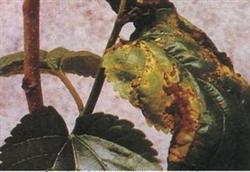
Mulberry bacterial blight, commonly known as "rotten head blight", is one of the serious mulberry diseases.
Symptoms: (1) black withered buds - affected buds and leaves lose their luster at the early stage of disease and die rapidly; (2) new shoot stem rot. The stem base of new shoots shows black rot, with part of the phloem and xylem necrotic; (3) rotten head. After the terminal shoot buds and leaves are infected, the growing point dies first.
Control methods: (1) Eliminate the pathogen. When black withered buds, rotten new shoot heads, basal rot, or dotted and linear lesions on branches are found on plants, they should be cut off and burned promptly to prevent the pathogen from spreading; (2) During routine mulberry management such as leaf picking and branch pruning, do not tear the branches, so as to avoid wound infection; (3) Before budding, spray the tree with 1% Bordeaux mixture; (4) Mix 50 g of copper sulfate with 400-450 g of 12% ammonium water, add 50 kg of water, mix well, and spray in the mulberry field to control the disease.