What causes wheat head blight?
What causes wheat head blight? A detailed introduction to wheat head blight: 1. The impact of wheat head blight on quality and its types. Important wheat regions in China have all suffered from head blight. In recent years, the frequency of head blight in northern Henan has been high, greatly affecting wheat quality. The issue of head blight toxins. ...
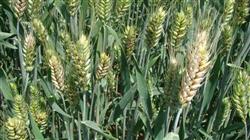
What causes wheat head blight? A detailed introduction
Wheat head blight:
1. The impact of wheat head blight on quality and its types. Important wheat regions in China have all suffered from head blight. In recent years, the frequency of head blight in northern Henan has been high, greatly affecting wheat quality. The issue of head blight toxins. The head blight pathogen can produce multiple toxins. Group B trichothecene toxins are toxins that cause vomiting in humans and abortion in animals. There are two types of group B toxins: one is nivalenol (NIV), and the other is deoxynivalenol (DON). Therefore, the control of wheat head blight concerns not only food security but also food safety. There is clear differentiation in head blight toxins among wheat regions in China. The issue of the pathogenic population of wheat head blight in China. Many experts have studied the pathogens of head blight in China and all considered it to be Fusarium graminearum. With advances in research and the expansion of the species concept, Fusarium graminearum is no longer a single species but a species complex comprising 11 species. Among these 11 species, using molecular identification methods, we identified at least 6 distinct species causing head blight in China. Therefore, the control effect of a single fungicide application is now relatively poor.
2. Epidemic factors of wheat head blight. The epidemic of wheat head blight is closely related to meteorological factors. The most suitable temperature for pathogen development is 24-28°C, with a minimum of 8°C and a maximum of 32°C. It develops best at a relative humidity of 80-100%. The optimum temperature for the formation of perithecia and ascospores is 20-25°C. The fastest conidial production occurs at 25°C. Generally speaking, the temperature conditions after wheat heading all satisfy the development and growth of the pathogen. The key to the epidemic is rainy weather. Forecasting does not require very complex mathematical models! In fact, one can make a forecast simply by looking at how many rainy days and how much rainfall are in the weather forecast during wheat heading and flowering. The variety factor is also very important in the epidemic of wheat head blight. At present, some progress has been made in breeding for head blight resistance, but an ideal resistant variety has not truly been obtained, and it may not be possible to obtain one in the next ten years. The resistance types of varieties to head blight include resistance to infection and resistance to spread. In addition to resistance, the agronomic traits of varieties are also related to the epidemic of head blight. ① Plant height. Short-stalked varieties receive far more ascospores ejected from the soil surface into the ear layer than varieties of appropriate height. ② Uniformity of heading and the length of the full-head period. If heading is uniform and the full-head period is short, the chance of encountering rainfall is lower, which can reduce the epidemic. ③ The duration of anther retention. Anthers play an assisting role in pathogen invasion; retained anthers may provide nutrients to the pathogen like a culture medium, thereby helping the pathogen invade. ④ The speed of grain filling. Fast grain filling reduces the spread range of the pathogen. The epidemic of wheat head blight is also closely related to cultivation management and planting methods. Low-lying terrain, heavy clay soil, and poor drainage cause high humidity in wheat fields, reducing wheat root respiration and disease resistance. In corn-wheat rotation fields, shallow plowing, large amounts of corn stalks returned to the field, and pathogen-carrying residues provide a large amount of inoculum for the epidemic of head blight in the later growth stages of wheat.
3. Control of wheat head blight.
(I) Cultivation control is the foundation of head blight control.
1. Deep plowing to destroy stubble. Deep plowing to destroy stubble is an important way to reduce inoculum. 2. Topdressing should not be too late. Late topdressing easily causes excessive vegetative growth and delayed maturity, prolonging the time for pathogen infection and increasing infection opportunities; in addition, it causes many ineffective tillers and aggravates the epidemic.
(II) Selecting resistant, tolerant, or disease-avoiding varieties is an important control measure. Although there are no resistant varieties, there are still great differences among varieties, and varieties with resistance to spread should especially be selected. In addition to resistance, the selection of varieties should also consider the following principles: ① appropriate plant height, ② uniform heading, ③ neat ear layer, ④ short anther retention time, ⑤ fast grain filling.
(III) Chemical control is the key to head blight control. Due to different climatic conditions, the timing and speed of wheat heading and flowering also differ, so the application date and number of applications should be flexibly controlled according to local climate changes and changes in the wheat growth period. The principle for application timing: when the weather is clear and the temperature is high during heading, and the wheat heads and flowers at the same time, applying at the early flowering stage (10-20% flowering) is best. When the temperature is low and sunshine is scarce during heading, and the wheat heads first and flowers later, apply at the early flowering stage (10% flowering). If continuous rainy weather occurs during heading, apply at the full-head stage. Seize the opportunity during breaks in the rain to apply the fungicide. Issues to note when applying: the spraying equipment must ensure mist spraying, and the pressure and nozzle orifice diameter must meet the requirements for mist spraying. During continuous rainy weather, appropriately high-concentration spraying should be used. Because head blight occurs in the rainy season, mist spraying and appropriately high concentration can prevent rain washing, can bring about secondary dilution of the fungicide without causing waste and loss of the fungicide. Especially when applying during breaks in the rain, mist spraying and appropriately high concentration should be emphasized even more. There are now reports suggesting that Fusarium has developed some resistance to carbendazim, leading to reduced control efficacy. For example, Ma Zhonghua reported that in the Jingjiang area of Jiangsu, carbendazim-resistant head blight pathogens on rice stubble accounted for 4.7%, and in the Hai'an area the proportion of resistant strains was as high as 7.9%. However, carbendazim is still a good fungicide for controlling wheat head blight. Per mu, 120 g of 40% carbendazim suspension concentrate, 100 g of 80% wettable powder, and 70 g of effective ingredient of 70% thiophanate-methyl wettable powder can all be used for head blight control. If carbendazim ultramicro powder or carbendazim suspension concentrate is available, it is best to use the ultramicro powder and suspension concentrate, whose effect is better than that of wettable powder.
Click to get more wheat cultivation techniques
Click to get more grain cultivation techniques