Detailed Explanation of Key Points of Pollution-Free Cultivation Techniques for Water Spinach
Water spinach, also called water convolvulus, tong cai, or rattan vegetable, is a fast-growing leafy green vegetable that has been actively introduced in various regions in recent years. Its leaves and tender stems are eaten, and it can be served cold-dressed, stir-fried, or boiled in soup. It is not only rich in nutrients but also has medicinal value such as clearing heat and detoxifying, promoting urination, and stopping bleeding. It has now become one of the specially needed vegetables for major hotels and restaurants....
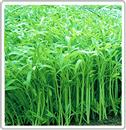 I. Cultivation region: choose a region where the soil (including pH, cadmium, lead, mercury, arsenic, chromium, BHC, and DDT), water quality (including pH, cadmium, lead, mercury, fluorine, arsenic, hexachlorocyclohexane chromium, cyanide, and chloride), and atmosphere (with nitrogen oxides, sulfur trioxide, and fluoride) all meet the requirements of the "Pollution-Free Agricultural Products - Environmental Standard for Production Areas" for cultivation.
II. Sowing and seedling raising: use vine seedling raising. After germination promotion, insert the seed vines selected and retained from the previous year and safely overwintered under protection into the seedling bed. Generally sow in late February. Prepare the field and make beds according to the specifications of bed width 1.5 m and ditch width 20-25 cm, apply sufficient base fertilizer, and sow by broadcast sowing across the whole bed, sowing 150-200 kg of seed vines per mu of seedbed. After sowing, cover with plastic mulch to keep warm and moist, and remove the mulch after the seedlings emerge. When the seedlings are about 30 cm tall, remove the vines to encourage adventitious roots to develop downward at the nodes and lateral branches to grow upward, then use the successively emerging lateral branches of a certain size for cutting propagation and field planting.
III. Fertilization and transplanting: water spinach does not have strict requirements for soil conditions; it is suitable to choose low-lying, moist, and fertile clay loam for cultivation. Base fertilizer is mainly organic fertilizer and phosphate fertilizer, and a certain amount of plant ash can be broadcast. Its cultivation specifications are row spacing 30-35 cm and hill spacing 15-20 cm. In addition, during the growth period, about 15 cm top shoots can be picked for another round of cutting propagation. As long as the soil moisture in the cutting field is suitable, the cuttings will quickly grow adventitious roots and send out new shoots.
IV. Field management: in the early stage, timely intertillage and loosening of the soil should be carried out to raise soil temperature. Entering summer, with high temperatures and rapid plant growth, the demand for fertilizer and water is large. Water frequently and irrigate heavily (dry air and insufficient soil moisture can easily lead to increased fiber in water spinach, affecting yield and quality), and apply topdressing in combination with watering. After the first harvest, apply 15 kg of urea or 20 kg of diammonium phosphate per mu as topdressing, applied with irrigation water. After that, apply topdressing once every about 20 days, with 3-5 kg of urea per mu. In autumn, when temperatures turn cooler, timely intertillage and weed control should be carried out, and attention should be paid to controlling pests such as red spiders. In addition, for the parts where lateral branches are too numerous, crowded, and thin and weak, thin out the branches so that the branches grow evenly, with good ventilation and light transmission, improving product quality.
V. Harvesting techniques: timely harvesting is the key to high yield and high quality of water spinach. In production, it can generally be harvested when the seedlings are about 25-35 cm tall. During the first and second harvests, leave enough 2-3 nodes at the stem base to facilitate new bud sprouting after harvest, promote lateral branches, and strive for high yield. After 3-4 harvests, carry out one heavy harvest of the plants, that is, leave only 1-2 nodes at the stem base to prevent excessive lateral branches, which would lead to weak and slow growth.