Detailed Explanation of Pollution-Free Production and Cultivation Techniques for Greenhouse Eggplant
1. Pollution-Free Cultivation Techniques for Early Spring Greenhouse Eggplant. In the Bozhou region, this crop of eggplant is raised as seedlings from early December and transplanted into early spring greenhouses in mid-February. 1.1 Selection of Excellent Disease-Resistant Varieties. The climatic characteristics of this cropping season are: weak light and low temperatures during the seedling-raising period, with temperature and light gradually...
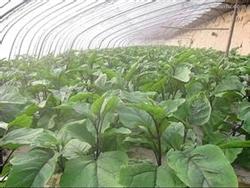
1. Pollution-Free Cultivation Techniques for Early Spring Greenhouse Eggplant
In the Bozhou region, this crop of eggplant is raised as seedlings from early December and transplanted into early spring greenhouses in mid-February.
1.1 Selection of Excellent Disease-Resistant Varieties
The climatic characteristics of this cropping season are: weak light and low temperatures during the seedling-raising period, with temperature and light gradually increasing after transplanting. Varieties with cold resistance, disease resistance, tolerance to weak light and strong growth vigor should be selected, such as Wuye Eggplant, **Long Eggplant, Lantern Eggplant, Damin Round Eggplant, Dalong Long Eggplant, etc.
1.2 Raising Strong, Disease- and Pest-Free Seedlings
1.2.1 Seed treatment. The sowing rate is generally 40-50 grams per mu. To eliminate pathogens attached to the seed surface, seeds can be soaked in 1% potassium permanganate solution or 0.1% carbendazim for 1 hour, then repeatedly rinsed before soaking, which has a certain effect on preventing eggplant Verticillium wilt. After chemical treatment, soak the seeds in 55°C warm water for 10 minutes, then soak at 25-30°C water temperature for 8 hours before sprouting. Sow when 80% of the seeds have sprouted.
1.3 Sowing should be carried out at noon on a windless, sunny day. 2-3 days before sowing, fill the seedbed with bed soil and level the bed surface, water thoroughly, and promptly cover with film to raise the soil temperature. At sowing, spray warm water once more; after the water has penetrated, scatter a layer of fine soil on the seedbed surface, then evenly spread 2/3 of the prepared (Wudai Mixture) medicated soil on the sowing bed. Broadcast sowing is used; after sowing, first cover the seeds with the remaining 1/3 of the medicated soil, then cover with soil 1-1.5 cm. Immediately after covering with soil, cover the bed surface with plastic film to retain heat and moisture. When 50% of the seeds have emerged, promptly remove the film.
1.4 Temperature, water and fertilizer management during the seedling stage. After pricking out and hardening off, and after transplanting, the greenhouse should be kept closed to retain heat, with daytime temperatures maintained at 25-30°C and nighttime temperatures maintained above 15°C to promote seedling recovery. If necessary, a small arched tunnel can be set up inside the greenhouse. When the heart leaves begin to grow, the seedlings have recovered. After recovery, maintain daytime temperatures at 25°C and nighttime at around 15°C, and pay attention to ventilation.
1.5 Transplanting
Generally, the transplanting time for early spring greenhouse cultivation is mid-February. When seedlings have grown 6-7 true leaves, have thick stems and carry flower buds, they can be transplanted. Ridge planting is used, with a row spacing of 60 cm x (33-40) cm. For early-maturing varieties, 3,500 plants per mu is suitable; for mid-to-late-maturing varieties, 3,000 plants is suitable.
1.6 Light management. Eggplant has relatively strict light requirements, and its transplanting time coincides with the season of weakest light. To increase light duration and enhance light intensity, greenhouse covers should be removed as early as possible and put on as late as possible. After removing the curtain each day, the film must be cleaned. In recent years, ** has promoted reflective curtains, which can also effectively increase light and raise air and soil temperatures. After eggplant transplanting and seedling recovery, decide whether to water for seedling recovery based on weather and soil moisture. If there are many sunny days and plants are growing vigorously, fertilizer and water should be applied, then water should be controlled and temperature appropriately lowered, with the focus on intertillage to promote root development and prevent excessive vine growth. For ridges covered with plastic film, loosening the soil in the furrows can be adopted. When the first fruit (door eggplant) reaches the "eye-opening" stage, apply 10-15 kg of urea or 15 kg of compound fertilizer per mu combined with watering. When watering begins, because outside temperatures are low, subsurface irrigation under the film is used. When soil temperature stabilizes above 18°C, as plants enter vigorous growth and peak fruiting, water and fertilizer demand increases sharply, and both open and subsurface furrows need watering. Water in the morning on sunny days; after watering, keep the greenhouse closed for 1-2 hours, then ventilate heavily to remove moisture.
1.7 Management after transplanting
1.7.1 Temperature management. After transplanting, keep the greenhouse closed to retain heat and promote seedling recovery. After recovery, maintain daytime temperatures at around 25°C, nighttime at 16-18°C, and keep the temperature above 10°C before removing the curtain in the morning.
As outside temperatures rise, gradually increase ventilation and appropriately extend ventilation time. After entering the fruiting stage, greenhouse temperatures should be 25-30°C during the day and 18-20°C at night.
1.7.2 Fertilizer and water management. After seedling recovery and before fruit set, eggplant should mainly receive intertillage and weeding; this period is the seedling-restraining stage. During seedling restraint, fertilizer and water should be controlled. When the first fruit (door eggplant) grows to 1-4 cm, that is, the "eye-opening" stage, water and fertilizer management begins. According to the growth vigor of the eggplant, the first topdressing can be quick-acting nitrogen fertilizer, applying 10-15 kg of urea per mu, or organic fertilizer or decomposed biogas slurry 1,000 kg. Thereafter, alternate topdressing can be adopted as "one clear, one mixed."
1.7.3 Plant adjustment. Because early spring eggplant is planted at relatively high density and has poor ventilation, if not pruned in time, it is prone to excessive vegetative growth, producing only branches and leaves without setting fruit, seriously affecting yield. Pruning methods include two-stem pruning or three-stem pruning. The pruning method is the same as for early spring. To bring to market earlier, generally only 5-7 eggplants are retained per plant, namely 1 door eggplant, 2 opposite eggplants, 2 four-door bucket eggplants, and 2 eight-faceted wind eggplants. Three-stem pruning retains 6-9 eggplants, and the remaining side branches and axillary buds should be promptly removed so that nutrients are concentrated in the fruits.
1.8 Harvesting
When eggplant fruits reach commercial maturity, they can be harvested promptly. Before harvesting, because the plant has not yet become lignified, to avoid damaging the fruit and plant, it is best to harvest with pruning shears.
2. Pollution-Free Cultivation Techniques for Late Autumn Greenhouse Eggplant
Late autumn eggplant cultivation refers to the seasonal cropping period in the Bozhou region where seedlings are raised from late June to early July, transplanted from late August to early-to-mid September, harvesting begins at the end of October, and continues until late December to early January of the following year.
2.1 Selection of Excellent Disease-Resistant Varieties
The seedling-raising period for pollution-free late autumn greenhouse eggplant cultivation coincides with high temperatures and abundant rain, while the fruiting period occurs in cold, low-temperature weather. Varieties with heat tolerance, disease resistance, low-temperature and weak-light tolerance, and relatively strong growth vigor should be selected, such as Qiye Eggplant, Jiuye Eggplant, Purple Long Eggplant, Dalong Long Eggplant, etc.
2.2 Seedling raising. The seedling raising for this crop of eggplant occurs during the high-temperature autumn season. In the Bozhou region, direct sowing and seedling raising in beds is generally used. To avoid high-temperature direct sunlight scorching the seedlings, shade netting is best used for covering during seedling raising.
2.2.1 Seed soaking and sprouting. Treating seeds with chemicals before soaking can prevent diseases and insect pests. One method is to soak seeds in 300-fold formalin solution for 10 minutes before soaking, or in 500-fold 50% DT fungicide for 20 minutes, then remove and wash off the solution before soaking.
2.2.2 Sowing. June weather is hot, so sowing on cloudy days is best. Water the bed thoroughly; after the water infiltrates, scatter a layer of nutrient soil, evenly broadcast the seeds onto the bed surface, then cover with soil 1-1.5 cm.
2.2.3 Shading and rain protection. After sowing, use shade netting to shade the seedbed, or build some frames over the seedbed and cover with straw, which both shades and cools and also prevents rain damage. When seedlings have all emerged, pay attention to moisture retention to prevent the seedbed from drying out and damaging roots. To improve seedling quality, seedling boxes and nutrient pot pricking out can also be used.
2.3 Transplanting
Before transplanting, disinfect the greenhouse to prevent diseases. The method is to mix 5 grams of sulfur powder, 0.1 gram of dichlorvos emulsifiable concentrate and 20 grams of sawdust per cubic meter of space, ignite the mixture, fumigate with the greenhouse closed for one day and night, then open the greenhouse for ventilation. Land preparation and fertilization: eggplant absorbs relatively large amounts of fertilizer during production. To ensure no fertilizer shortage during production, apply 5,000-7,000 kg of decomposed barnyard manure or decomposed biogas slurry per mu, plus 15 kg each of superphosphate and potassium sulfate. After plowing and fertilizing, rake the ground level and form ridges with a row spacing of 60 cm and ridge height of 10-15 cm. For transplanting, choose a cloudy day or evening and carry it out quickly; plant spacing of 35 cm is suitable, with a planting density of 3,500-4,000 plants per mu. Water thoroughly immediately after transplanting.
2.4 Field management
2.4.1 Intertillage and weeding. 3-4 days after transplanting, water once for seedling recovery to help eggplant root development. After watering for seedling recovery, while the soil surface has not yet dried completely, immediately carry out intertillage and weeding to retain water, improve aeration and promote well-developed roots. Then, according to the growth of the eggplant, carry out intertillage 2-3 times consecutively, paying special attention to intertillage after rain or after water runs through the field to prevent soil compaction.
2.4.2 Watering. After 2-3 rounds of intertillage and weeding and other measures, the eggplant gradually begins to grow larger. Generally, 20-25 days after transplanting, watering can be prepared. The first watering must be done with a small amount of water to soak thoroughly, and flood irrigation must be avoided._
2.4.3 Fertilization. After seedling recovery, apply 1,000-1,500 kg of fully decomposed organic fertilizer or decomposed biogas slurry per mu combined with watering. After flowering, apply another topdressing per mu combined with watering of decomposed organic fertilizer plus diammonium phosphate or urea 10-15 kg. Diammonium phosphate and urea should be applied deeply. After the door eggplant expands, increase the number of topdressings, but control the amount of chemical fertilizer, and at the same time prohibit foliar spraying of nitrogen fertilizer.
2.4.4 Greenhouse covering management. In the Bozhou region, nighttime temperatures vary greatly after September. Frost has already appeared by the end of September, so the film should be put on promptly according to weather changes at any time. It is best to put on the film 7-10 days before the arrival of the first frost, or promptly when nighttime temperatures are below 15°C. As the weather turns colder, gradually reduce ventilation.
When the opposite eggplant or four-door bucket eggplant flowers, dip flowers with 2,4-D or fruit-setting hormone to increase the fruit-setting rate. When pruning, prune according to 3 fruits for the door eggplant and opposite eggplant, 3 fruits for the four-door bucket, or 2-4 fruits for the door eggplant, opposite eggplant and four-door bucket. Promptly remove old leaves at the bottom and excess side branches. When greenhouse temperature is below 15°C, promptly supplement heat. When temperature exceeds 30°C, promptly ventilate to cool down.
3. Eggplant Disease Control
3.1 Control methods for Verticillium wilt
3.1.1 Crop rotation. Carry out rotation with non-solanaceous crops for more than 4 years; rotation with alliums, such as onions and garlic, has a better effect.
3.1.2 Strict quarantine. Seeds introduced from elsewhere should first be trial-planted in non-production areas, and only promoted after being confirmed disease-free.
3.1.3 Seed disinfection. Soak seeds in 500-fold 50% carbendazim solution for 2 hours; or dress seeds with thiram at a dosage of 2‰ of the seed weight, and soak seeds in 55°C warm water for 15-20 minutes.
3.1.4 Soil heat treatment to kill soil pathogens. Use high summer temperatures to cover the ground with black film and apply heat treatment to the soil.
3.1.5 Chemical control. Before eggplant transplanting, dip roots in 400-600-fold 50% carbendazim wettable powder or 75% chlorothalonil wettable powder. For nutrient pot seedling raising, before transplanting, drench the seedling soil with the above solution to a depth of 5 cm. At the same time, mix 2 kg of 50% carbendazim wettable powder or 75% chlorothalonil wettable powder with 30 kg of fine soil per mu, evenly scatter it on the ground, mix it into the soil during land preparation, and then transplant.
3.2 Control of eggplant Phytophthora fruit rot
Control method: 250-fold 40% phosethyl-Al wettable powder or 500-fold Propamocarb aqueous solution. Spray evenly and thoroughly, focusing on protecting eggplant fruits. Generally spray once every 7 days or so, for 2-3 consecutive sprays.
3.3 Control of eggplant fruit rot
Control method: before disease onset, begin using chlorothalonil smoke agent, igniting it in 10 places inside the greenhouse to disinfect the greenhouse, disinfecting once every 7-10 days for 2-3 consecutive disinfections. From the early stage of disease onset, spray with 150-200-fold 3% Nongkang 120 aqueous solution, or spray with 600-800-fold 70% mancozeb, once every 5-7 days, for 3-4 consecutive sprays.
4. Main Eggplant Pests and Their Control
The main pests in protected eggplant production are aphids, whiteflies and red spider mites. Red spider mites are especially serious, with eggplant and kidney beans suffering the most, followed by pepper, tomato, cowpea, cucumber, etc. They are important pests on vegetables, and in severe cases plants wither and die.
4.1 Control methods
4.1.1 Promptly clean up residual branches, fallen leaves and weeds in the greenhouse and surrounding areas, and destroy them to eliminate overwintering pest sources.
4.1.2 Reasonable crop rotation. Eggplant and beans are both hosts of mites, so they cannot be planted in succession or intercropped with each other, but can be rotated with other vegetables.
4.1.3 Chemical control should be carried out at the stage of spot and patch occurrence. Use 2,000-fold 10% abamectin emulsifiable concentrate, once every 5-7 days, for 2-3 consecutive sprays. Focus on spraying the undersides of leaves, and also spray weeds at field edges.
4.2 Colorado potato beetle
4.2.1 Control methods: strengthen quarantine, strictly prevent human introduction, and once introduced, eradicate it as early as possible.
4.2.2 Rotate with non-host crops and plant early-maturing varieties, which has a clear effect on controlling the density of this pest.
4.2.3 Biological control. At present, the more widely used method is spraying 600-fold Bacillus thuringiensis preparation.
4.2.4 At the early stage of occurrence, spray 10,000-fold 70% imidacloprid (Aimeile) water-dispersible granules or use pyrethroid pesticides.