Detailed Explanation of Key Points of Pollution-Free Cultivation Techniques for Early-Maturing Cauliflower
Cauliflower has the characteristics of being palatable and delicious. Through two years of cultivation, Siyang County has mastered pollution-free cultivation techniques for early-maturing cauliflower. Variety selection: choose varieties according to local climate characteristics, such as Li Yuanfu, Shenliang Yidai, Shenlong Teda and other varieties with a growth period of 50-60 days. Sow at the appropriate time in the open...
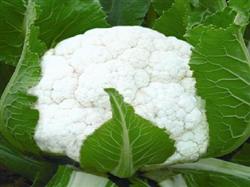
Cauliflower has the characteristics of being palatable and delicious. Through two years of cultivation, Siyang County has mastered pollution-free cultivation techniques for early-maturing cauliflower.
Variety selection: choose varieties according to local climate characteristics, such as Li Yuanfu, Shenliang Yidai, Shenlong Teda and other varieties with a growth period of 50-60 days.
Sowing at the appropriate time: open-field cultivation is generally sown from late June to early July, with the harvest period from late August to early September. For each mu of seedbed, use 500 kg of clean garden soil and 100 kg of decomposed organic fertilizer to prepare nutrient soil. The humidity should reach 75%; when squeezed by hand, no water drips, and when dropped from a height of 1 m, it breaks apart. The seedbed should be far from pollution, and the water source, soil, and atmosphere should meet the requirements of pollution-free cultivation. The site should be high and dry, with good ventilation and convenient irrigation and drainage. Prepare the land and make beds: bed width 1.1 m, height 20 cm, level and finely worked. Fill nutrient pots measuring 8 cm in length, width, and height to 80-90% full with soil, place them tightly one by one on the bed soil, put 1 seed in each pot, with a sowing depth of 0.5 cm, cover with fine soil, spray water, build a small arched shed, and then cover with a shade net.
Seedling management: after sowing, water promptly according to weather conditions. Before emergence, keep the seedbed moist, judged by the bed surface not turning white. After emergence, spray chlorothalonil once every 5 days to prevent seedling-stage diseases. During the seedling stage, pay attention to managing the uncovering and covering of the shade net; cover the shade net from 9:30 a.m. to 4:30 p.m. on sunny days. When it rains, add plastic film covering to increase the seedling survival rate and strong-seedling rate. Ten days before transplanting, apply 5 kg of urea per mu of seedbed and harden the seedlings.
Transplanting at the appropriate time: all indicators of the field should meet the requirements of pollution-free production. Ten days before transplanting, plow and sun-bleach the soil in time. Broadcast 50-75 kg of fresh lime per mu, and leave narrow ditches in the field with a depth of 80-100 cm. One week before transplanting, apply 2500 kg of decomposed organic fertilizer, 20 kg of urea, 50 kg of superphosphate, and 10 kg of potassium chloride per mu of field.
When the seedlings are 20-25 days old and have 4-5 true leaves, transplant them in double rows in a "pin" shape, with a row spacing of 60 cm and a plant spacing of 35-40 cm, transplanting 2500-2800 plants per mu.
Field management: before planting, dissolve 2 kg of urea and 1 kg of boron fertilizer in water and splash-irrigate per mu; after planting, apply once more together with the water for settling the roots. Five days after planting, bury 5-8 kg of urea per mu between two cauliflower plants, then apply once every 7 days thereafter, increasing the fertilizer amount by 1 kg each time, while also applying 2 kg of superphosphate and 1 kg of potassium chloride. After budding, apply 10 kg of urea, 30 kg of superphosphate, and 7.5 kg of potassium chloride per mu among 4 cauliflower plants, and at the same time spray 50 g of monopotassium phosphate plus 20 kg of water per mu. Hill up soil once each after root formation and after budding. After the curd is as large as an egg, fold leaves in time to cover the curd to prevent the curd color from turning yellow.
Control of diseases, insects, and weeds: after emergence, spray 50 g of chlorothalonil plus water per mu of seedbed every 5 days. For black root disease in the field, use 1000-fold Kasugamycin solution? No, use 1000-fold copper hydroxide solution? Wait, "Kocide" is copper hydroxide. Use 1000-fold copper hydroxide solution to drench the roots for control; for black rot and soft rot, use 150-200 g of agricultural streptomycin plus water per mu for spraying. For insect pest control, use insect-proof net covering cultivation. Weeds in the seedbed are removed manually. For weeds during the field period, on the evening of the planting day, spray 125 mL of 40% butachlor plus 60 kg of water per mu for control.
Harvest at the appropriate time: harvest when the curd has fully grown and cracks appear between the outermost small flower branches at the edge and the curd.