Management Measures for Spring Planting and Cultivation of Chestnut
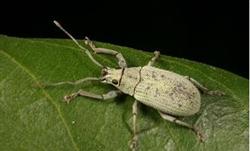
The chestnut weevil, also known as the chestnut snout beetle, lays eggs in August, and the eggs hatch into larvae in September. The larvae bore into and feed on chestnut fruits, causing the damaged fruits to be filled with insect droppings, affecting their edibility and making them unsuitable for seed. Fruit damage generally ranges from 20% to 40%, and can reach 90% in severe cases. The control method is to spray insecticide on chestnut trees. Use 50% fenitrothion at 800 times dilution...
 Spring is the period of flower bud differentiation, spring bud sprouting, and flowering for chestnut. To ensure increased yield and a good harvest, management must be effectively strengthened.
Watering. Spring is the period when all organs of the chestnut are being built up intensively, and metabolism and nutrient transport urgently need water. Irrigation before bud break in early spring can promote female flower formation and benefit branch growth. Local chestnuts are mostly planted in mountainous and hilly areas, where the soil layer is relatively thin and water retention is poor, so mulching with grass is needed to conserve soil moisture.
Bud removal. When buds sprout, remove excessive buds from the middle and lower parts of vigorous branches, keeping 4 to 5 large buds, and keep 2 to 3 buds on medium branches. Bud removal should follow the principle of removing lower buds and keeping upper ones, and removing dense buds while keeping sparse ones.
Pinching. Within two years after grafting, some branches grow excessively vigorously, which can inhibit the growth of other branches and affect canopy formation. Therefore, after new shoots begin to grow in spring, timely pinching management must be carried out on the excessively vigorous branches. When new shoots reach 20 cm, pinch off 1 to 2 cm from the shoot tip; when secondary and tertiary shoots reach 30 cm, pinch off 7 to 10 cm from the shoot tip. This can help young trees form more fruiting mother branches and increase the number of female flowers.
Male flower removal. Without artificial control, the ratio of male to female flowers in chestnut is usually 20 to 50:1. Excessive male flowers consume a large amount of nutrients and reduce yield. Therefore, most male inflorescences should be removed when they reach 2 cm, leaving only the topmost 3 to 5 inflorescences on new shoots, so that the ratio of male to female flowers is maintained at about 5:1. In addition, increasing potassium fertilizer application also helps inhibit excessive growth of male inflorescences.
Fertilization. For high chestnut yields, in addition to conventional application of nitrogen, phosphorus, and potassium fertilizers, the key is to apply boron fertilizer and zinc fertilizer. When female inflorescences appear, spray a mixed solution of 0.2% borax and 0.2% zinc sulfate, once every 7 days, for 2 to 3 consecutive sprays.