Key Technical Points and Recommendations for Mid-Season Field Management of Sweet Potato
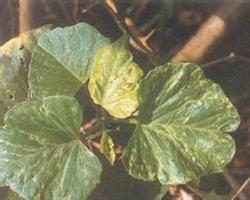
In recent years, farmers have often reported that after the sweet potato seedlings they cultivated were transplanted into the field, the leaves turned yellow and wrinkled, and the plants grew very slowly, or in rural colloquial terms, "died without growing." Such potato vines basically produce no yield later on. According to investigation, the main cause is severe occurrence of sweet potato virus disease. Sweet potato virus disease is a common disease of sweet potato...
 From when the number of tubers is basically stable to when stem and leaf growth reaches its peak is the mid-growth period (the stage of simultaneous vine and tuber growth). For spring sweet potatoes, this is 60 to 100 days after planting, and for summer sweet potatoes, about 40 to 70 days after planting. Tuber nutrient accumulation and stem and leaf growth proceed together. At the end of this period, the leaf area index reaches a peak value of 4.0 to 4.5. The main goal of this period is balanced growth aboveground and belowground, and the core of management is to promote steady stem and leaf growth and tuber enlargement. The main measures are:
I. Prevent drought and drain waterlogging. When leaves wilt at noon and cannot recover by sunset, if this continues for 5 to 7 days, irrigation can be applied where conditions permit to promote rapid recovery of sweet potato growth. For ridge cultivation, the irrigation amount should preferably be half the depth of the furrow. In rainy seasons, make the ridge furrow, waist furrow, and drainage ditch "three ditches" connected to ensure there is no standing water in the field. Special attention should be paid to timely drainage of accumulated water during rainy periods in low-lying, waterlogging-prone land, to minimize the impact of excessive soil moisture on sweet potato.
II. Pinch the tips and lift the vines without turning them, apply chemical regulation, and combine promotion with control. For sweet potato fields with sufficient base fertilizer and a tendency toward excessive growth after rain, do not cut the vines. On the basis of pinching the tips at the row-closing stage, when branch length reaches about 1 chi, pinch the tips another 1 to 2 times. The maximum leaf area index should preferably not exceed 5.0. After rain, lift the potato vines in the silted soil and place them back in their original position, without disrupting the reasonable arrangement of leaves, without damaging stems and leaves, tear off the fine roots on the vines, and pick out the fibrous roots in the surface soil near the sweet potato crown, so as to reduce the plant's water absorption. If there is still a tendency toward excessive growth, use 75 grams of 15% paclobutrazol per mu mixed with 50 kg of water and spray on the leaves. If there is still a tendency toward excessive growth after 10 days, spray once more. If excessive growth is caused by too much nitrogen fertilizer, spray 1 to 2 times with a 300-fold potassium dihydrogen phosphate solution. However, if stem and leaf growth is insufficient and the leaf area index is less than 3.5, spray 1 to 2 times with a mixed solution of 1% urea and 0.2% potassium dihydrogen phosphate to promote growth appropriately.
III. Control diseases, pests, and weeds. In the mid-growth period, sweet potato will suffer damage from pests such as the cotton leafworm, sweet potato hornworm, sweet potato leaf miner, and red spider mite. Once they occur, spray the leaves with a 1500-fold solution of 50% phoxim. If purple ring rot is found (purple mycelium appears in the lower soil layer of the plant, encircling the tubers, causing tuber rot later), the diseased plants and diseased soil should be dug out together, taken outside the field, and buried deeply. Spread quicklime powder in the original spot, or spray carbendazim fungicide to control its spread. After the sweet potato rows close, some scattered residual weeds in the field will grow larger and larger, competing with sweet potato for light and nutrients. Once found, they should be pulled out promptly.