Key Management Techniques for Water Spinach in Solar Greenhouses
After water spinach seedlings are transplanted or direct-seeded seedlings emerge, intertillage and soil loosening should be carried out several times to raise soil temperature, promote root development, and thoroughly remove field weeds. Water spinach requires relatively little water during the seedling stage, so irrigation can be done moderately. After harvesting begins, the soil should be kept moist. After the first harvest, apply 15 kg of urea or diammonium phosphate per mu...
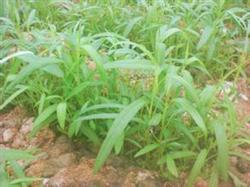
After water spinach seedlings are transplanted or direct-seeded seedlings emerge, intertillage and soil loosening should be carried out several times to raise soil temperature, promote root development, and thoroughly remove field weeds. Water spinach requires relatively little water during the seedling stage, so irrigation can be done moderately.
After harvesting begins, the soil should be kept moist. After the first harvest, apply 15 kg of urea or 20 kg of diammonium phosphate per mu, with the topdressing applied together with irrigation water. After that, apply topdressing once about every 20 days. In the middle and late stages of water spinach growth, plant regulation should be carried out at any time in conjunction with harvesting. On the one hand, surface soil can be used to earth up around the base of the plants to promote the development of adventitious roots and make the plants grow vigorously; on the other hand, for the parts where lateral branches develop excessively and the branches are crowded and thin and weak, branches should be thinned so that branch growth is balanced, ventilation and light penetration are good, and quality is improved. When the seedling branches and vines grow to about 35 cm, carry out the first harvest, leaving 3-4 nodes at the base of the branches and vines and picking the tender shoots. The remaining axillary buds quickly produce new shoots, and the emergence times of new shoots at different node positions differ somewhat. When the new shoots grow to 20 cm, they can be harvested again. After the plants have been harvested 3-4 times, during harvesting leave only 1-2 nodes at the base of the stems, as this helps renew the plant branches and vines and prevents the branches and vines from being too numerous and growing thin and weak.
Of course, if there are large differences in the growth vigor of different plants, the severity of harvesting should also differ accordingly. That is, plants with strong growth vigor can be harvested lightly and early, while plants with weak growth vigor can be harvested heavily and late, so that their nutrients are concentrated and they grow stronger new shoots, increasing yield.