Key Cultivation and Management Techniques for High-Quality, High-Yield Water Spinach
I. Sowing. Both direct sowing in the open field and seedling transplanting are acceptable; the sowing period is generally mid-to-late April. For direct sowing in the field, drilling or hill sowing may be used, with a row spacing of 30-35 cm and a hill spacing of 15-20 cm, sowing 3-4 seeds per hill; water immediately after sowing, and seedlings will emerge in about 7 days. Dense sowing may also be used, and once the seedlings reach 17-20 cm in height...
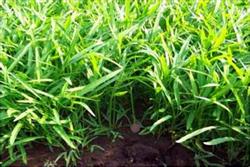 Water spinach, also called weng cai, tong cai or vine greens, is a fast-growing leafy vegetable that has been introduced and cultivated in more places in recent years. Its key technical points are:
1. Sowing: Both direct sowing in the open field and seedling transplanting are acceptable; the sowing period is generally mid-to-late April. For direct sowing in the field, drilling or hill sowing may be used, with a row spacing of 30-35 cm and a hill spacing of 15-20 cm, sowing 3-4 seeds per hill; water immediately after sowing, and seedlings will emerge in about 7 days. Dense sowing may also be used, and once the seedlings reach 17-20 cm in height, they can be thinned and harvested. After sowing, cover with plastic film to raise temperature and retain moisture, and remove the film once the seedlings emerge. In addition, during the growing period, shoot tips about 15 cm long may be taken for cutting propagation; as long as the soil moisture in the cutting field is suitable, the cuttings will quickly grow adventitious roots and put out new shoots.
2. Planting and management: Water spinach is not strict about soil conditions, and it is best to choose low-lying, moist and fertile clay loam for cultivation.
In the early stage, cultivate and loosen the soil in time to raise soil temperature. In summer, with high temperatures and rapid plant growth, the demand for fertilizer and water is great, so water frequently and water heavily (dry air and insufficient soil moisture can easily lead to increased fiber in water spinach, affecting yield and quality), and apply topdressing together with watering. When temperatures turn cooler in autumn, cultivate and weed in time and apply topdressing, and pay attention to controlling pests such as red spider mites. Water spinach has a long harvest period; generally, after each harvest, apply 10 kg of ammonium sulfate per mu together with watering.
3. Harvesting: Timely harvesting is the key to high yield and good quality in water spinach. In production, it can generally be harvested when the seedlings are about 20-30 cm tall. At the first and second harvests, leave enough of the stem base to retain 2-3 nodes, so as to favor the sprouting of new buds after harvest, promote lateral branch development, and strive for high yield. After 3-4 harvests, the plants should be given one heavy harvest, that is, leaving only 1-2 nodes at the stem base, to prevent excessive lateral branches from developing and causing weak, slow growth.