Careful Management During the Persimmon Blooming Period Is Key to Good Fruit Quality
In order to produce persimmon fruits that are uniform in size, neat in shape, full at the top, and good in commercial appearance, measures such as artificial supplementary pollination, flower and fruit thinning, releasing bees during the blooming period, and girdling can be used for regulation. For artificial pollination, varieties such as Jiro and Fuyu have low parthenocarpic fruit-setting ability; through pollination, a certain number of seeds are formed,...
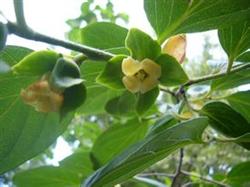
In order to produce persimmon fruits that are uniform in size, neat in shape, full at the top, and good in commercial appearance, measures such as artificial supplementary pollination, flower and fruit thinning, releasing bees during the blooming period, and girdling can be used for regulation.
Artificial pollination Varieties such as Jiro and Fuyu have low parthenocarpic fruit-setting ability; through pollination, a certain number of seeds are formed, which can both increase the fruit-setting rate and prevent physiological fruit drop. The suitable period for collecting pollen is the bud stage, when the petals are yellow-white and before opening. Dry the collected flowers in the shade, sieve out the pollen, place it in a brown glass bottle, and store it in the freezer compartment of a refrigerator for later use. To use pollen economically, skimmed milk powder, starch, chestnut pollen, or Shuangdifeng aqueous solution can be used as extenders; dilute the pollen 30-50 times and, within 3-4 days before and after flowering, apply it with a brush 1-2 times.
Timely flower and fruit thinning Through flower and fruit thinning, a reasonable crop load is determined, which can both reduce nutrient consumption in the tree, allowing the retained persimmon fruits to grow larger, and promote flower bud differentiation, ensuring next year's yield. Flower thinning begins when the first flower opens on the fruiting shoot and ends when the second flower opens. Among the second and third flowers counting upward from the base, keep 1-2 and remove all the rest. Fruit thinning mainly targets deformed fruits and pest- or disease-damaged fruits. Fruiting shoots with fewer than 5 leaves are not retained, those with 6-10 leaves retain 1 fruit, and those with 11 or more leaves retain 2 fruits.
Releasing bees during the blooming period and girdling These have a significant effect on increasing the fruit-setting rate and reducing physiological fruit drop.