Key Management Techniques for Persimmon Trees Before and After Flowering
Management of persimmon trees before and after flowering. Persimmon trees are light-loving crops, and in dense planting cultivation, attention should be paid to solving ventilation and light penetration, which is the main measure for high-yield management. Persimmon trees bear fruit from axillary buds, so thinning out vigorous growing branches and strengthening nutrient accumulation in branches and trunks are very important. Before flowering, emphasis should be placed on applying amino acids to the trunk to promote flower bud differentiation, overcome alternate...
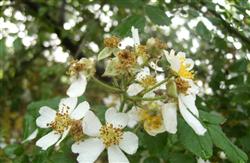
Management of persimmon trees before and after flowering. Persimmon trees are light-loving crops, and in dense planting cultivation, attention should be paid to solving ventilation and light penetration, which is the main measure for high-yield management. Persimmon trees bear fruit from axillary buds, so thinning out vigorous growing branches and strengthening nutrient accumulation in branches and trunks are very important. Before flowering, emphasis should be placed on applying amino acids to the trunk to promote flower bud differentiation, overcome alternate bearing, and promote early fruiting, which is the focus of the work.
(1) In response to infectious disease spots on persimmon branches and trunks, Paulownia wilt, angular leaf spot, and anthracnose, it is recommended that fruit growers prevent and control them through the following measures. 1. Apply 1 jin of Meinongxin multi-element or 1 jin of silicon-calcium-magnesium-potassium fertilizer per tree to restore healthy growth. 2. Alternatively, when applying amino acids to the trunk, add Ningnanmycin or Beibo. The method is to prepare Ningnanmycin or Beibo as a 50-fold solution and mix it with amino acids to coat the trunk.
(2) Measures for protecting flowers and fruit: 1. When one-third of flowers have opened, spray "Yunda Quanshuguo" at 600 times + Fuluboron at 1000 times, and spray again at an interval of 3-5 days. 2. When one-third of flowers have opened, start spraying "Baofengling" at 600 times + Fuluboron at 1000 times, and spray again at an interval of 3-5 days.
(3) Plan for preventing angular leaf spot, anthracnose, and round spot disease after flowering. 1. Kejunjing at 2000 times + Fuwanjia at 800 times + Jinke at 1500 times; 2. Iprodione at 6000 times + Haierfeng at 800 times + Zhengshuai at 1500 times; 3. Beibo (or Ningnanmycin) at 800 times + Fuwanjia at 800 times + Jinsheng at 1500 times; 4. 70% Haili-produced thiophanate-methyl at 1000 times + Yunda 120 (1500 times) + Kajie at 800 times; 5. Cuibei at 7500 times + Fuwanjia at 800 times + Yunda Anzhi at 1500 times. One spray of Cuibei can effectively control pathogen infection for 60 days. Spraying it on branches and trunks can effectively prevent trunk rot, anthracnose, and angular leaf spot.