-

A Detailed Guide to Pleurotus pulmonarius Cultivation Techniques and Management Methods
Pleurotus pulmonarius Cultivation Techniques
-

Detailed Explanation of Key Technical Points for Field Management of Water Bamboo
[Symptom characteristics] Water bamboo soft rot mainly occurs in the water bamboo shoots during transportation, sales and storage after harvest. Infected water bamboo shoots initially show nearly round to irregular, nearly translucent water-soaked spots, after which the lesions spread rapidly, the affected tissue softens and rots, and a foul odor is noticeable, ultimately causing part or most of the tissue of the water bamboo shoot to rot so that it is inedible. Affected...
-
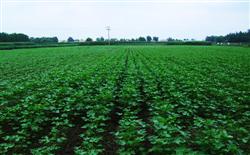
What are the key points for cotton management in July? A must-read for cotton farmers
July is the month when cotton grows fastest and puts on the most growth; it is also a month of dramatic weather changes, frequent disasters, and severe outbreaks of pests and diseases. Most cotton fields enter the flowering stage in early July, and by the end of July, 90% of the cotton plant's vegetative and reproductive organs have already formed; the cotton root network is also established in July, forming a peak period of absorption for mineral nutrients and water.
-

How to carry out good field management when growing peanuts?
Field management for peanut cultivation
-
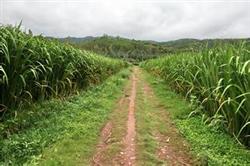
Detailed Explanation of Key Overwintering Management Techniques for Wild Rice Stem
Wild rice stem (Zizania latifolia) is a warmth-loving plant that reproduces asexually through tillering and division. Its optimum growth temperature is 10-25°C, and it is not tolerant of cold or of high-temperature drought. The frost-free period in cultivation areas must be more than 150 days. After frost, the wild rice stem leaves wither and die, and during dormancy it can withstand low temperatures of -10°C. In northern China, where the frost-free period is short, single-harvest wild rice stem is mainly planted. Single-harvest wild rice stem is suitable...
-
Cotton field management measures for the next stage: how Xiantao does it
(1) The mid-season boll survey results are: the city's specialized cooperative cotton planting area is 10438 ten-thousand mu, with an average density of 1640 plants per mu, plant height 134.9 cm, 19.7 fruiting branches, and per plant there are already 15.25 mature bolls, 18.03 small bolls, 2.4 flowers, 27.56 buds, 11.81 shed, with a shedding rate of 17.66% (total fruiting nodes 66.85)...
-
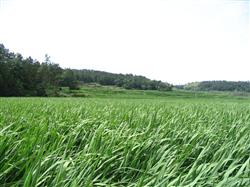
How to grow double-cropping water bamboo? A detailed explanation of planting techniques and management points
Its main cultivation techniques are as follows: 1. Select good varieties. The double-cropping wheat variety we chose is Suozi Kuan. Based on many years of introduction, comparison and observation, the Suozi Mei variety is a late-maturing variety among spring Mei and an early-maturing variety among autumn Meng. This variety has thick fleshy stems, is white and smooth, and the single weight of shelled water bamboo is 110-180g, while the single weight of peeled water bamboo...
-
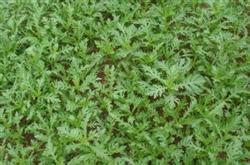
Field management measures and technical key points for garland chrysanthemum
When thinning is done well, garland chrysanthemum not only yields more, but also does not bend, giving good quality. Besides selecting and keeping seedlings of uniform growth, attention should also be paid to suitable thinning timing. If thinning is done too early, it easily wastes a second round of work, because seeds sown into the ground do not all grow at the same time; some seedlings have already emerged, while others...
-
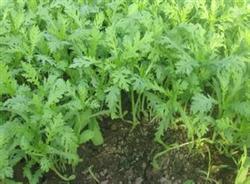
How to Grow Crown Daisy? Master the Cultivation Techniques and Management Methods in One Article
I. Site Selection and Land Preparation Crown daisy cultivation is best suited to sandy loam soil, and convenient irrigation conditions are required. After selecting the site, plow the soil and apply high-quality farmyard manure, applying more than 1000 kg per 0.1 hectare, along with 25 kg of diammonium phosphate as base fertilizer. Make flat beds 1.2-1.4 m wide and 10-20 m long, ready for sowing. II. Sowing and Seedling Raising...
-
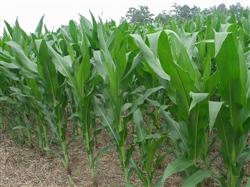
What are the key points for field management in the late stage of spring corn?
1. Choose good varieties. Choosing good varieties is the key to achieving a corn harvest; be sure to choose varieties introduced by formal agricultural technology departments, or varieties that have been approved by the provincial seed approval committee. In 2006, what we introduced was "Changxin No. 1," introduced from elsewhere by Danleng County Changxin Seed Co., Ltd. Per mu...
条件筛选