-
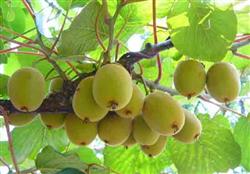
Winter Pest and Disease Control Methods for Kiwifruit Orchards
As the cultivated area and fruiting area of kiwifruit continue to expand, the occurrence and damage of pests and diseases are becoming increasingly serious. Winter pest and disease control in kiwifruit orchards can achieve twice the result with half the effort in promoting tree vigor transformation, pest and disease control in spring and summer, and the healthy growth of kiwifruit trees. According to surveys conducted by our station in recent years, the main diseases found so far...
-
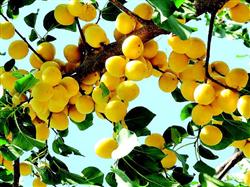
Key Technical Measures for Renovating Low-Yield Apricot Orchards
I. Characteristics of Low-Yield Orchards Low-yield orchards include low-yield young orchards and low-yield old orchards. An apricot orchard whose yield is lower than the average yield of the region for consecutive years, or lower than that of similar surrounding orchards, is considered a low-yield orchard. 1. Young orchards in full fruit stage show weak tree vigor, small and slow-expanding canopies, low branching of extension shoots, and fine and weak fruiting branches...
-
A Complete Guide to Fertilization Techniques and Key Points for Chestnut Orchards
Chestnut blight, also known as chestnut canker, trunk blight, or chestnut bark disease, is a major disease of chestnut trees. It mainly affects the trunk and main branches, often causing the trunk and main branches to rot until the entire tree dies. The chestnut blight pathogen mainly overwinters in diseased branches as mycelium, pycnidia, and perithecia, while conidia and ascosp...
-
Key Technical Points for Spring Irrigation and Moisture Conservation in Chestnut Orchards
Chestnut (Castanea mollissima) is a deciduous tree and one of the woody grain tree species, with a long lifespan, known as the "iron-stemmed crop." The chestnut fruit is nutritious and delicious, and can serve as a substitute for grain; all parts of the chestnut tree can be used medicinally, and tannin extract can also be obtained from the bark, branches and leaves, and the pith of the wood, while the leaves can also be used to raise camphor silkworms and oak silkworms. Chestnut wood is hard, with straight grain, moisture-resistant and rot-resistant...
-
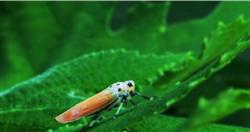
What is sooty mold disease in mango orchards?
The mango leafhopper, also called the leafhopper, damages flower spikes and young fruit, causing flower and fruit drop, poor harvest or even total crop failure, and induces severe sooty mold. It also damages young buds, tender shoots and leaves, causing bud and leaf deformity. It usually occurs more frequently during the flowering period, and high humidity and a dense canopy make this pest more likely. In Hainan it often...
-
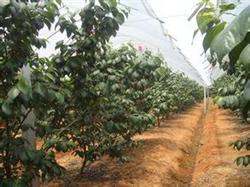
What are the key points of soil management measures in cherry orchards
Although large cherries have a well-developed root system, they have no taproot, only a large number of fibrous roots and hair roots distributed horizontally at about 20-30 cm underground, so the timing and method of fertilization must be well understood. Large cherries are best fertilized 3-4 times a year. The first fertilization should be completed within 10 days after the fruit is finished. 40 days after the fruit is finished...
-
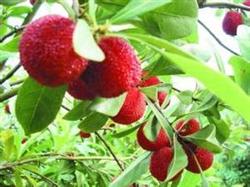
How to manage soil and fertilizer in bayberry orchards scientifically? Key points explained in detail
The yield of bayberry depends mainly on the vigor of the plant's growth and the size of the canopy. Therefore, orchard management should be strengthened, with water and fertilizer management as the main focus. 1. Mounding soil around the base: Bayberry planted on hillsides often suffers from soil erosion, exposing the root mass at the tree base and affecting tree vigor. Therefore, by digging trenches on the inner slope and promptly...
-
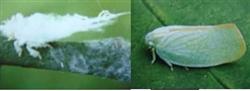
How to control the white moth planthopper and the mealybug in longan orchards
Both the white moth planthopper and the mealybug belong to the order Homoptera, the former to the family Flatidae and the latter to the family Pseudococcidae, and they mainly damage fruit trees such as citrus, longan, lychee and mango. In the past, the populations of these pests were often naturally controlled by large numbers of natural enemies and rarely reached the level of economic loss. In recent years, because some longan orchards in our region have been extensively managed, ...
-
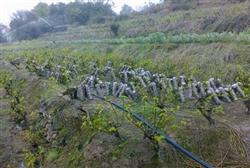
Key Technical Points for Interplanting Black Wood Ear Mushrooms in Orchards
Interplanting black wood ear mushrooms in trenches between orchard rows yields fairly considerable returns. The main cultivation methods are as follows: 1. Stock culture substrate formula: sawdust 78%, rice bran (or wheat bran) 5%, corncob 15%, gypsum powder 1%, sucrose 1%. Weigh each ingredient according to the above proportions. First dissolve the sucrose in water, then stir the sawdust, rice bran and gypsum powder...
-
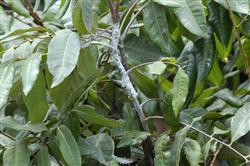
Control Methods for the White Moth Wax Cicada and the Citrus Mealybug in Longan Orchards
How to control the white moth wax cicada and the citrus mealybug in longan orchards? Please provide control methods. The white moth wax cicada and the citrus mealybug both belong to the order Homoptera, the former to the family Flatidae and the latter to the family Pseudococcidae, and they mainly damage fruit trees such as citrus, longan, lychee and mango. In the past, the population of these pests was often naturally controlled by large numbers of natural enemies and rarely reached...
条件筛选