-

Technical key points for converting young Scots pine (Pinus sylvestris var. mongolica) stands into Korean pine (Pinus koraiensis) nut orchards
In recent years, the establishment of Korean pine dual-purpose nut and timber forests and Korean pine nut orchards has developed rapidly in Heilongjiang and Jilin provinces of China. In some places, developing Korean pine nut orchards has become a path to prosperity, and relatively large-scale Korean pine nut orchards have been established one after another. However, due to deviations in people's understanding, the selection of superior scions for grafting to establish orchards has been neglected, and the scions selected are rarely improved varieties that have undergone identification. Establishing Korean pine nut orchards without such selection cannot guarantee the yield and quality of seeds and nuts, let alone early fruiting, high yield, and stable yield. Practice has proven that using young Scots pine
-
How to control the citrus black scale in orange orchards? The pure yellow aphelinid wasp comes to the rescue
[Morphological characteristics] Female wasp body length 0.92-1.18 mm, yellow, without color spots. The posterior margin of the scutellum has dark brown stripes. The base of the forewing has short black stripes; the ventral side of the antennal scape is dark brown, and the remaining segments are deep fuscous. Legs yellow. Compound eyes with fine hairs. Thoracic hairs thick and black; the scutellum bears 4 hairs; the forewing is 2.25 times as long as wide; the ovipositor is 1.9-2.01 times the length of the middle tibia. Male wasp body length 0.71-0.92 mm; the forewing is wider than that of the female, 2.2-2.33 times as long as wide. Important differences from Aphytis chrysomphali: the pure yellow aphelinid wasp of the citrus black scale is a bisexual species, and the propodeum is shorter, 0.75-0.8 times the length of the scutellum. The fan-shaped projections are large and elongated. Strongly overlapping; the thorax and venter of the mature pupa are dark brown, with only the abdominal tip lighter in color. Aphytis chrysomphali is a unisexual species, with males rarely seen in nature; the propodeum is longer, equal to or slightly longer than the scutellum. The posterior margin is broadly arched; the fan-shaped projections are small, rounded, and not overlapping. The mature pupa is yellow, with only a single black longitudinal line on the mesothoracic ventrite.
-
Technical Key Points and Implementation Methods for the Improvement of Abandoned Jujube Orchards
1 Breaking the Hardpan, Deep Plowing, Clearing Weeds and Removing Suckers Deep plowing can clear weeds, remove excess root suckers, and increase the soil's permeability and capacity to retain water and dissolve fertilizers. It can also turn pest eggs and larvae up to the surface to be dried out by the sun or picked out and killed. Deep plowing should be carried out when the soil is suitable for cultivation; if too dry or too wet, clods easily form and the structure is destroyed. Deep plowing should also be adjusted in depth according to position: the area far from the canopy should be deeper, reaching about 20 cm; the area near the canopy should be shallower, about 10 cm. This avoids excessive root damage that would affect tree vigor. Deep plowing creates favorable conditions for root regrowth; because the jujube tree has well-developed horizontal roots with strong outward extension and regeneration capacity, damaging part of the root system will also stimulate the sprouting of more horizontal roots.
-
Key Technical Points for Late-Stage Management of Mature Prickly Ash Orchards
I. Strengthen management during the flowering and fruiting stages. (1) Boron spraying at flowering: During the full-bloom stage of prickly ash, spray 1-2 times with a 0.3% borax solution, which can noticeably increase the fruit-setting rate. (2) Use of prickly ash reddening agent: Applying a reddening agent can promote coloring of prickly ash and increase yield. 7-10 days before harvesting prickly ash, spray the trees 1-2 times with a 200-fold dilution of the reddening agent, so that the ripening period of prickly ash becomes relatively more concentrated, picking efficiency increases by an average of more than 2 times, the peel is bright in color, the peel yield rate increases by 3.3%, and the yield per plant increases by 23%. (3) Timely
-
How to use a backpack air-assisted sprayer: save chemicals and labor when spraying orchards
The backpack air-assisted sprayer is a great helper for spraying in orchards and greenhouses. This article introduces the working principle, key points for purchase, correct operation methods and daily maintenance tips of air-assisted sprayers, helping growers save chemicals and labor and improve pest and disease control results.
-
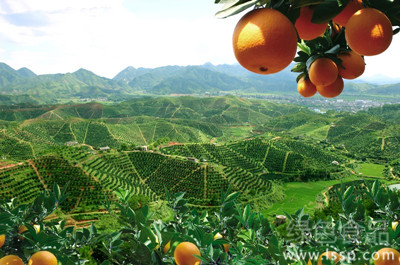
Effective management techniques for promoting growth in orchards in Sichuan in autumn
Effective management techniques for promoting growth in orchards in Sichuan in autumn
-
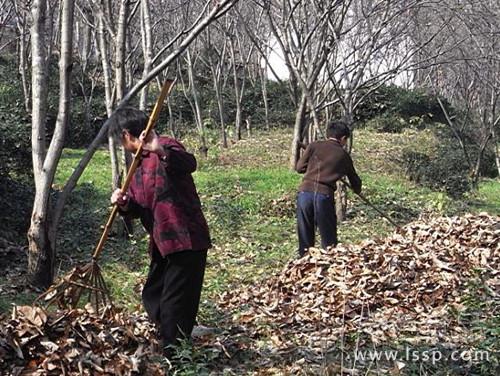
Five key points for winter management of chestnut orchards: clean the orchard, deep plough, fertilize, prune, and control pests
Cleaning the orchard, deep ploughing, fertilizing, pruning, and pest control: key points for winter management of chestnut orchards
-
Identification of Fertilizer Damage Symptoms in Citrus Orchards and Detailed Prevention Measures
From early May to the end of June is the critical period for citrus from flower drop to fruit stabilization. In citrus production, this period is usually called the young fruit stage. During this time, citrus will go through two important physiological fruit drop stages: the first physiological fruit drop and the second physiological fruit drop. The quality of cultivation and management during this period often directly affects the yield and fruit appearance of that year...
-
Detailed Explanation of Key Technical Points for Renovating Low-Yield Pomegranate Orchards
I. Strengthen soil, fertilizer and water management. In summer, dig over the tree basin, rake it level, then cover the tree basin with a 20 cm thick layer of grass or wheat straw, press a small amount of soil on top, and turn it under on the spot in early spring of the following year. From after harvest to early winter, apply base fertilizer by the trench method, with trenches 30-35 cm deep, applying 3000 kg of high-quality farmyard manure, 3 kg of superphosphate, and ternary compound...
-
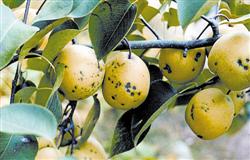
Key Points and Technical Details for Spring Management of Pear Orchards
In mid-May, some fruit growers in Xinji, Shenzhou and other places found that after spraying pear trees with pesticides, the young fruit of some pear varieties developed black spots, affecting fruit quality. In order to investigate the causes of the black spots, on May 22, Ni Qunzhou of the Shijiazhuang Fruit Tree Research Institute of the Provincial Academy of Agriculture and Forestry Sciences, Liu Pingjun of the Jinzhou Forestry Bureau, and Xie Zhuang Technicians of Zhaoxian County...
条件筛选