-

Why interplanting dry Pinellia ternata in fruit orchards is highly profitable
Dry Pinellia ternata is best suited for interplanting in fruit orchards, because it prefers shaded environments. During hot seasons with direct sunlight, the plants are prone to lodging (seedlings turn yellow, wither and shrink), causing tuber growth to stop. In the hot summer, the lush foliage of fruit orchards serves as a natural protective umbrella that provides shade during the vigorous growth period of dry Pinellia ternata, offering favorable conditions for normal tuber growth. Interplanting dry Pinellia ternata in each mu of fruit orchard can yield about 120 kg of dried product, and its cultivation benefit increases by 3-5 times compared with interplanting conventional crops. 1. Sowing. Spring March-May
-
Key Points of Water Management Techniques in Schisandra chinensis Orchards
1. Irrigation The root system of Schisandra chinensis is relatively shallow, and drought has a considerable impact on its growth, flowering, and fruiting. In Northeast China, spring rainfall is scarce, making drought conditions likely and highly unfavorable to the early growth of Schisandra chinensis. If irrigation can be carried out promptly throughout the year according to climate changes and the plant's water requirements, it will have an extremely significant effect on improving the yield and quality of Schisandra chinensis. Schisandra chinensis is most sensitive to water during the bud break stage, the rapid shoot growth stage, and the rapid berry enlargement stage. Water shortage in the early growth period can cause uneven bud break, short and small shoots and leaves
-
Detailed Explanation of Key Techniques for Intercropping Pinellia ternata (Ban Xia) in Fruit Orchards
Encouraged by the national preferential policy of returning farmland to forest, the production area of fruit tree orchards in rural areas has increased noticeably over the past two to three years. At present, most orchards have grown into shady groves, and because of insufficient light between tree rows, intercropping conventional crops such as peanuts, soybeans, rapeseed, wheat, and corn results in poor growth, low yields, and poor returns. How to use the open spaces between orchard rows to increase intercropping returns is the issue of greatest concern to many farmers today. In practice, it has been found that intercropping the medicinal herb Pinellia ternata (Ban Xia) in fruit orchards can significantly increase economic income
-
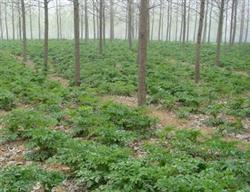
Can dry Pinellia ternata be intercropped in fruit orchards?
Can Pinellia ternata be intercropped in fruit orchards? Please give an introduction. Pinellia ternata is best suited for intercropping in fruit orchards, because it prefers shaded environments. During hot seasons, when exposed to direct sunlight, the plants are prone to lodging (seedlings turn yellow and wither), causing the tubers to stop growing. In the hot summer, the dense foliage of fruit orchards serves as a natural...
条件筛选