How to manage soil and fertilizer in bayberry orchards scientifically? Key points explained in detail
The yield of bayberry depends mainly on the vigor of the plant's growth and the size of the canopy. Therefore, orchard management should be strengthened, with water and fertilizer management as the main focus. 1. Mounding soil around the base: Bayberry planted on hillsides often suffers from soil erosion, exposing the root mass at the tree base and affecting tree vigor. Therefore, by digging trenches on the inner slope and promptly...
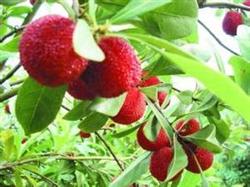
The yield of bayberry depends mainly on the vigor of the plant's growth and the size of the canopy. Therefore, orchard management should be strengthened, with water and fertilizer management as the main focus.
1. Mounding soil around the base: Bayberry planted on hillsides often suffers from soil erosion, exposing the root mass at the tree base and affecting tree vigor. Therefore, by digging trenches on the inner slope and promptly mounding soil around the tree base, you can not only retain water and accumulate soil to prevent drought, but also help prevent rain erosion, conserve soil and fertilizer, and reduce soil erosion. This is the primary measure for promoting bayberry growth.
1.1 Mounding method: Mounding depends on the size of the plant, generally about 1 m in length and width. First use grass sods to form the mound ring, then dig a small pit trench outside the drip line of the canopy, and fill the soil into the mound ring. The amount of soil added depends on the size of the plant, and the thickness generally should not exceed 7 cm to prevent root rot.
1.2 Mounding timing: For young trees, twice a year, once during the bayberry harvest season and once around August; for mature fruiting trees, once a year, after fruit harvest.
2. Rational fertilization: Bayberry roots have mycorrhizae and can fix nitrogen, so they generally do not need large amounts of nitrogen fertilizer, but need potassium and phosphorus fertilizer, especially potassium fertilizer. Therefore, farmers in the main producing areas all use plant ash and burnt soil, which contain more potassium, as the main fertilizer for bayberry. Practice has shown that if plant ash or burnt soil is applied regularly, it can not only ensure dark green leaves, but also promote plant growth, make shoots and buds plump, lead to early fruiting and high yield, and improve fruit quality. Excessive application of nitrogen fertilizer alone will lead to excessive vegetative growth and reduced yield, and an excessive amount can cause plant death.
2.1 Fertilization amount: Taking a 10-year-old fruiting tree as an example, use 10-12 kg of plant ash or 50 kg of burnt soil per tree, plus half a load of barnyard manure. Increase or decrease according to the size of the fruit tree.
2.2 Fertilization timing: Generally, fertilize twice a year, in February to March and in July to August after fruit harvest.