What are the key points of soil management measures in cherry orchards
Although large cherries have a well-developed root system, they have no taproot, only a large number of fibrous roots and hair roots distributed horizontally at about 20-30 cm underground, so the timing and method of fertilization must be well understood. Large cherries are best fertilized 3-4 times a year. The first fertilization should be completed within 10 days after the fruit is finished. 40 days after the fruit is finished...
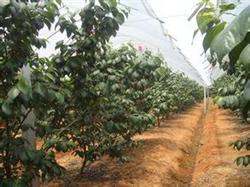 Cherry trees are shallow-rooted fruit trees, not drought-tolerant, not waterlogging-tolerant, and not wind-resistant; therefore, cherry trees have relatively high requirements for soil management.
Ridge cultivation: Planting large cherry trees on ridges with drainage furrows between ridges is one of the most effective measures to prevent waterlogging and drought; generally the ridge width is 150-200 cm and the ridge height is 20-25 cm, connected with the drainage branch ditches and main drainage ditches at the outer edge of the orchard, so as to facilitate the timely removal of standing water in the field.
Mounding soil around the trunk: Cherry roots are relatively shallow. After planting, mounding a soil pile of about 30 cm at the base of the trunk can enhance the stability of the tree, increase the absorption area of the root system, and at the same time help resist drought and preserve soil moisture; mounding is generally carried out in early spring, and in autumn the soil pile is opened again, and diseases should be treated promptly if found; the top of the soil pile must closely meet the trunk to prevent rainwater from flowing down along the trunk and causing waterlogging.
Deep plowing and hole expansion: Starting in the autumn of the 1st-2nd year after planting, deep plowing and hole expansion should begin to facilitate root system expansion; deep plowing and hole expansion can be carried out in all four seasons, but the best time is each autumn (September-October); because at this time the air temperature and soil temperature are relatively high, broken roots heal easily, and the number of new roots in the second spring is the greatest, which can enhance nutrient absorption; combined with hole expansion, basal fertilizer can be applied in autumn. If the orchard soil is clay, in addition to applying more crop straw and livestock manure, sandy soil should also be mixed in to improve soil aeration.
Methods of hole expansion and deep plowing: In the first few years after young trees are planted, starting from the edge of the planting hole, expand outward every year or every other year, digging a ring-shaped ditch about 50 cm wide and 60 cm deep, filling it with soil and farmyard manure, and gradually expanding until the deep plowing ditches between two trees connect; orchard hole expansion should be combined with autumn basal fertilizer application, mixing farmyard manure with ditch soil or sandy soil used for soil improvement and then filling it into the ditch, then watering thoroughly; when expanding holes, do not damage too many coarse roots; when the soil is poor and thin, apply more livestock manure or crop straw to increase the soil organic matter content; in about 2-4 years, the whole orchard should be hole-expanded once.
Intertillage and soil loosening: Usually carried out after irrigation and rainfall; after each irrigation, intertillage and soil loosening should be done. On the one hand, it can conserve water and prevent soil compaction; on the other hand, it can eliminate weeds; after entering the rainy season, rainfall occurs more frequently and weeds grow faster, so hoeing should be done appropriately several more times, with a depth of about 5 cm, to prevent damage to coarse roots.
Orchard intercropping: During the young tree period, economic crops can be appropriately intercropped between rows; suitable intercropping crops should be short in plant height, short in growth period, low in water and nutrient absorption, with a large demand for fertilizer and water at a time different from that of the fruit trees, relatively shallow in root system, with fewer pests and diseases, and with no pests and diseases in common with cherries, or they must not be intermediate hosts of the main pests and diseases of cherries; beans, melons and vegetables, medicinal plants, green manure, etc. are best, and wheat, corn, sweet potato, etc. are not suitable for intercropping; when intercropping, leave enough tree disk (tree disk) space, and the intercropping time depends on planting density and tree growth conditions, with the principle of not affecting tree growth, generally 1-2 years.
Soil turning and digging: Soil turning and digging should preferably be carried out after autumn basal fertilizer application or combined with autumn basal fertilizer application; turning and digging to a depth of about 15 cm is appropriate, and the area around the trunk should be dug more shallowly to avoid damaging large roots; combined with leveling the ground, make the ground within the tree canopy slightly higher to prevent waterlogging in the rainy season from damaging the roots.
Orchard grass growing: When the orchard is not covered and no economic crops are intercropped, orchard grass growing can be carried out, which saves labor and time, increases soil organic matter content, prevents soil erosion, regulates ground temperature, and reduces freezing injury and sunscald; shallow-rooted, low-growing grasses of the Poaceae or Fabaceae families or green manure are best, such as clover, alfalfa, etc.; during the annual grass growing season, pay attention to applying additional chemical fertilizer to prevent the grass from competing with large cherry trees for nutrients; in summer, when the grass grows to 20-30 cm high, mow it promptly, and remove tall-stemmed grasses between rows.
Maintaining terraces: For large cherry orchards on hilly terraces, generally once a year in autumn and spring, terrace maintenance is carried out in combination with orchard digging, and it can also be done in the rainy season; repair the field ridges and reinforce the soil embankments with soil; clear away silt, broken grass, rotten leaves, etc. from bamboo-node ditches, silt settling pits, and water storage ponds, and turn these sediments onto the ground surface.
Plastic film mulching: Choose different types of plastic film according to different purposes; for example, colorless transparent film has the best effect on preserving soil moisture and increasing temperature, black film has a relatively good effect on preserving moisture, maintaining temperature, and controlling weeds, and silver reflective film has the effect of heat insulation and strong sunlight reflection; it should be covered just before the fruit begins to color, so as to increase the light intensity inside the tree canopy and improve fruit quality.
When mulching with plastic film, note: ① After watering, wait until the water in the ground has seeped down and intertillage and soil loosening have been done before covering with plastic film; otherwise, because the soil moisture content is too high, after film covering the water is not easy to dissipate, soil air permeability decreases, and root rot may be caused; ② The plastic film mulching strip must not be too wide. Generally, for young trees cover only 60-80 cm wide, and for large trees the maximum coverage area reaches about 70%; ③ For young trees, remove the film in June or cover the film with grass to prevent high ground temperature; ④ After rainfall, pay attention to opening holes for drainage.
Orchard grass mulching: Grass can be spread before the rainy season arrives; rain can fix the grass in place, and at the same time rainwater can promote the decomposition of the mulched grass; spread the grass evenly under the tree canopy, leaving a 20 cm ventilation hole at the root crown area; the mulching thickness is generally 20 cm, and the amount of grass needed is generally 2000-3000 kg per mu; if the grass source is insufficient, grass can mainly be spread over the tree disk (tree disk); after mulching, press on a small amount of sparse soil on top to prevent the wind from blowing the grass away; orchards with grass mulching should strengthen the control of underground rodent damage, pay attention to fire prevention in winter, and open water channels in the rainy season to facilitate drainage; tree disk (tree disk) mulching is most suitable for mountain orchards, and flatland orchards with heavy clay soil and waterlogged lowlands are not recommended for grass mulching, because after mulching it is easy for water to accumulate and cause waterlogging damage; when controlling insects and spraying pesticides, also take the mulch into account to eliminate pests lurking in the grass.