Key Technical Measures for Renovating Low-Yield Apricot Orchards
I. Characteristics of Low-Yield Orchards Low-yield orchards include low-yield young orchards and low-yield old orchards. An apricot orchard whose yield is lower than the average yield of the region for consecutive years, or lower than that of similar surrounding orchards, is considered a low-yield orchard. 1. Young orchards in full fruit stage show weak tree vigor, small and slow-expanding canopies, low branching of extension shoots, and fine and weak fruiting branches...
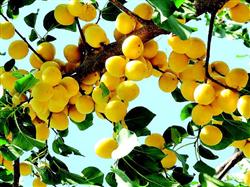
I. Characteristics of Low-Yield Orchards Low-yield orchards include low-yield young orchards and low-yield old orchards. An apricot orchard whose yield is lower than the average yield of the region for consecutive years, or lower than that of similar surrounding orchards, is considered a low-yield orchard. 1. Young orchards in full fruit stage show weak tree vigor, small and slow-expanding canopies, low branching of extension shoots, and fine and weak fruiting branches. 2. Young trees grow vigorously, but the tree structure is unreasonable, the proportions of various types of branches are unbalanced, the scaffold branches on the trunk are upright and strong, while fruiting branches and lateral branches are few, fine and weak; although they bloom abundantly every year, they bear little fruit. 3. Old orchards have weak tree vigor, with almost no vegetative shoots or extension shoots; the main branches in the middle and lower parts of the canopy are bare, and the vast majority of fruiting branches are on the periphery and top of the canopy; flower buds on fruiting branches are dense, the proportion of imperfect flowers is large, dead and old branches are numerous and drooping, and pests and diseases are very serious.
II. Steps and Methods for Renovating Low-Yield Orchards
1. Improving environmental conditions, restoring tree vigor, and promoting the renewal of old trees are the basic measures for increasing yield. (1) Deep plowing to expand the tree and applying sufficient base fertilizer In September??November, after autumn fruit harvest, dig trenches around the canopy or between rows, with a depth of 60??80cm and an appropriate width; keep topsoil and subsoil separate. When backfilling, apply 50??100kg of farmyard manure per tree; where fertilizer sources are lacking, a certain amount of decomposed straw, weeds, or fallen leaves can be added, then backfill with topsoil and compact it, which can improve soil fertility, structure, and permeability. When digging trenches, be careful not to damage large roots. (2) Irrigation and moisture conservation Where conditions permit, irrigate at least 2 times before flowering and before winter. When irrigation conditions are unavailable, covering the tree with grass, straw, or plastic film can also conserve moisture and inhibit weed growth. Organic materials such as straw used for mulching, after decomposing for 1??2 years, can be buried underground together with deep plowing, increasing soil organic matter content. After irrigation or rain, carry out intertillage and weeding to loosen the soil surface; the suitable depth of intertillage is 10cm. In mountainous areas, after the spring thaw, shallow plowing and shallow harrowing between plants and rows can increase ground temperature and conserve moisture, promoting root activity; green manure can also be planted between rows. (3) Rational fertilization Base fertilizer can be applied together with deep plowing. For topdressing during the growing period, pre-flowering fertilizer should mainly be quick-acting nitrogen fertilizer; post-flowering fertilizer should mainly be nitrogen mixed with a small amount of phosphorus and potassium fertilizer; fruit-promoting fertilizer should mainly be quick-acting potassium fertilizer, and topdressing about 15 days before fruit harvest gives good results; post-harvest fertilizer should mainly be quick-acting phosphorus and potassium, combined with a small amount of nitrogen, to ensure branch maturity and later flower bud differentiation. (4) Eliminating pests and diseases Low-yield orchards are extensively managed, old trees have weak vigor, and pests and diseases are serious. Common ones include red-necked longhorn beetle, apricot globose scale, tent caterpillar, phalera flavescens, and leaf roller moths. Active and effective control measures should be taken according to the types of pests and diseases and their occurrence patterns.
2. Rational pruning and rejuvenation renewal (1) Light renewal Remove 1/3??1/2 of the 3??4-year-old scaffold branches in the upper part of the canopy, and at the same time prune the remaining branches, thin out dead branches and weak flower branches, and cut back some fruiting branches. (2) Heavy renewal For apricot orchards with good management conditions, vigorous tree vigor, and sturdy trees about 30 years old, all scaffold branches and fruiting branches can be heavily cut back at one time to stimulate new shoots; combined with summer pruning, a new canopy can be formed, with relatively good results.
3. Replacing with improved varieties Poor varieties are one of the main reasons for low yield in apricot trees. For younger trees, high-yield and high-quality varieties suitable for local growth can be selected, and on the scaffold branches in the middle and upper part of the canopy, a one-time multi-leader top grafting technique can be used to replace the variety. Old trees need to be combined with rejuvenation renewal, and top grafting should be carried out on relatively vigorous, thick, strong branches.
4. Bee release and artificial pollination during flowering period Release bees in the orchard during the flowering period (honeybees or horned mason bees), with 1 box per mu; if mason bees are used, 50??100 bees per mu is appropriate. Artificial pollination can also be used; in addition to manual point pollination, a sprayer can be used to spray flowers for pollination during full bloom, which can promote pollination and fertilization and increase the fruit-setting rate.