-
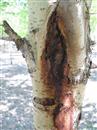
A Detailed Guide to Identifying and Managing Poplar Canker Disease
The typical symptoms of poplar canker disease fall into two types: the canker type and the dieback type. In the early stage of the canker type, brown circular or oval, water-soaked or blister-like lesions appear on the bark of the affected trunk; pressing them by hand causes liquid to ooze out, and after the blisters rupture, a liquid with a distiller's grains odor flows out. The diseased area then shrinks and collapses into a canker lesion, and the cortex at the lesion turns brown...
-
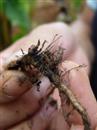
Detailed Guide to Identifying Symptoms of Banana Root Nematode Disease and Control Methods
What is banana root nematode disease and how is it controlled? Please provide an introduction. The introduction to banana root nematode disease and control methods is as follows: (1) Symptoms. Root nematodes infect the roots of banana. Affected large roots appear short and swollen, with cracking, and galls sometimes form on small roots. Sometimes they are destroyed before developing into large roots; when swollen, cutting the tissue open reveals brown dotted substances. Because of nematode damage, the roots become infected by pathogenic bacteria, causing root rot and leaving few effective roots. Above ground, the main symptoms are stunted plants, yellow leaves or clustered leaves, loose bunches, loss of green at leaf margins, many dead leaves, and wavy, crinkled leaves. In plants that have emerged from the bud, old leaves look scorched, withering from the leaf margin to the midrib. In severe cases, the fruit bunch cannot bend down normally, and the fruit is thin, small, shriveled and hard; sometimes the symptoms resemble bunchy top disease, except that the petiole has no "green veins".
-
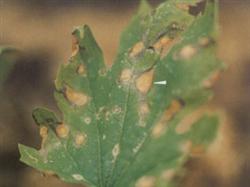
How to identify and control bitter melon anthracnose?
Diseased leaves and diseased melons What is bitter melon anthracnose, and how should it be controlled? Please provide an introduction to the control methods. Bitter melon anthracnose is an important disease of bitter melon, occurring fairly commonly and causing severe damage. The occurrence and control of bitter melon anthracnose are briefly introduced as follows: The leaves, stems and melon fruits of bitter melon can all be affected. The main symptom is that brown semicircular or circular lesions appear on the leaf edges...
-
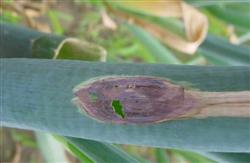
How to identify and control purple blotch of onion?
What is purple blotch of onion? How to control it? Please guide on purple blotch of onion: 1. Symptoms Purple blotch mainly affects onions and Welsh onions, and also infects and damages garlic and Chinese chives. On onions it mainly damages leaves, flower stalks and bulbs. The lesions first appear starting from the leaf tip, or form at wounds caused by thrips. Initially...
-
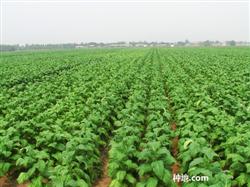
Is your tobacco suffering from pesticide damage? Teach you a quick way to identify it
What should you pay attention to when growing tobacco? Tobacco plants are tall with dense leaves and have a high water requirement during their growth period. However, too much or too little water is harmful to growth. Hunan has abundant rainfall, but it is unevenly distributed. During the rosette to rapid growth stage, tobacco leaves have a high water requirement, but rainfall during this period tends to be excessive, and flash floods often occur. Therefore, ...
-
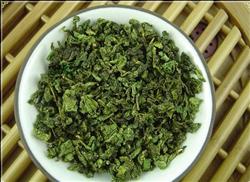
How to Identify Tea? Master These Methods to Easily Tell Good from Bad
How should tea be identified? An introduction. Tea comes in many categories, mainly divided into 6 major types: black, green, yellow, white, dark and oolong. After consumers choose the type of tea they want, they should pay attention to identifying the quality of the tea. This can be done by examining the shape of the tea leaves, the color, the aroma of the dry tea and other aspects. If conditions allow, it can also be done by brewing, ...
-
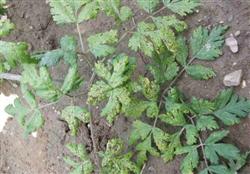
How to identify and control brown spot disease of Angelica sinensis?
What is brown spot disease of Angelica sinensis? How to control it? Please provide guidance. The pathogen of brown spot disease of Angelica sinensis is a fungus of the genus Septoria in the subphylum Deuteromycotina. The pycnidia are round, and the conidia are filiform to needle-shaped, colorless and transparent, straight or slightly curved, mostly with slightly pointed tips, with 1-3 septa. 1. Damage symptoms: it damages the leaves. At...
-
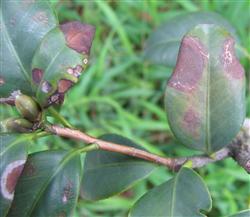
Detailed Guide to Identifying and Controlling Common Camellia Diseases
What diseases of camellias need to be controlled? How should they be controlled? Please give an introduction. The diseases that camellias need to be controlled include: anthracnose. [Cause and symptoms] This disease is caused by the fungus Colletotrichum gloeosporioides infecting camellia leaves. This is the main disease of camellias, with an incidence rate of 33%. Symptoms mostly appear on the leaf margins, leaf tips, and both sides of the veins....
-

What to Do When Garlic Bulbs Split Apart? Identifying the Cause and Taking Timely Action Is Key
What should you do when your garlic bulbs split apart? What causes it? We'd also like experienced gardeners to share their insights. In a normal garlic bulb, the tips of the several cloves all press tightly against the central axis of the bulb. If the clove tips open outward, the cloves separate, and the outer skin splits open, this condition is called "split-head garlic," and it reduces the commercial value. Therefore, Zhongdiwang has compiled the causes of garlic bulbs splitting apart...
-
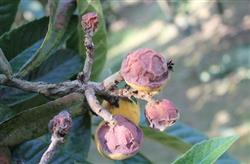
How do you identify and control common pests and diseases of the loquat tree?
What pests and diseases affect loquat trees? How should they be controlled? Experienced gardeners, please help explain. Loquat tastes sweet and is highly nutritious, containing various fruit sugars, glucose, potassium, phosphorus, iron, calcium, and vitamins A, B, C, and more. Its carotene content ranks third among all fruits. Moreover, loquat leaves are also a kind of traditional Chinese medicine...
条件筛选