Detailed Guide to Identifying and Controlling Common Camellia Diseases
What diseases of camellias need to be controlled? How should they be controlled? Please give an introduction. The diseases that camellias need to be controlled include: anthracnose. [Cause and symptoms] This disease is caused by the fungus Colletotrichum gloeosporioides infecting camellia leaves. This is the main disease of camellias, with an incidence rate of 33%. Symptoms mostly appear on the leaf margins, leaf tips, and both sides of the veins....
 What diseases of camellias need to be controlled? How should they be controlled? Please give an introduction.
The diseases that camellias need to be controlled include:
Anthracnose
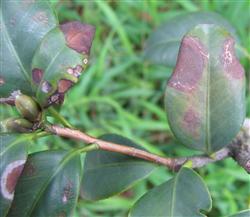
[Cause and symptoms] This disease is caused by the fungus Colletotrichum gloeosporioides infecting camellia leaves. This is the main disease of camellias, with an incidence rate of 33%. Symptoms mostly appear on the leaf margins, leaf tips, and both sides of the veins. Initially, dark green spots appear, which then gradually expand into irregular large patches, changing in color from brown to black. In severe cases, they can spread across the entire leaf, causing massive leaf drop.
[Disease pattern] The occurrence of this disease is closely related to temperature and humidity. The optimal temperature for disease development is generally 25-28°C. When the temperature is suitable and humidity increases, especially during continuous rainfall, the spread and development of the disease are promoted. The disease generally begins in April, peaks in June-July, and tends to stop after September.
[Control methods] 1. Thoroughly remove diseased leaves. 2. Prune diseased and dead branches in winter. 3. Before the annual disease period, spray 1% Bordeaux mixture once every half month. 4. Spray a 600-fold dilution of chlorothalonil aqueous solution once a week for 3-4 consecutive applications. 5. Strengthen cultivation management with scientific weeding and fertilization. In spring, increase the application of phosphorus and potassium fertilizers, and spray a 0.15% potassium dihydrogen phosphate aqueous solution before the leaves unfold.
This disease is the most severe and can cause all leaves to drop, leading to death. In my own experience, for potted plants at home during the hot summer season, especially for flowering trees like camellias that lose water rapidly, the greater concern is high temperature and dryness. Be sure to water thoroughly (but not to the point of waterlogging) and spray water on the leaves to cool them down, which can prevent the occurrence of this disease.
Algal leaf spot
[Cause and symptoms] This disease is caused by parasitic rust algae. Lesions can appear on both sides of the leaves, but mainly on the upper surface. Initially, they appear as pinhead-sized grayish-green small round spots, which then gradually expand outward in a radial pattern, forming nearly circular or irregular lesions. The lesions are distinctly raised, with fine striped felt-like material on the surface. In the later stage, the lesion color changes from grayish-green to dark brown. Because the pathogen covers the leaf surface, it affects photosynthesis, thereby weakening the growth of the camellia plant.
[Disease pattern] The parasitic rust algae overwinters as filamentous vegetative bodies in the host tissue. Under humid conditions, it produces swimming spores, which infect new plants and cause disease. This pathogen is a very weak parasite. Under conditions of high temperature and high humidity, camellias growing poorly due to poor ventilation and light transmission are most severely affected by this disease.
[Control methods] 1. Strengthen cultivation management with rational fertilization and timely pruning. Avoid excessive shading of camellias, ensure ventilation and light penetration, and improve camellia resistance. 2. Spray with a 0.2%-0.5% copper sulfate solution for control.
Twig blight
[Cause and symptoms] A disease caused by pathogenic fungi infecting young or old camellia branches. Affected branches become necrotic, leaves change from green to pale yellow, gradually dry up and drop from the top downward, and finally the entire shoot tip dries up and dies.
[Disease pattern] The occurrence of this disease is as follows: as spring temperatures rise, the spore masses of the pathogen overwintering on diseased dead trees gradually mature and drift with the wind onto nearby camellia branches. They invade the plant through new buds, wounds on young twigs, leaf scars, and grafting or pruning wounds, causing damage and multiplying in large numbers.
[Control methods] 1. Prune diseased and dead branches in winter and burn them in a centralized manner. 2. Remove useless adventitious buds and weak thin branches to reduce sites for pathogen attachment. 3. Isolate and maintain diseased plants. 4. Before the camellia plant buds and sprouts, spray with fungicides such as thiophanate-methyl, thiram, and chlorothalonil, especially ensuring that the wounded parts of the branches are sprayed. 5. Apply more phosphorus and potassium fertilizers and less nitrogen fertilizer.
However, at this time of year, it is not the season when this disease is most prevalent.
Red leaf spot (red leaf blight)
[Cause and symptoms] This disease is caused by fungi of the genus Phyllosticta sp. in the class Deuteromycetes. Lesions mostly occur on relatively young leaves, initially as pale brown circular water-soaked small spots. Later, the lesions spread, and the color changes from pale brown to brownish-brown. Sometimes multiple lesions merge into larger patches or spread across the entire leaf, causing extensive scorching and shedding of leaves.
[Disease pattern] This pathogen survives on the diseased remains of the host, and spores are spread by wind, rain, and flowing water. The disease generally begins in May, peaks from July to September, and affected leaves drop in large numbers.
[Control methods] 1. In the early stage of the disease, spray with a 1,000-1,500-fold dilution of 70% thiophanate-methyl, or a 400-fold dilution of 25% folpet for control. 2. During drought, increase water spraying on the leaves to suppress the occurrence of the disease.
One of my own camellia plants had this disease some time ago. Due to consecutive days of high temperature, severe water evaporation, and the potting soil being on the dry side, the disease occurred. I immediately watered more once a day, especially making sure to water thoroughly in the evening, and sprayed a large amount of water on the leaves. I did not use any medication, and as a result, the symptoms immediately lessened, and it recovered in less than a week. These past few days it has put out quite a few new leaves again, looking much better for the time being.
Sooty mold
[Cause and symptoms] This disease is induced by damage from aphids and scale insects. The surface of affected camellia leaves is covered with a layer of fungal mycelium, forming a black "sooty" layer that hinders normal photosynthesis and gas exchange in the camellia plant, severely restricting its growth and development.
[Disease pattern] The pathogen of this disease prefers low temperature and high humidity environmental conditions, among which a temperature of 10-20°C is most suitable for the growth of the pathogen. Within this temperature range, the higher the humidity, the faster the pathogen reproduces and spreads. Camellia groves with long-term overgrown weeds, high humidity, and poor light are conducive to the occurrence and spread of the disease.
[Control methods] The pests that induce sooty mold are mainly aphids and scale insects. Therefore, to control this disease, you must first control aphids and scale insects on camellias. Once the pests are eliminated, the disease naturally disappears.
For the above several diseases, you can judge by the symptoms yourself and take measures accordingly.
Click to get more camellia cultivation techniques
Click to get more flower and tree cultivation techniques