A Detailed Guide to Identifying and Managing Poplar Canker Disease
The typical symptoms of poplar canker disease fall into two types: the canker type and the dieback type. In the early stage of the canker type, brown circular or oval, water-soaked or blister-like lesions appear on the bark of the affected trunk; pressing them by hand causes liquid to ooze out, and after the blisters rupture, a liquid with a distiller's grains odor flows out. The diseased area then shrinks and collapses into a canker lesion, and the cortex at the lesion turns brown...
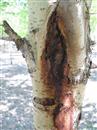
The typical symptoms of poplar canker disease fall into two types: the canker type and the dieback type. In the early stage of the canker type, brown circular or oval, water-soaked or blister-like lesions appear on the bark of the affected trunk; pressing them by hand causes liquid to ooze out, and after the blisters rupture, a liquid with a distiller's grains odor flows out. The diseased area then shrinks and collapses into a canker lesion, and the cortex at the lesion turns brown and rots. The dieback type mostly occurs on young trees in the year they are planted; inconspicuous small spots appear on the main trunk and are reddish brown, and after 2 to 3 days the lesions rapidly girdle the main trunk, causing the upper shoot tip to die.
The poplar canker pathogen usually exists in a latent state within the bark. Poplar seedlings can already be infected in the nursery, and poplar seedlings transplanted in spring have the highest disease incidence. The disease begins each year in mid-April, and late May to June is the peak period of incidence.
Control methods: carry out thorough quarantine at the place of origin and in transport for poplar seedlings in affected areas, and avoid planting infected seedlings. At the same time, strengthen fertilizer and water management, improve tree vigor, avoid wounds, and enhance tree resistance. For trees that have already become diseased, pesticides such as thiophanate-methyl and carbendazim can be used for trunk painting, trunk injection, root drenching, or canopy spraying. Severely diseased trees should be cut back at the trunk, and diseased branches and dead trees should be removed.