How to identify and control bitter melon anthracnose?
Diseased leaves and diseased melons What is bitter melon anthracnose, and how should it be controlled? Please provide an introduction to the control methods. Bitter melon anthracnose is an important disease of bitter melon, occurring fairly commonly and causing severe damage. The occurrence and control of bitter melon anthracnose are briefly introduced as follows: The leaves, stems and melon fruits of bitter melon can all be affected. The main symptom is that brown semicircular or circular lesions appear on the leaf edges...
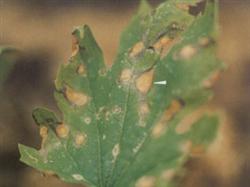 Diseased leaves
Diseased melons
What is bitter melon anthracnose, and how should it be controlled? Please provide an introduction to the control methods
Bitter melon anthracnose is an important disease of bitter melon, occurring fairly commonly and causing severe damage. The occurrence and control of bitter melon anthracnose are briefly introduced as follows:
The leaves, stems and melon fruits of bitter melon can all be affected. The main symptom is the appearance of brown semicircular or circular lesions on the leaf edges, slightly sunken. Leaf lesions are nearly circular and vary in size; initially water-soaked, they quickly dry out and turn reddish-brown, with a yellow halo at the edges, and several small lesions often join together to form irregular large lesions. Black dots are arranged in rings on the lesions; when moist, pink sticky material forms on the lesions, and under dry conditions the lesions often crack and perforate. Stem lesions are grayish-white to dark brown, slightly sunken; all surfaces can be affected, and the lesions are nearly circular, initially pale yellowish-brown, later turning reddish-brown to brown, slightly sunken. When humidity is high, pale pink sticky fluid oozes from the lesions; when the disease is severe, the affected area expands and can cause the melon fruits to rot.
Control measures for bitter melon: First, use disease-free seeds; second, seed disinfection: soak the seeds in 55°C warm water for 15-20 minutes, or soak them in a 150-fold dilution of 40% formaldehyde for 1 hour; or soak them in a 500-fold dilution of 50% amobam for 1 hour, then remove them, rinse them clean with water and sow. Third, raise seedlings in disease-free soil and cultivate on high ridges covered with plastic film. Fourth, strengthen field management. Promptly remove diseased melons and diseased leaves at the early stage to reduce effective sources of inoculum in the field. Fifth, chemical control. Carry out chemical control promptly at the early stage of the disease; the chemicals can be a 500-fold dilution of 50% carbendazim wettable powder; or an 800-fold dilution of 80% thiram wettable powder, sprayed once a week for 3 to 4 consecutive times, giving good control results.
Click to get more bitter melon cultivation techniques
Click to get more vegetable cultivation techniques