-
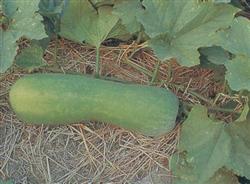
Key Points of Fertilization Management Techniques for High-Quality and High-Yield Winter Melon
In Dongxia Town, Qingzhou City, the overwintering summer melons grown by vegetable farmers are mainly cultivated in a creeping manner, similar to watermelon cultivation, which results in the melon body touching the ground, uneven light exposure on the top and bottom of the winter melon, the part touching the ground turning white or developing yellow-brown necrotic spots, or even rotting, while the upper part of the melon exposed to direct sunlight is prone to sunburn...
-
How to plant winter melon seeds for high yield? All the technical points are here
1. Sow at the right time and grow strong seedlings. The sowing period should be arranged according to local climate conditions, aiming to set fruit before the rainy season arrives. Generally sow from late February to mid-March, use a heat-retaining seedbed and nutritional pots for seedling raising, with about 100g of seed per mu. Before sowing, soak the seeds in hot water at about 70 degrees, let them cool naturally, soak for 1...
-
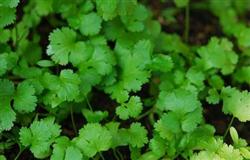
How to manage large-leaf cilantro for high yields? Detailed technical points
Select improved varieties: Japanese large-leaf cilantro, Thai large-leaf cilantro, Beijing large-leaf cilantro. Sow at the right time. For greenhouse cultivation, sow in staggered succession throughout the year, and in summer cover briefly with a shade net. For open-field cultivation, start sowing in late April and harvest in late June. For sowing in May, sow sweet corn as double plants in advance on both sides of the bed at 1 m intervals...
-
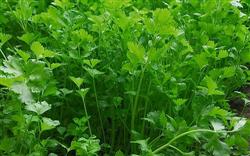
High-Yield Cultivation Techniques for Cilantro with Shade Net Covering in Summer and Autumn
Cilantro prefers a cool climate and cannot tolerate high temperatures; it stops growing when the temperature exceeds 30°C. How can cilantro be grown well in summer? Summers are hot, so when growing cilantro, the first step is to choose good varieties, and heat-tolerant varieties that bolt late and grow quickly should be selected as much as possible, such as Beijing cilantro and North China Large Leaf. When planting, you also need to...
-
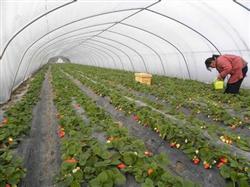
Simple, Easy-to-Learn and Efficient High-Yield Cultivation Techniques for Greenhouse Strawberries
In recent years, with the rapid development of strawberry cultivation, many farmers have not fully mastered strawberry cultivation and management techniques. Continuous cropping and repeated cropping often cause a series of problems such as major outbreaks of certain strawberry diseases, worsening soil-borne diseases, nutrient imbalance and physiological disorders; in strawberry production, slow development after seedling transplanting or excessive seedling growth...
-
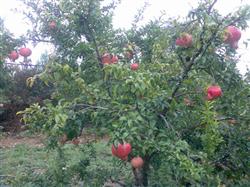
Detailed Explanation of Key Technical Points for Renovating Low-Yield Pomegranate Orchards
I. Strengthen soil, fertilizer and water management. In summer, dig over the tree basin, rake it level, then cover the tree basin with a 20 cm thick layer of grass or wheat straw, press a small amount of soil on top, and turn it under on the spot in early spring of the following year. From after harvest to early winter, apply base fertilizer by the trench method, with trenches 30-35 cm deep, applying 3000 kg of high-quality farmyard manure, 3 kg of superphosphate, and ternary compound...
-
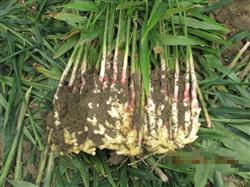
Detailed Explanation of High-Yield Cultivation Techniques for Ginger and Taro
Ginger and taro are traditional specialty agricultural products of our city. In recent years, with the adjustment of crop planting structure and the pull of market prices, the planting area of ginger and taro in our city has also continued to expand, and they have become one of the main specialty agricultural products of our city. At present, ginger and taro in our city have been fully sown and are in the early growth stage...
-
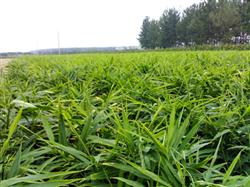
Detailed Explanation of Key Technical Points for High-Yield Ginger Cultivation and Management
I. Pre-planting Preparation 1. Fine land preparation and adequate base fertilizer. It is advisable to choose plots with fertile soil, good irrigation conditions, and no ginger blast disease, and to avoid continuous cropping as much as possible. On the basis of winter plowing, carry out fine land preparation early in spring, so that the soil has no visible or hidden clods and is loose on top and firm below. Increase the application of organic fertilizer, using high-quality chicken manure, disease-free residue-free barnyard manure, cake fertilizer, and plant ash in combination, and broadcast 4 cubic meters of high-quality decomposed chicken manure or 5,000-10,000 kg of high-quality barnyard manure as base fertilizer in combination with land preparation. In high-fertility and high-water plots, open furrows at a row spacing of 60-65 cm for sowing, and apply 100 kg of soybean cake, 50 kg of ternary compound fertilizer, 50 kg of potassium sulfate, 2 kg of zinc fertilizer, and 1 kg of boron fertilizer in the furrows as seed fertilizer.
-
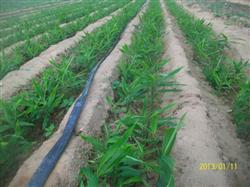
How to skillfully apply nitrogen fertilizer to ginger for high quality and high yield
Reasonably applying suitable varieties of nitrogen fertilizer according to the fertilizer uptake pattern of ginger can greatly increase yield, improve quality, increase the starch, protein and volatile oil content of commercial ginger, and reduce the soluble sugar and cellulose content. Among the four nitrogen fertilizers ammonium bicarbonate, sodium nitrate, urea and ammonium nitrate, sodium nitrate has the...
-
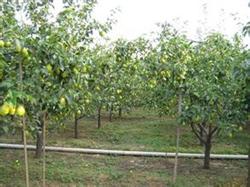
Key Technical Points for High-Yield Fertilization Management of Pear Trees
About one month before pear fruit ripens, the growth rate accelerates, which is called the fruit expansion stage. Topdressing at this time can improve photosynthetic efficiency, promote nutrient accumulation, and benefit fruit expansion and flower bud differentiation. This topdressing can both increase the yield of the current year and lay the foundation for fruiting in the following year. 525 Shandong Fruit Network The fertilization period is generally at the fruit...
条件筛选