-
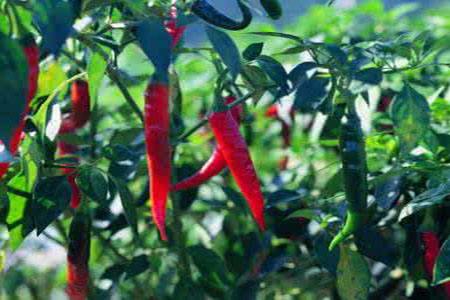
How many jin per mu can the yield of chili peppers generally reach?
What is the general yield of chili peppers per mu in jin
-

Detailed Explanation of Key Techniques for High-Yield Cultivation of Bambusa multiplex
Bambusa multiplex shoots have excellent quality, being fragrant and crisp, and are rich in various amino acids needed by the human body, making them a natural green food. The bamboo culm wall is thick and elastic, making it a good material for scaffolding, papermaking, furniture making, and processing other items, with high comprehensive utilization benefits. It is an excellent scattered bamboo species dual-purpose for both shoots and timber. However, existing Bambusa multiplex forests have long been in a wild and unmanaged state, with only harvesting and no cultivation, only collecting and no management, resulting in unreasonable bamboo forest structure, low yield, and low economic benefits. Therefore, its high-yield cultivation techniques are briefly introduced for reference.1
-
Water-saving and high-yielding rice, with a jasmine fragrance in every bowl
Wearing shoes to go into the paddy field, water-saving rice cultivation has become a reality. After the team led by researcher Luo Lijun at the Shanghai Agrobiological Gene Center created the world's first hybrid upland rice "Huhan 1A", it has achieved another breakthrough. Hanyou 3 has been approved, and under the condition of saving 50% of water resources, its actual yield per mu exceeded 500 kg for the first time. Shanghai's hybrid upland rice research took scientists 10 years, screened 10,000 resources, and selected more than 100 relatively drought-tolerant resources as parents for breeding. "The characteristic of hybrid rice is high yield, just like
-
Detailed Explanation of Key Techniques for High-Yield Cultivation of Edible Lilies
Lilies are a cross-year crop. After planting in the autumn of the first year, they do not break through the soil and emerge until the spring of the following year, spending nearly half a year developing and growing underground in the meantime. To achieve high yields, the following technical steps should be emphasized in cultivation: 1. Select suitable improved varieties. Lilies are divided into two main categories, edible and medicinal, with more than 10 varieties in total. Among edible lilies, Longya lily (Dragon Tooth lily) has the best quality. This variety has large, plump scales shaped like dragon teeth, is pure white and tender, has no bitter taste, commands a high price, and sells well. Medicinal lilies generally have short, small scales, low yields, and a strongly bitter taste, and can only be used as medicine.
-
How to increase the yield of lilies? Master these four methods
Lily, also known as white lily and lily garlic, has effects such as moistening the lungs and stopping cough, clearing the heart, and calming the mind. It is an economic crop suitable for both medicinal and vegetable use, with relatively high planting benefits. Under conventional cultivation and management, farmers can adopt the following four methods to achieve the goal of increasing yield and efficiency. 1. Chemical regulation method. When lily seedlings grow to 18-20 cm tall, carry out chemical regulation: per mu use the plant growth regulator paclobutrazol 20-50 grams, or mepiquat chloride 10-15 grams, or daminozide (B9) 5-10 grams, or mepiquat chloride 5-10 grams, choose any one, add water 50-
-
High-yield cultivation techniques for bulb propagation of Asiatic lilies in semi-arid regions
1. Site selection, land preparation and fertilization. According to the growth characteristics of Asiatic lilies, choose level, fertile sandy loam with deep soil layers, high organic matter content, loose texture, and good drainage and irrigation for cultivation. After selection, plow deeply to 30 cm, harrow fine and level. In combination with deep plowing, apply 6 cubic meters of fully decomposed high-quality farm manure per 667 sq m. For each cubic meter of manure, use 50% carbendazim and 50% phoxim at 1000 g each, add 50 kg of water, stir evenly and pile up to ferment. Then make beds running north-south, 1-2 m wide and 10-15 m long, with bed ridges
-
Detailed Explanation of High-Quality and High-Yield Cultivation Techniques for Lilies
I. Site Selection and Seed Selection Lilies should not be continuously cropped; paddy fields under rice-dryland rotation need 1 rotation every 2-3 years, while dryland cropping needs 1 rotation every 4-5 years, and the previous crop should not be allium crops. For the soil, choose a sandy loam with higher terrain, deep soil layer, fertile soil, convenient drainage and drought resistance, and loose texture. For the seed bulbs, choose bulbs that are round and upright, with white scales that are tightly closed, and with only one scale bud and no pests or diseases. II. Rational Planting One month before planting, plow and sun the soil; the land should be deeply plowed to achieve level, clean, fine, and crumbly conditions,
-
For lilies to achieve high yields, doing the three changes well is key
1. Change from using inferior seed bulbs to high-quality seed bulbs. Choose excellent varieties such as Longya lily as seed. Lilies need to be purchased from other regions as seed, which is an important measure for lily rejuvenation. Choosing seed bulbs with little or no virus is the key to high-yield lily cultivation. At the same time, pay attention to choosing thick, plump, and large seed bulbs. Use bulbs propagated from scales or directly use the daughter bulbs from the mother bulb as seed. 2. Change from sowing too early to sowing at the right time. Sowing too early makes it easy to encounter drought, often causing seed rot, and the high temperatures in early August are not conducive to breaking the dormancy period of lily seed bulbs. After sowing, roots often do not grow, and it is prone to
-
Key Points of High-Yield Cultivation and Improved Techniques for Lilies
Lily yields are unstable; some plots suffer "disaster," with early seedling death and almost no yield. To achieve high yields in lily cultivation, focus on the "four improvements." 1. Replace poor-quality seed bulbs with high-quality seed bulbs. For lilies, select superior varieties such as Longya lily (Lilium brownii var. viridulum) as seed. The typical features of Longya lily are: bulbs tightly clasped, scales thick and fleshy at the lower part, pointed and curved at the upper part, shaped like dragon claws, colored like ivory. Leaves on the aerial stem are large and sparse, with no bulbils and no daughter bulbs. Lilies need to be purchased from other locations for seed, which is an important measure for rejuvenation. But pay attention to purchasing from sea
-
Detailed Explanation of Key Techniques for High-Yield Lily Cultivation
Lily is a yin-nourishing medicinal herb. It clears heat and benefits lung qi, and has the effects of moistening the lungs, stopping cough, calming the heart, and soothing the mind. It is a commonly used precious traditional Chinese medicine. It is mainly produced in Jiangsu, Zhejiang, Hunan, Guangdong, Sichuan, Shaanxi, and other places. In most areas of our province, the soil plow layer is shallow. If lily is cultivated by conventional methods, the average single bulb weighs about 200 grams, and the yield per mu is less than 600 kg. If new high-yield cultivation techniques are adopted to create a deep and fertile plow layer, making the soil loose, air-permeable, and well-drained, it will be beneficial to the growth of the lower roots of lily and the rapid expansion of the bulb.
条件筛选