Key Points of Fertilization Management Techniques for High-Quality and High-Yield Winter Melon
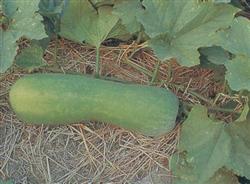
In Dongxia Town, Qingzhou City, the overwintering summer melons grown by vegetable farmers are mainly cultivated in a creeping manner, similar to watermelon cultivation, which results in the melon body touching the ground, uneven light exposure on the top and bottom of the winter melon, the part touching the ground turning white or developing yellow-brown necrotic spots, or even rotting, while the upper part of the melon exposed to direct sunlight is prone to sunburn...
 1. Base fertilizer
Winter melon has a long growth period and a long peak period of nutrient absorption, so great importance should be attached to the application of base fertilizer. The base fertilizer should mainly be high-quality organic fertilizer with comprehensive nutrients and a long nutrient supply duration. For winter melon base fertilizer, generally more than 5000 kg of high-quality barnyard manure is applied per mu. The base fertilizer can be applied in combination with land preparation, and in some places it is applied in furrows after the beds are prepared. The amount of base fertilizer applied to winter melon is large, especially organic fertilizer, which must be fully decomposed to avoid damaging the root system. In northern regions, winter melon fields should be plowed and sun-dried before winter, and after applying organic fertilizer, the land should be re-plowed and harrowed evenly. If cake fertilizer or oil residue is used as base fertilizer, it should be fully fermented and then applied in holes before transplanting, or mixed with superphosphate and applied in holes. In areas with less base fertilizer, it can be applied in furrows or holes; if there is more base fertilizer, it is best to broadcast half and apply the other half in holes.
2. Topdressing
Topdressing is also very important for the growth and yield formation of winter melon. In southern regions, diluted manure water is mostly used for topdressing, while in the north, fully decomposed high-quality stable manure and quick-acting chemical fertilizers are used, with 2 to 3 topdressings throughout the entire growth period. Early topdressing is mainly nitrogen-based, while in the middle and later stages, quick-acting compound fertilizers of nitrogen, phosphorus, and potassium are mainly used. The topdressing timing for winter melon varies depending on the variety and cultivation method. Winter melon is mostly directly seeded; when the base fertilizer is sufficient, the first topdressing does not need to be too early. In southern regions, it is generally carried out after the third true leaf has flattened out, while in northern regions, the first topdressing is mostly carried out at the 5th to 6th true leaf stage. During the vine elongation stage, generally when the vine is about 1 meter and about 2 meters long, one diluted fertilizer application is given each time, with the purpose of promoting stem and vine growth. The fourth topdressing is during the flowering and fruiting stage. This fertilization is very important for the growth of winter melon and is generally carried out after the fruit has set to prevent flower and fruit drop, and at the same time nitrogen, phosphorus, and potassium fertilizers should all be complete. For winter-stored winter melon, especially large-fruited varieties, fertilizer and water supply should be stopped 10 to 15 days before harvest, in order to reduce the water content in the fruit and increase storability. Topdressing for winter melon should follow the principle of less in the early stage and more in the later stage. Generally, before vine elongation, topdressing accounts for about 30%, and during the flowering and fruiting stage it accounts for 70%. Topdressing is best applied in holes or in strips. A total of 45 kg of urea, 50 kg of superphosphate, and 25 kg of potassium sulfate are needed per mu. In areas with the conditions, high-quality organic fertilizer can also be used for topdressing (such as soybean cake, 75 kg per mu, and diluted manure water, 4000 kg).