-
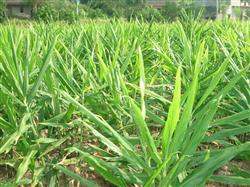
Key Techniques for High-Yield Cultivation of Ginger Intercropped with Watermelon
When planting ginger, apply heavy base fertilizer and increase phosphorus and potassium fertilizer; avoid applying too much nitrogen fertilizer. Apply sufficient base fertilizer, mainly organic fertilizer, with a combination of slow-release and quick-release chemical fertilizers. Base fertilizer generally accounts for 40% of the total fertilizer application. Before sowing, apply 15 kg of imported compound fertilizer plus 50 kg of calcium magnesium phosphate fertilizer per mu as deep-layer base fertilizer. After sowing, use high-quality farmyard manure...
-
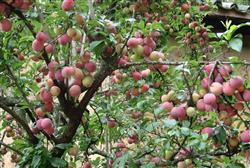
Take good care of management in early summer for plum trees, and only then can the plums be high-quality and high-yield
Although the plum is a fruit tree with good yielding ability and strong disease resistance, due to poor management in early summer, it often shows severe alternate bearing, small fruit, and quality that cannot be guaranteed. Plum trees in full fruit period are mainly borne on short fruit branches and bouquet-like fruit branches. At present, plum fruit is in the fruit expansion stage. In order to enlarge the fruit, ensure uniform fruit size...
-
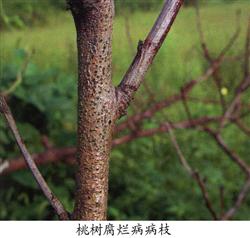
Efficient management techniques for peach trees to help achieve high yields
Peach tree rot, also known as dieback disease, causes branches to wither and die after the tree is affected, forming canker lesions on large branches and the trunk. If not treated in time, it quickly causes the entire tree to die. The main causes of this disease are: frost damage and extensive management; improper fertilization and years with abundant autumn rain, which delay the peach tree's dormancy and reduce the tree's cold resistance. It has...
-
Detailed Explanation of Key Techniques for Increasing Yield by Grafting Multiple Pumpkin Plants Together
If too much nitrogen fertilizer is applied in the early growth stage, the plants tend to grow excessively, causing flower and fruit drop, and it becomes impossible to ensure uniform fruit set and the final product quality. Therefore, the amount of nitrogen fertilizer used should be controlled, and the proportion of phosphorus and potassium fertilizers should be appropriately increased. When needed, chemical treatments can be used, such as selecting Zucchini Fruit Set King 1...
-
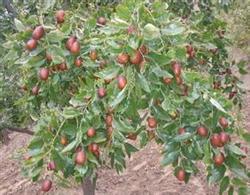
What are the key technical points for skillful fertilization of jujube trees to promote high yields?
Only through scientific and rational fertilization can jujube trees be strengthened, their resistance to pests and diseases improved, quality enhanced, and yields increased. Fertilization of jujube trees is divided into base fertilizer and topdressing. The scientifically appropriate time for applying base fertilizer is from the jujube fruit ripening stage until the soil thaws the following year, while topdressing is carried out in three applications: before bud break, at the early full-bloom stage, and during the rapid fruit swelling stage...
-
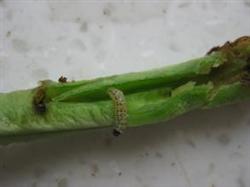
For high yardlong bean yields, preventing the pod borer is key
The adult pod borer moths lay eggs on the tender leaves of the plants. After 5-7 days, the hatched larvae bore into the pods and feed on the beans. Once larvae past the 3rd instar have bored into the pods, spraying pesticides can hardly kill them. Therefore, to control this pest, fertilizer and water management should be strengthened to ensure uniform growth and a relatively concentrated flowering and pod-setting period, so that in the critical period the pest can be...
-
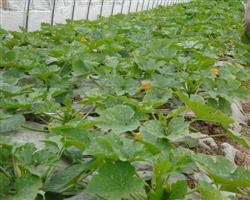
High-Yield Cultivation Techniques for Autumn-Winter Zucchini in Greenhouses
I. Selecting Excellent Varieties First, choose the early-maturing, high-yielding, fast-growing "Zaoqing No. 1" zucchini hybrid, which has trailing-vine characteristics. II. Raising Strong Grafted Seedlings 1. Sowing time. The sowing time for autumn-winter zucchini in greenhouses is generally from early September to mid-September, with a seeding rate of 500 g per mu...
-
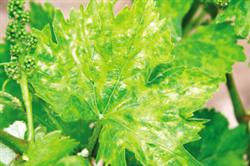
When grape thinning of flowers and fruit is done well, the yield is naturally high
First, pay attention to strengthening the management of fertilizer and water; second, keep the damaged leaves on the plant appropriately for a period of time. It takes about one month for new lateral branches to grow. The leaves of the new lateral branches can replace the diseased leaves in photosynthesis, alleviating the phytotoxicity. After spraying grapes, observe in the orchard at any time, and if abnormal patches and plants are found...
-
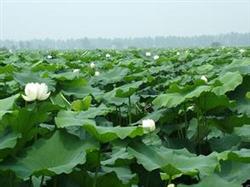
Smart Fertilization for High-Yield Lotus Root: Mastering the Method Is Key
I. Fine Land Preparation and Sufficient Base Fertilizer. Lotus root grows in mud, and it requires soil rich in humus, soft, smooth and loose, with good aeration, which is most favorable for the growth of lotus root and makes it easy to obtain high quality and high yield. Therefore, before planting lotus root, the soil should be deep-plowed, finely prepared, and given sufficient base fertilizer. Generally, at the end of winter when the soil thaws...
-
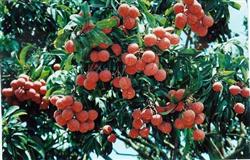
How to Grow Lychee for High Yield? A Detailed Guide to Practical Cultivation Methods
Site selection and planting: For high-yield lychee cultivation, open terrain with loose, fertile soil, a deep soil layer, and a water source on hills or slopes should be chosen, as this is ideal for developing a planting orchard. Lychee mycorrhizae are aerobic, so the soil should be loosened, improved, and made porous and well aerated to promote root development. Soil fertilization should follow the principle of frequent light applications. Spray in a timely manner...
条件筛选