Detailed Explanation of Key Technical Points for Renovating Low-Yield Pomegranate Orchards
I. Strengthen soil, fertilizer and water management. In summer, dig over the tree basin, rake it level, then cover the tree basin with a 20 cm thick layer of grass or wheat straw, press a small amount of soil on top, and turn it under on the spot in early spring of the following year. From after harvest to early winter, apply base fertilizer by the trench method, with trenches 30-35 cm deep, applying 3000 kg of high-quality farmyard manure, 3 kg of superphosphate, and ternary compound...
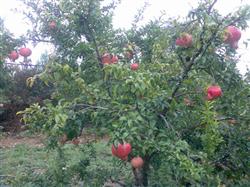
I. Strengthen soil, fertilizer and water management. In summer, dig over the tree basin, rake it level, then cover the tree basin with a 20 cm thick layer of grass or wheat straw, press a small amount of soil on top, and turn it under on the spot in early spring of the following year. From after harvest to early winter, apply base fertilizer by the trench method, with trenches 30-35 cm deep, applying 3000 kg of high-quality farmyard manure, 3 kg of superphosphate, and 2 kg of ternary compound fertilizer per mu. Before flower buds appear, apply 0.5 kg of diammonium phosphate per tree as a top dressing; during the fruit expansion stage, apply 0.5 kg of peanut cake fertilizer, 2 kg of superphosphate, and 2 kg of ternary compound fertilizer per tree. Irrigate once before spring bud break and once after each top dressing.
II. Rational shaping and pruning. The tree form is mostly a clumping natural semicircle; in summer, use methods such as propping and bending branches to open the angle between the main trunk and branches to 60-70 degrees. For water sprouts and auxiliary branches, use branch-twisting to adjust the spatial position of the branches. During the fruit expansion stage, cut out branches that rub against fruit and some leaves close to the fruit. During winter pruning, cut back scaffold branches and large fruiting branch groups to vigorous positions, select and retain vigorous branches to fill gaps, and thin out overly dense branches. In the following spring, promptly remove excess new shoots sprouting from heavy pruning and thin out densely growing branches.
III. Focus on flower and fruit management. At the initial flowering stage, spray a mixture of 0.3% monopotassium phosphate, 300 times urea, and 0.3% borax once every 10 days, for a total of 2-3 sprays. At the flower bud stage, make 2 girdling cuts at 4-10 cm intervals on the middle-lower part of scaffold branches of vigorous trees with few flowers. Promptly thin out incomplete flowers and flower buds; after fruit set, promptly thin out twin fruits, late-season fruits, deformed fruits, and fruits damaged by pests or disease. When fruits are about 2 cm in diameter, spray once with an insecticide and fungicide, then bag with 25 x 20 cm plastic film bags, and remove the bags at harvest.
IV. Integrated pest and disease control. The main pests and diseases include early defoliation disease, black spot, dry rot, woolly apple aphid, hawthorn spider mite, peach fruit borer, crape myrtle scale, and mulberry longhorn beetle. In combination with winter orchard cleaning, use a stiff brush to scrub off scale insects on branches and trunks, and whitewash the trunks; from May to June, try not to spray broad-spectrum insecticides so as to protect and utilize natural enemies; before bud break, spray 5 degrees Baume lime sulfur mixture; before the rainy season arrives, spray 5% beta-cypermethrin emulsifiable concentrate at 2000 times dilution to control leaf-eating pests; after the rainy season, spray 2-3 times at 10-day intervals with 50% carbendazim suspension concentrate at 800 times dilution to control diseases; use the poison stick method to control trunk-boring pests such as the mulberry longhorn beetle.