How to manage Chinese bayberry after planting? These techniques must be mastered
After the Chinese bayberry seedlings are planted, they begin to bear fruit in about 5 years. To achieve the goal of early fruiting, strengthening cultivation and management after planting cannot be neglected. First, inspect the seedlings and straighten them promptly. After the Chinese bayberry seedlings are planted, they must be checked promptly; if missing plants are found, replant immediately so that growth is uniform and consistent; if dry weather occurs after planting, water promptly...
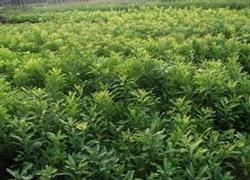
After the Chinese bayberry seedlings are planted, they begin to bear fruit in about 5 years. To achieve the goal of early fruiting, strengthening cultivation and management after planting cannot be neglected. First, inspect the seedlings and straighten them promptly. After the Chinese bayberry seedlings are planted, they must be checked promptly; if missing plants are found, replant immediately so that growth is uniform and consistent; if dry weather occurs after planting, water promptly and earth up appropriately.
Second, after the seedlings are planted, the work of trunk heading must be done well. Leave a height of 35-40 cm above the graft union on the central leader of the seedling, cut off the top shoot to encourage new shoots to sprout from the lower part, and later select and keep 3-4 vigorous new shoots as main branches. If the seedling already has branches and their height above the ground is appropriate, they can be kept as main branches; those too low and close to the ground should be cut off.
Third, do a good job of ground mulching. After the young trees are planted, before the high-temperature and drought period arrives in mid-to-late June, do a good job of drought resistance and seedling protection. If water sources are scarce, shallow plowing can be done around the seedlings and then ground mulching can be carried out. For mulching materials, local materials can generally be used, such as cutting tender brushwood and green grass from the hills and spreading them on a circular disk about 1 m in diameter around the tree trunk, 10-20 cm thick, and pressing them down with clods of soil or stones to prevent them from being blown away by the wind.
Fourth, apply fertilizer reasonably as a top dressing. After the newly planted young Chinese bayberry trees survive, quick-acting fertilizer should be applied promptly to meet the needs of shoot growth and leaf development. Dilute human excrement and urine is preferred as the fertilizer, applying 1-1.5 kg per small tree; urea 0.1 kg mixed with water can also be applied, or applied before light rain or after heavy rain.
Top dressing is best applied 3 times a year, at the time of spring, summer, and autumn shoot sprouting, so that the young Chinese bayberry trees form a canopy capable of bearing fruit as soon as possible. For young trees 1-3 years old, top dressing should mainly be quick-acting nitrogen fertilizer; from the 4th year onward, potassium fertilizer should also be added, generally applying 2-5 kg of plant ash or burnt mud ash per tree, or 0.2 kg of potassium sulfate, to strengthen tree vigor and lay the foundation for bearing fruit.