High-Quality New Pumpkin Varieties and Key Points of Spring Cultivation Techniques
Pumpkin is a nutritious and healthy vegetable, and the Western pumpkin (Cucurbita maxima) introduced from abroad has low fruit water content, high solids, high levels of non-reducing sugars and starch, a starch-to-total-sugar ratio exceeding 1, low crude fiber and high crude protein, so its eating quality and mouthfeel are excellent, and its quality greatly surpasses that of domestic local pumpkins, making it deeply...
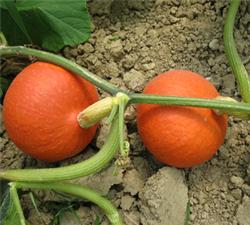 The high-quality pumpkin varieties developed by the Institute of Horticulture, Anhui Academy of Agricultural Sciences, are partly bred by the institute itself and partly introduced from abroad. Their common characteristics are: strong disease resistance, tolerance to low temperature, tolerance to weak light, easy fruit setting, easy cultivation, high yield, and contents of nutrients and health-promoting components such as starch, pectin substances and vitamins far higher than those of ordinary pumpkins, with beautiful appearance, good marketability and excellent flavor and mouthfeel. Some of the main varieties and their cultivation techniques are introduced below.
I. Brief Introduction to the Varieties
1. Ganli Wang: an early-maturing F1 hybrid with strong vigor, thick stems and vines, and dark green leaves. The first female flower is at node 6-8, female flowers can appear continuously, and fruit setting is good. The fruit development period is about 40 days. The average single fruit weight is about 2 kg; the fruit is oblate, the rind is dark green, and the fruits are uniform and consistent with a high marketable rate. The flesh thickness is 3.2 cm, the flesh is dense, high in mealiness, and good in flavor and mouthfeel. It is tolerant to low temperature and weak light, resistant to heat, resistant to viral disease, and widely adaptable. The average yield is about 2000 kg per mu.
2. Hongli Wang: an early-maturing F1 hybrid with relatively strong vigor, thick stems and vines, and green leaves. The first female flower is at node 4-6, female flowers can appear continuously, and fruit setting is good. The fruit development period is 35-40 days. The average single fruit weight is about 1.5 kg; the fruit is oblate, the rind is dark green, and the fruits are uniform and consistent with a high marketable rate. The flesh thickness is 3.0-3.2 cm, the flesh is dense, high in mealiness, and good in flavor and mouthfeel. It is tolerant to low temperature and weak light, resistant to viral disease, and widely adaptable. The average yield is about 1800-2000 kg per mu.
II. Spring Open-Field Cultivation Techniques
1. Sowing and seedling raising: The pumpkin varieties introduced above belong to the Western pumpkin type, and for spring cultivation early sowing is suitable; the sowing date can be calculated according to the planting time. For example, in the region between the Yangtze and Huai rivers, planting can be done in mid-to-late April; counting on a seedling age of 30 days, sowing should be done in mid-to-late March. If a specific marketing time is required, the sowing date can also be calculated according to the marketing period.
Use nutrient pots covered with film for seedling raising. The seedbed soil can be prepared by mixing 2/3 soil and 1/3 decomposed organic fertilizer with 0.3% ternary compound fertilizer. Arrange the nutrient pots in the seedbed tightly and level. One to two days before sowing, water the seedbed soil thoroughly with a 1000-fold solution of 70% thiophanate-methyl prepared with warm water, then cover with film for later use. Before sowing, fully sun-dry the seeds, then soak them in warm water at 55°C, stirring constantly until it cools, then soak for another 4-5 hours; germinate at 28-30°C for about 36 hours, and sow once the seeds show white sprouts. Sow 1 sprouted seed per pot, place the seed flat with the sprout facing down, cover with 1-2 cm of soil, and on top cover with film and straw curtains to maintain certain temperature and humidity. The optimum temperature for emergence is 25-30°C. If the weather is good after sowing, seedlings can emerge in 2-3 days. During the seedling stage, the optimum daytime temperature is 25°C and the nighttime temperature is 15°C; maintain a certain day-night temperature difference to help cultivate strong seedlings. Harden the seedlings about 7 days before planting.
2. Land preparation and fertilization. Pumpkin has a well-developed root system and strong nutrient uptake capacity, so deep plowing is required. The pumpkin field should be a plot with good drainage and irrigation conditions. Plow once 15 days before planting, and uniformly mix in 3000-4000 kg of decomposed organic fertilizer per mu. Make beds at 2.5 m (single row) or 4 m (double row) apart, form planting beds 20-30 cm high, open drainage ditches around the perimeter, and open a fertilization ditch 40 cm from the bed ditch; apply 50 kg of potassium sulfate ternary compound fertilizer and 30 kg of calcium-magnesium phosphate fertilizer per mu, then cover with soil and level the bed surface. Five to seven days before planting, irrigate thoroughly and cover with plastic film to raise the soil temperature.
3. Planting. For open-field cultivation, plant when the seedlings have grown to 2-3 true leaves and there is no danger of frost. The planting density varies with the cultivation method, pruning method and variety. Ganli Wang pumpkin has relatively strong branching ability, and two-vine pruning is mostly used. For single-row planting and ground-creeping cultivation, the plant spacing is 60 cm, with about 550 plants per mu; for double rows facing each other, plant 1 row on each side of the bed surface, with a plant spacing of 70-80 cm and 400-500 plants per mu. For trellis cultivation, the bed width is 2.5 cm, with two rows planted per bed, a plant spacing of 60-70 cm, and 800 plants per mu.
It is advisable to plant on a sunny afternoon. Before planting, water the nutrient-pot seedlings thoroughly to facilitate removing the seedlings from the pots and to prevent the root balls from breaking apart and damaging the roots, which would affect the survival rate; after planting, water once with a rooting water, adding 20% fenvalerate to prevent underground pests.
4. Pruning and fruit setting. Generally, 7-10 days after planting, pinch out the growing tip of the main vine after leaving 4-5 true leaves. When the secondary vines grow to about 30 cm, select and retain 2 vigorous secondary vines and cut off all the others. Arrange the 2 retained secondary vines neatly in the same direction, avoiding crossing and overlapping, with a vine spacing generally kept at about 30 cm, to facilitate full exposure to sunlight. If the vines are relatively long, they can be lifted backward, with part of them coiled around the planting hole, while the tips are still arranged neatly, which helps the female flowers receive sufficient sunlight during the flowering period, promotes female flower enlargement, and at the same time makes it easier to find where the female flowers are borne, facilitating pollination. Before fruit setting, prune and remove side shoots frequently, generally once every 5-7 days, to prevent the branches and leaves from growing too densely and too vigorously. All pruning operations should not be carried out on rainy days or on mornings with heavy dew, to avoid pathogens invading through pruning wounds.
The fruit-setting node is related to plant vigor and variety. Generally, fruit is set at nodes 12-25, and it is suitable to set fruit on the 2nd-3rd female flower on the secondary vines. It is best to have both secondary vines set fruit at the same time, with 2-4 fruits per vine. If the fruit-setting node is too low, deformed fruits and small fruits are easily produced; low-node fruits and deformed fruits should be removed in time, and 3-4 good fruits should be selected and retained per plant. After each vine is properly pollinated, pinch out the growing tip 5-8 nodes after the last fruit-setting node to promote fruit setting, or after fruit setting, pinch out the growing tip when the secondary vine grows to about 30 nodes or has already reached the next ridge, and remove all side branches. If the growth vigor is weak, 1 secondary vine can be left unpinched, or (when pinching the secondary vines) 1-2 tertiary vines can be retained after the fruit-setting node. In the later stage, all old leaves and diseased leaves should be removed to facilitate ventilation and light penetration.
Pumpkin female and male flowers open relatively early; generally, flowering begins at 4 a.m. on sunny days, and fertilization is not easy after 9 a.m., so pollination is best done from 5-8 a.m. In open-field cultivation, on cloudy and rainy days the stigma and pollen are easily exposed to rain. The corolla of the yellow female flowers that will open the next morning can be tied shut or bagged the previous morning, and the male flower buds that will open the next day can be collected and kept well by spraying with water, then pollinated the next morning while protected from rain; after pollination, tie the corolla shut or bag it to improve the effect of artificial pollination.
5. Fertilizer and water management. Because pumpkin has a well-developed root system, strong nutrient uptake capacity and a high fertilizer requirement, fertilizer and water must not be lacking, but the amount of base fertilizer, especially nitrogen fertilizer, applied in the early stage must not be excessive. Otherwise, excessive vegetative growth is likely to occur, affecting fruit setting. Topdressing is carried out in 2 applications. The first is after pruning begins: open a topdressing ditch on the bed surface 50 cm from the planting hole, and apply 10 kg of urea and 15 kg of potassium sulfate ternary compound fertilizer per mu, combined with hilling and intertillage weeding; if there is no rainfall during the vine elongation stage, irrigate once at the same time. The second is after fruit setting, mainly with quick-acting fertilizers, which can be applied with irrigation water, or if the soil moisture is good, can be applied by digging holes in the center of the bed. Apply 15 kg of compound fertilizer per mu. In the later stage, 0.3% urea or potassium dihydrogen phosphate can be sprayed on the leaves to maintain plant vigor until harvest and promote fruit enlargement. In the middle and lower reaches of the Yangtze River, there is generally more rain in spring and summer, so basically no irrigation is needed throughout the period; in rainy seasons, ditches should also be cleared to drain water to avoid disease occurrence. Stop irrigation 15 days before harvest.
6. Pest and disease control. In spring cultivation, the main diseases include viral disease, powdery mildew, Phytophthora blight and downy mildew; the main pests include Aulacophora beetles, aphids and cutworms. The control of viral disease mainly relies on seed disinfection and preventing aphid transmission; after the disease occurs, promptly pull out diseased plants to avoid spread of the disease. Diseases such as powdery mildew are mainly caused by high humidity. Therefore, prevention should be the main approach, combining prevention and control. Generally, high-bed cultivation should be adopted to reduce field humidity, and chemicals such as a 1000-fold solution of 70% thiophanate-methyl and a 700-fold solution of 75% mancozeb should be used alternately, generally sprayed once every 7 days; if rain occurs, promptly respray.
Pests mainly damage pumpkin seedlings. After planting, cover with plastic film in time, and spray with chemicals such as trichlorfon, imidacloprid, and fenvalerate. Generally, during the seedling stage, spray once every 3-5 days.
7. Harvest. For harvesting tender pumpkins, generally 10-15 days after flowering; mature pumpkins are harvested about 40 days after flowering. When Ganli Wang pumpkin is mature, the rind changes from green to black-green, and the fruit stalk cracks and becomes lignified. You can also harvest the first batch of tender pumpkins for early marketing, and harvest the second batch after they mature; stored in a ventilated and dry place, they can be kept for 2-3 months before marketing.