Key Points of Spring Cultivation Techniques for Honey Pumpkin
Honey pumpkin plants grow as vines. A single fruit weighs 2-3 kg, the fruit is about 36 cm long with a transverse diameter of 14.5 cm. The fruit is club-shaped, and when ripe it is orange-yellow with thick, orange-red flesh, fine-textured starch, and a sweet taste and excellent quality. It is early to mid-maturing, and can be harvested 85-90 days after transplanting. Spring planting is from January to March, autumn planting from July to August, with a yield of 2000 kg per mu....
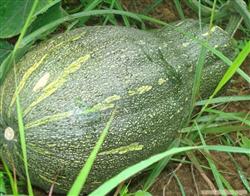
Honey pumpkin plants grow as vines. A single fruit weighs 2-3 kg, the fruit is about 36 cm long with a transverse diameter of 14.5 cm. The fruit is club-shaped, and when ripe it is orange-yellow with thick, orange-red flesh, fine-textured starch, and a sweet taste and excellent quality. It is early to mid-maturing, and can be harvested 85-90 days after transplanting. Spring planting is from January to March, autumn planting from July to August, with a yield of 2000 kg per mu. The following mainly introduces the key technical points for spring cultivation of honey pumpkin.
I. Sowing and Seedling Raising
The spring sowing period in Guangdong is generally arranged from January to March. Honey pumpkin seeds have strong germination ability and generally do not need soaking or sprouting before sowing. For early spring sowing ahead of time, nutrient cups or nutrient pots can be used for cold-protection seedling raising, and transplanting is done after the temperature rises. If sowing is done at the end of February or in March, direct sowing (hole sowing) is generally used, with 2-3 seeds per hole, a row spacing of 2 m, and a plant spacing of 50 cm; after sowing, cover with soil 2-3 cm deep.
II. Field Management
1. Fertilization: Before sowing, deep-plow the soil and apply 2000-3000 kg of pig and cattle manure per mu as base fertilizer. After the plants begin to vine, open a furrow 15-20 cm from the roots for fertilizer application, applying 500-1000 kg of farmyard manure or 15-20 kg of urea per mu, and irrigate after fertilizing. During the flowering and fruiting stage, apply some potassium fertilizer or compound fertilizer as appropriate, and thereafter fertilize according to the growth of the plants.
2. Drainage and irrigation: After sowing honey pumpkin, water thoroughly to facilitate seed germination. From emergence to before transplanting, generally do not water or water only sparingly. After transplanting, the amount of watering should also not be too much during the period from the plants resuming growth to before vining. In addition to timely irrigation after fertilizing, under normal circumstances, water or irrigate based on the weather and plant vigor, following the principle of not watering when the soil is not dry and not watering when the plants are growing vigorously. On rainy days, drainage work must be done properly.
3. Pruning and vine pressing: Pruning and vine pressing are among the technical measures for obtaining early maturity and high yield in honey pumpkin. For pruning pumpkin, the topping method and the side-shoot removal method can be used. The topping method is to remove the terminal bud when the plant has grown 6-8 true leaves, leaving 3-4 secondary vines, and keeping 1-2 fruits on each secondary vine. The side-shoot removal method is to keep only one main vine, remove all secondary and tertiary vines, and begin pressing the vine when it is 40-50 cm long, pressing the vine 3-4 times in total.
4. Hand pollination: After flowering, gently smear pollen onto the stigma of female flowers every day from 8-10 a.m. Each male flower can be used to pollinate 1-2 female flowers.
III. Pest and Disease Control
The main diseases of honey pumpkin are viral disease and powdery mildew. Viral disease is also called mosaic disease. After the plant is infected, the leaves become mosaic-like, wrinkled, and smaller, with dark green tumor-like raised spots appearing, the fruit becomes deformed, and the plant is obviously stunted and dwarfed. A relatively effective measure for controlling viral disease is to control and eliminate aphids. If diseased plants are found, they should be pulled out and burned as early as possible, and lime should be used for disinfection to prevent spread. Powdery mildew mostly occurs in the middle and later stages of growth and can be controlled with triadimefon, carbendazim, colloidal sulfur, and the like.
The main insect pests of honey pumpkin are aphids and Aulacophora beetles, which can be killed by spraying with 40% dimethoate at 600-800 times dilution or 10% imidacloprid wettable powder at 3000-4000 times dilution.