What are the key points of fertilization techniques for spring peanuts?
Calcium can promote pod formation, reduce empty pods and increase the number of filled pods; applying calcareous fertilizer such as lime to acidic soil can also reduce soil acidity and benefit nitrogen fixation by root nodules. Therefore, calcareous fertilizer can improve peanut yield and quality. When peanuts are deficient in calcium, plant growth is slow, roots are thin and seedlings are weak, and the edges and surface of old leaves will show...
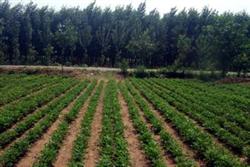 Apply sufficient base fertilizer. The amount of base fertilizer should account for 80%-90% of the total fertilization. Some peanut fields only apply base fertilizer, and can still achieve high yields without topdressing later. For base fertilizer, 1000-3000 kg of high-quality barnyard manure can be applied per mu.
Increase phosphate fertilizer application. Peanuts require more phosphate fertilizer than general crops, and their absorption and utilization rate of phosphate fertilizer is also high. Experiments have shown that applying 10 kg of superphosphate per mu has a significant yield-increasing effect, and the residual effect is also very obvious. When applying phosphate fertilizer on barren land, adding 2.5-5 kg of urea per mu as seed fertilizer can better exert the yield-increasing effect of phosphate fertilizer. However, when applying seed fertilizer, the fertilizer and seeds must be separated to avoid damaging the seeds and affecting their germination and emergence.
Calcium fertilizer. Applying 10 kg of calcium sulfate per mu to peanuts can not only regulate soil pH and improve the nitrogen-fixing ability of rhizobia, but also improve nitrogen nutrition, promote pod development, and reduce empty pods and rotten pods.
Bacterial fertilizer. Artificial inoculation of peanut rhizobia can enable peanuts to form root nodules earlier and more abundantly, improving the nitrogen-fixing ability of peanut plants. The peanut rhizobia inoculant (rhizobia fertilizer) currently promoted in production is generally used at 25 g per mu. When using it, add an appropriate amount of water to make a paste and mix it evenly with the seeds. Note that it should be mixed and sown immediately, protected from sunlight, and also avoid mixing or contact with fungicides.