A Complete Analysis of the Key Points of Spring Peanut Cultivation Techniques
I. Fine land preparation and sufficient base fertilizer. For spring peanuts, choose sandy soil with relatively high soil fertility and convenient drainage and irrigation. Apply 150 dan of high-quality farmyard manure, 100 jin of compound fertilizer, and 2 jin of boron fertilizer per mu. After plowing and harrowing to level, open furrows with a bed width of 5.2 chi and a ditch depth of 0.6 chi, ensuring the three ditches are connected. II. Select...
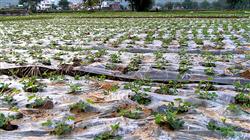
I. Fine land preparation and sufficient base fertilizer
For spring peanuts, choose sandy soil with relatively high soil fertility and convenient drainage and irrigation. Apply 150 dan of high-quality farmyard manure, 100 jin of compound fertilizer, and 2 jin of boron fertilizer per mu. After plowing and harrowing to level, open furrows with a bed width of 5.2 chi and a ditch depth of 0.6 chi, ensuring the three ditches are connected.
II. Select high-yield and stable-yield varieties
It is advisable to choose varieties with strong resistance, a short growth period, suitability for close planting, and high and stable yields, with a single yield of 300-350 kg.
III. Timely dry sowing and rational close planting
Before sowing, treat the seeds. Use 25 grams of ammonium molybdate or 50 grams of peanut rhizobium inoculant per mu to coat the seeds, which can increase yield by 10-15%. The seeds must be coated and sown on the same day.
IV. Optimize formula fertilization
According to the fertilizer requirements of peanuts and the soil texture and soil nutrient content, peanut-specific fertilizer should be applied. Applying fertilizer at the seedling stage and early flowering stage can increase yield by more than 10% compared with conventional fertilizers. Spraying 0.3% borax solution at the peanut fruiting stage and 0.4% potassium dihydrogen phosphate solution at the pod-setting stage can increase yield by 9-13%.
V. Vigorously promote plastic film mulching and chemical weed control to promote early flowering, pegging, and pod setting, improve the full-pod rate, and increase the 100-kernel weight. At the same time, it can shorten the growth period and create favorable conditions for a second high yield. For spring-sown film-mulched peanuts, use 6 kg of film per mu. Before laying the film, use 4 liang of "Lasso" or "Dual" herbicide per mu mixed with 50 kg of water and spray it on the bed surface and edges for weed control. After spraying, cover with plastic film to protect the surface soil layer containing the herbicide.
VI. Strengthen field management and control diseases and insect pests
Timely break the film to expose the seedlings, inspect the seedlings, and replant missing ones. Film-mulched peanuts emerge uniformly 15-18 days after sowing. When the cotyledons are flat and extended, manually break the film in time to prevent high temperatures from burning the seedlings. The holes should be just large enough for the cotyledons to grow out of the ground. For fields with missing seedlings or broken rows, replant in time. Timely carry out intertillage and weeding, and clear the ditches and drain them after rain to maintain soil air permeability, increase soil temperature, help early formation of rhizobia, and promote strong seedlings and early growth. For bacterial wilt affecting peanuts, use 40% carbendazim 500-fold solution or chlorothalonil 600-800-fold solution for control. At the rosette stage, manually remove the main stem, using a sharp blade to cut off the main stem above the two pairs of side vines.