Detailed Explanation of Greenhouse Management Techniques for Sweet Cherry
1. Soil, Fertilizer and Water Management Sweet cherry is a shallow-rooted tree species with vigorous root respiration, so the requirements of water, fertilizer, air and heat needed for root growth should be met as much as possible. Each growing season requires at least 4 to 5 intertillages, with a depth of 5 to 10 cm being appropriate, which both removes weeds and preserves soil moisture, activates the soil and enhances permeability. After harvest, shallow plowing should be carried out...
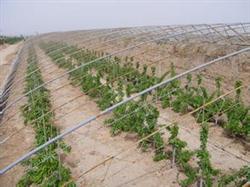
1. Soil, Fertilizer and Water Management
Sweet cherry is a shallow-rooted tree species with vigorous root respiration, so the requirements of water, fertilizer, air and heat needed for root growth should be met as much as possible. Each growing season requires at least 4 to 5 intertillages, with a depth of 5 to 10 cm being appropriate, which both removes weeds and preserves soil moisture, activates the soil and enhances permeability. After harvest, shallow plowing should be carried out to promote root renewal and growth. Base fertilizer should be applied in late summer or early autumn, mainly using organic fertilizers such as chicken manure and pig manure. Before freezing, apply one round of freezing water, and during the fruit expansion stage, apply one thorough watering.
2. Shaping and Pruning Techniques
Pruning can be done through these two methods: 1) Natural open-center form. Trunk height 20 to 40 cm, no central leader, the whole tree has 2 to 4 main branches, with an opening angle of about 40°, each main branch is equipped with 2 to 3 layers of lateral branches, with 30 cm between each layer, and various types of fruiting branch groups on the lateral branches. 2) Natural spindle form. Trunk height 40 to 60 cm, the central leader is equipped with 6 to 10 main branches with single-axis extension, with angles opened to almost horizontal, bearing a large number of fruiting branch groups. When pruning, the head should be dropped and the center opened in time to control tree height. When shaping, leave 50 cm for trunk determination in the year of planting; after trunk determination, select vigorous and well-positioned long shoots as main branches, and bend them to a horizontal angle during the growing season. In the second year's winter pruning, the extension shoot of the central leader is shortened to 40 to 60 cm. During the growing season, open the angle of the main branches, and pinch the vigorous shoots on the back of the main branches. In winter pruning, competing branches and back branches should be removed or shortened, while the remaining slanting branches and moderate branches can be left unpruned or lightly pruned. In the third year, pinch the central leader at 50 cm, continue to open the angle during the growing season, pinch the back branches and vigorous inner-canopy shoots, and cultivate them into fruiting branch groups.
3. Pruning Techniques
1) Growing season pruning. Mainly carried out during the new shoot growth period and after fruit harvest. The former mainly suppresses excessive new shoot growth and promotes branching, and can be done with multiple pinchings. Pruning after fruit harvest mainly thins dense branches, ensures ventilation and light penetration in the tree canopy, balances tree vigor, and promotes flower bud differentiation. Two-year-old branches are shortened at the axillary buds, and after fruiting they are removed from the base. 2) Dormant season pruning. In the young tree stage, appropriate shortening is suitable to promote branching and increase flower-spur fruiting branches and leaf cluster branches. After fruiting, appropriate retraction should be carried out to maintain tree vigor and improve fruiting capacity.
4. Film Covering and Film Removal
The chilling requirement of sweet cherry is generally 1440 h below 7 to 2°C. The film covering time is in mid-to-late December, and film removal is 10 days before fruit harvest. The method is to first uncover the film on both sides, ventilate and acclimate for 2 to 3 days, then uncover most of the film to increase light, promote coloring, and improve the sugar content and quality of the fruit. After fruit harvest, the covering film can be completely removed, and when the temperature drops or it rains, the film can be re-covered.
5. Temperature Regulation
Covering the greenhouse with plastic film can also increase ground temperature by 2 to 3°C. From film covering to before germination, control daytime temperature at 18 to 20°C and nighttime at 2 to 5°C; from germination to flowering stage, daytime at 18 to 20°C and nighttime at 6 to 7°C; during full flowering stage, daytime temperature at 20 to 22°C, and it must absolutely not exceed 25°C; during petal fall stage, daytime at 20 to 22°C and nighttime at 7 to 8°C; during fruit expansion stage, daytime at 22 to 25°C and nighttime at 10 to 12°C; afterward, daytime at 22 to 25°C and nighttime at 12 to 15°C. If high temperatures above 30°C continue for several days, coloring will be poor, flower bud differentiation will be poor, and the next year's yield will be affected.
6. Humidity Regulation
From film covering to before germination, the relative air humidity should be around 80%. If too low, flowering will be uneven and prone to high-temperature damage; if too high, it is unfavorable for pollen and germination and prone to disease. The relative humidity during flowering should be between 40% and 60%; if humidity is low, the stigma is prone to drying, affecting pollination. During fruit expansion stage, humidity should be controlled at 60%. From coloring to maturity stage, humidity should be controlled at around 50%. Soil moisture can be regulated by irrigation. Water demand is relatively high during fruit expansion stage, but small amounts of frequent irrigation are suitable at this time, with 10 to 15 mm per irrigation. Before fruit maturity, the irrigation amount should preferably be 5 to 7 mm.
7. Pest and Disease Control
7.1 Shot Hole Disease
In the early stage, small purplish-brown spots appear on the leaves; later, the diseased spots dry up and fall off, causing holes in the leaves, and in severe cases, early defoliation. Strengthening fertilizer and water management, enhancing tree vigor, improving disease resistance, pruning diseased branches, and removing diseased leaves are the fundamentals of controlling this disease.
7.2 Gummosis
It mainly occurs on branches and trunks, especially severely at the forks. It generally begins after harvest and worsens with increased rainfall. It is often caused by freezing injury, insect damage, and mechanical injury. Therefore, the most important thing in controlling this disease is to protect the tree body well: whitewash the trunk and branches before winter to prevent freezing injury, control trunk-boring pests, and eliminate mechanical injuries. For branches and trunks with gummosis, scrape and treat them promptly and apply a wound dressing to prevent spread.
7.3 Red-necked Longhorn Beetle
This pest is an important pest damaging branches and trunks. Main control methods: 1) Manually capture adults during the adult occurrence period. 2) Before adults emerge and lay eggs, apply whitewash (made of 10 parts quicklime, 1 part sulfur, and 40 parts water) on the main trunk and main lateral branches to prevent egg laying. 3) When scraping the bark, if insect holes are found, use a needle or wire to pierce to death or hook out the larvae damaging the phloem.