Detailed Explanation of Post-Grafting Care Techniques for Cherry Trees
1. Untie promptly. After cherry grafting, if rain or watering occurs, it easily causes gummosis and affects survival. Therefore, do not water within half a month after grafting. After the bud-grafted seedlings survive, untie the binding promptly to prevent rainwater from seeping along the binding material into the bark and causing gummosis. 2. Cut the rootstock at the right time. For bud-grafted seedlings that have already survived, the rootstock should be cut...
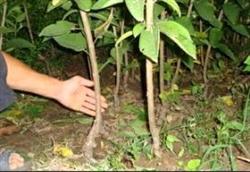
1. Untie promptly. After cherry grafting, if rain or watering occurs, it easily causes gummosis and affects survival. Therefore, do not water within half a month after grafting. After the bud-grafted seedlings survive, untie the binding promptly to prevent rainwater from seeping along the binding material into the bark and causing gummosis.
2. Cut the rootstock at the right time. For bud-grafted seedlings that have already survived, the rootstock should be cut. The suitable time for cutting the rootstock is when the grafted bud turns green but has not yet sprouted. Cutting the rootstock too early easily causes the rootstock to dry out and leads to the death of the grafted bud. Cutting the rootstock means using pruning shears to cut off the rootstock seedling about 1 cm above the grafted bud. When cutting the rootstock, it is best to leave the side with the grafted bud slightly higher and the back side of the grafted bud slightly lower, forming a slope, which is beneficial for healing.
3. Tie the shoot to prevent breakage. After the grafted bud sprouts, it grows rapidly. Because the wood is soft, it is very easy to bend or break in the wind. Therefore, when the grafted bud grows to 20-30 cm, support stakes should be set up promptly, and the new shoot should be fixed to the stake to prevent it from being broken by wind.
4. Remove buds and pinch the tips. During this period, the sprouts emerging from the rootstock seedling must be repeatedly removed, and field management should be strengthened at the same time to promote the growth of the grafted seedling. When the grafted seedling grows to 30-40 cm, pinch the tip of the seedling to encourage branching from the lower part. In early to mid-July, the excessively vigorous upper branches can be pinched again, which can increase the number of branches and help the seedling bear fruit earlier.
5. Fertilizer and water management. After the grafted seedling sprouts, fertilizer and water management should be strengthened. Generally, water once about every 20 days. Apply chemical fertilizer in a timely manner along with watering. The first application can be in mid-to-late May, with 5-10 kg of urea applied per mu. The second application can be in mid-July, with about 15 kg of diammonium phosphate applied per mu. After that, fertilizer and water should be appropriately controlled to ensure the maturity of the seedling and improve its overwintering ability.
6. Pest and disease control. After sprouting in spring, attention should be paid to the control of the small gray weevil; after the pinched seedlings sprout new shoots, the damage of the peach fruit moth should be prevented. From early July to early August, spray 250-fold Bordeaux mixture with a high lime ratio twice in succession to prevent early defoliation.