Detailed Explanation of Key Techniques for Mulched Cultivation of Spring Peanuts
The main pest from the seedling stage to the pegging stage is aphids. Control threshold: 1000 aphids per 100 hills; per 667 sq m, use 6-8 g of 50% pirimicarb or 20 mL of 40% omethoate, mix with 50 kg of water, and spray for control. Attention should also be paid to protecting natural enemies (ladybugs). When the ratio of ladybugs to aphids reaches 1:80-100, ladybugs can be used to prey on...
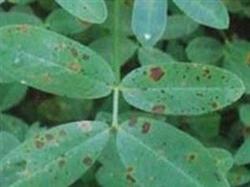 Plastic film mulching cultivation of spring peanuts has the advantages of heat preservation, moisture retention, fertilizer retention, improving the soil environment, ensuring uniform and strong seedlings, promoting growth and development, advancing maturity, and increasing yield and income. It generally increases yield by 20%-30% and increases net income by 50-100 yuan per mu.
I. Fine land preparation and whole-layer fertilization. For peanut mulching cultivation, land preparation must be fine, clods must not be large, and the bed surface must be level. Because topdressing during the growth period is troublesome, it is advisable to apply sufficient base fertilizer and more organic fertilizer, which can both promote early rapid growth and ensure stable growth in the middle and late stages. Apply 1000-1500 kg of cattle, horse, pig, and sheep manure per mu. After plowing and harrowing to break it up, form beds at a furrow spacing of 1.4 m, with a bed width of 1.1 m, a furrow width of 30 cm, and a furrow depth of 20-25 cm. In combination with land preparation, mix 50-80 kg of peanut-specific compound fertilizer, 80-100 kg of plant ash, and 1 kg of borax per mu, then apply evenly to the bed surface. Open four sowing furrows per bed that are 3-5 cm deep and uniform in depth, and also open perimeter field ditches.
II. Select good varieties, sow at the right time, and plant at a reasonable density. Each locality should choose the leading excellent varieties for cultivation. For example, in the Huang-Huai-Hai Plain, varieties such as Luhua No. 9, Yuhua No. 7, and Huayu No. 17 can be selected, with a seeding rate of 15 kg per mu. The sowing date should be determined according to local early-spring temperature recovery and rainfall conditions. Generally, sowing can begin when the temperature of the 5 cm soil layer stabilizes above 12°C after mulching. The planting specification is a plant spacing of 20 cm, dibbling with two kernels per hole, and a sowing density of 19,000 kernels per mu. After sowing, level the seed furrow to cover the seeds and keep the bed surface level.
III. Spray herbicides, cover the film carefully, and release seedlings in time. After covering the seeds, choose herbicides such as 72% metolachlor, 50% butachlor, or acetochlor, and use 150 mL per mu diluted in 60 kg of water to spray evenly on the bed surface. If the soil is dry, first wet the bed surface, then spray the herbicide. This helps form a thicker herbicide film layer and gives better weed control. Then lay plastic film 1.6 m wide and 0.005 mm thick, using 4 kg per mu.
Quality requirements for film mulching:
First, the surface soil should be fine and crumbly when mulching. Soil moisture should be sufficient (soil moisture content in the top 5 cm above 15%) to facilitate seed germination.
Second, the film should be laid flat, straight, tight, and closely attached to the bed surface. The bed edges should be pressed tightly and sealed with soil. Press a shovel of soil on the bed surface every 3-4 m to secure the film, prevent air leakage, and avoid the film being lifted or even torn by strong winds.
Third, it should be suitable for north-south bed orientation parallel to the wind direction. At the same time, pay attention to clearing drainage ditches. When peanut seedlings grow to 2.5 leaves, choose a sunny day to punch holes and release the seedlings in time to prevent high-temperature scorching of the seedlings. Specific method: use a blade to cut a film hole of about 5 cm around the seedling, lift the true leaves of the seedling out of the film, and promptly seal the edge of the film opening with soil. In addition, when punching holes, the hole diameter should be as small as possible, just enough for the true leaves to extend outside the film, so as not to reduce the heat preservation effect.
IV. Scientific drainage and irrigation, control seedling growth to prevent lodging, and prevent diseases and eliminate insects. In view of the characteristics that peanuts fear waterlogging in the early and late stages and fear drought in the middle stage, clear ditches and drain water during the seedling stage; during the flowering and pegging stage, if drought occurs, irrigate with running water; and keep the field soil moist in the late stage. Film-mulched peanuts grow vigorously and the plants are relatively tall. About 25 days after flowering, apply 20-25 g of paclobutrazol per mu diluted in 60 kg of water to control growth and prevent lodging. During the pegging stage, apply 40-50 kg of lime per mu to promote more flowers and more pods and increase the full-pod rate. For disease and insect control, after flowering, choose pesticides such as carbendazim, miebingwei, and copper hydroxide for spraying to control leaf spot disease, rust disease, and bacterial wilt. Also use matching pesticides such as imidacloprid and chlorpyrifos to promptly spray and kill aphids and tobacco cutworms.
V. Harvest at the right time and recover residual film. Film-mulched peanuts mature 8-10 days earlier than open-field peanuts, and can generally be harvested and marketed in mid-to-late July. During harvest, do a good job of recovering and disposing of the plastic film, and pick up all fragments of film to prevent soil pollution.