Detailed Explanation of Key Techniques for Early High Yield in Young Chestnut Trees
1 Technical Measures to Promote Female Flower Formation 1) Watering in early spring. The 3 weeks before bud break is the period of female flower morphological differentiation; meeting the tree's water needs makes the fruiting branches thick and strong with many buds, laying the foundation for the next step of female flower bud formation. 2) Foliar topdressing. When the basal leaves have just unfolded and are turning from yellow to green, spray once with a 1000-fold dilution of PP200...
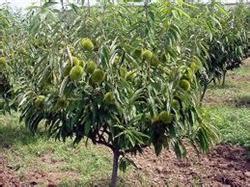
1 Technical Measures to Promote Female Flower Formation
1) Watering in early spring. The 3 weeks before bud break is the period of female flower morphological differentiation; meeting the tree's water needs makes the fruiting branches thick and strong with many buds, laying the foundation for the next step of female flower bud formation. 2) Foliar topdressing. When the basal leaves have just unfolded and are turning from yellow to green, spray once with a 1000-fold dilution of PP2003; after spraying, photosynthesis is enhanced, which can increase female flowers by more than 16%. 3) Bud removal. When the buds begin to swell, remove the excess buds on vigorous branches; generally leave 4-5 large buds on strong vigorous branches and 2-3 large buds on moderately vigorous branches. When removing buds, remove the small and keep the large, remove the lower and keep the upper, remove the dense and keep the sparse. 4) Removing the pre-fruit shoot tip. If there is no space, when the topmost mixed inflorescence shows red, remove the entire pre-fruit shoot tip. This can effectively increase the number of female flowers. 5) Male flower removal. Thinning out part of the male inflorescences can concentrate nutrients and promote female flower formation. The method is: when the male inflorescences are 1-2 cm long, except for keeping the 5 male flowers at the upper end of the new shoot, remove the rest of the male flowers. After male flower removal, female flowers can increase by more than 20%. 6) Pinching. Chestnut branches often grow too long, causing bare lower sections, so pinching should be done in time to promote branching. After the female inflorescences appear, pinch the vigorous non-fruiting vegetative branches to concentrate nutrients so that the buds form mixed buds, and the secondary shoots that sprout and grow in the same year can bear a second crop of fruit. When the new shoot grows to about 30 cm, pinch it by removing the terminal bud of the branch, then pinch once every 20 cm of growth thereafter; the last pinching can be done in late August, when a large bud can form below the growth ring scar. Winter pruning down to the growth ring scar allows the large bud to sprout and bear fruit the following year.
2 Technical Measures to Improve Fruit Set Rate
1) Watering at flowering stage. Because branch growth consumes a large amount of nutrients and water, watering can meet the water requirement and improve the fruit set rate. 2) Artificial pollination. Select varieties with large nuts, good quality, early maturity and high compatibility as pollinizer trees. Pick male flowers when the male inflorescences turn from green to yellow; picking before 8 o'clock is better. Spread the collected male inflorescences on glossy paper and place them in a dry, ventilated, dust-free place, turning them 1-2 times a day; pollen is released after 24 h. Pollination can be done when the multi-lobed stigmas of the three female flowers in the involucre extend out and curl back and turn yellow; use a pencil with an eraser for spot pollination. 3) Involucre thinning. To prevent empty burrs caused by poor nutrition and to ensure the next year's yield, involucre thinning should be carried out; leave 1-2 burrs on fruiting branches 20-30 cm long, and leave 2-3 burrs on fruiting branches 30-35 cm long, and finish before mid-July.
3 Technical Measures to Increase Single Nut Weight
1) Mulching with grass to conserve soil moisture. Mulching with grass can loosen the soil, maintain moisture, reduce the day-night soil temperature difference, increase soil nutrients, improve fertilizer and water retention capacity, promote root absorption and growth, and help fruit set and increase nut weight. Method: in summer, cut weeds from the field edges and cover them in the tree within the tree canopy area, with a thickness of no less than 10 cm. 2) Fertilizing in summer and autumn. From June to August, apply organic fertilizer mixed with chemical fertilizer to meet the needs of chestnut growth, increase single nut weight, and help female flower differentiation the following year. 3) Watering in autumn. The time is from late August to early September; watering during winter drought has a clear effect on nut weight. 4) Timely harvesting. Chestnut weight gain occurs mainly in the later stage, especially in the 10 d before harvest, when weight gain is fastest, so timely harvesting plays a great role in plumpness and yield increase of chestnuts. To shorten the harvest period, spray PP2003 once more, and after 2-3 d (days) all will be fully mature.