Key Techniques for Early-Maturing, High-Efficiency Lotus Root Cultivation under Plastic Tunnels
1. Select good varieties: choose medium-maturing large purple-red lotus root varieties whose main rhizome has 4-5 nodes. 2. Treat seed rhizomes: select main rhizomes with robust buds, 2-3 nodes and a weight above 0.5 kg as seed rhizomes, or use large secondary rhizomes as seed rhizomes. After the seed rhizomes are dug up, plant them as early as possible, with a seeding rate of 300-400 kg per mu. Before planting, use...
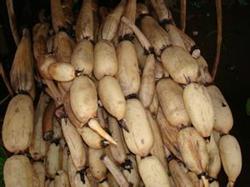 Using plastic-film-covered tunnels to cultivate lotus root can advance the marketing period of lotus root and significantly increase economic returns.
Selection of lotus root varieties: E-lian No. 1 was bred by the Wuhan Vegetable Research Institute, with a main rhizome of 6-7 nodes, 1.3 m long, 6.5 cm in diameter, entering the mud to a depth of 15-20 cm, pale yellow skin, and tender lotus root harvested in early to mid-July under open-field cultivation. E-lian No. 3 was also bred by the Wuhan Vegetable Research Institute, with a main rhizome of 5-6 nodes, 1.2 m long, about 7 cm in diameter, entering the mud to a depth of about 20 cm, a single rhizome weighing more than 3 kg, light yellowish-white skin, and tender lotus root harvested in mid-July under open-field cultivation. Hua'ou is an early-maturing lotus root variety in our province, with a main rhizome of 4-5 nodes, 80 cm long, secondary rhizomes of 3-4 nodes, and yellowish-white skin; tender lotus root is harvested in late July under open-field cultivation. Choose lotus roots that are disease-free and undamaged, plump, with intact terminal buds and complete tail tips as seed rhizomes.
Land preparation and tunnel construction: For cultivation under plastic-film-covered tunnels, the lotus root field is best rectangular to facilitate tunnel planning and field cultivation. Around the Spring Festival, choose a sunny day and apply sufficient organic fertilizer, 5000 kg of organic fertilizer per mu, plow deeply and harrow finely, irrigate and puddle the soil so that the mud layer is deep and kept in a thin-film water state. Build tunnels with bamboo poles, 1.5 m high, 3 m wide, and 20-30 m long, with 40 cm between tunnels; install tie rods at the top and on both sides, cover with plastic film 0.6 mm thick and 5 m wide, and press the skirt edges firmly with soil.
Tunnel lotus root management: Do not fertilize before 50% of the standing leaves have grown, but attention must be paid to water management to keep the soil in a soft-mud state. When the temperature is too high, uncover the film for ventilation; before a cold wave arrives, store water to prevent freezing. After the standing leaves of lotus root have formed, pay attention to ventilation and air exchange; on sunny days, uncover the tunnel film and remove old and residual floating leaves, and apply 30 kg of urea or 100 kg of ammonium bicarbonate, 100 kg of superphosphate, and 50 kg of potassium chloride per mu as topdressing. Pay attention to controlling aphids. Remove the tunnels in early May, and after removal manage as for open-field cultivation. Harvest and market in late June to fill the summer market gap for lotus root.