Key Cultivation Techniques for the New "Plant Once, Harvest Three Times" Lotus Root Model
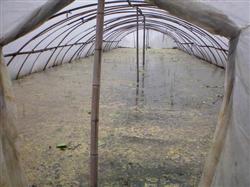
Lotus root is a aquatic vegetable whose cultivation area in our province is second only to wild rice stem. In recent years, with the promotion and application of protected cultivation techniques, the harvest time of lotus root has been advanced to May-July, the market price has risen substantially, and two harvests per year have been achieved, with very significant benefits. 1. Building the shed. Before building the shed, apply sufficient base fertilizer, requiring the use of large and medium-sized...
 Honghu, the "Home of Lotus Root," formerly used the traditional "plant once, harvest once" model for lotus root. Lotus farmers planted lotus to get lotus, planted root to get root; seed lotus fields harvested dried lotus seeds, and root fields harvested mud-root lotus. What was the result? Lotus root came onto the market in a concentrated period, dealers held down prices, income decreased, and lotus farmers often suffered losses they could not voice. Combining market demand and the growth characteristics of lotus root, Honghu City proposed the innovative "plant once, harvest three times" model for lotus root, which means that in the second year a seed lotus field can harvest lotus root shoots, fresh lotus seed pods, and dried lotus seeds, or a root field in the same year can harvest lotus root shoots, green lotus root, and withered lotus root (or lotus root seed). Fresh lotus root products can be supplied to the market throughout the year, and lotus farmers can have economic income throughout the year. This new model was successfully tested in Wanquan Town last year, and this year the promoted area in Honghu City reached more than 50,000 mu, with an average income of about 5,000 yuan per mu.
The key techniques of this new model require attention to the following points
The characteristic of this model is to determine the planting structure according to market demand, and then determine how to fertilize to promote growth and generate benefits according to needs. Its technical points are as follows:
First, there must be high-quality, high-yield varieties suitable for local planting, either seed lotus or root lotus;
Second, based on that year's market conditions, determine the product structure, either lotus root shoots-fresh lotus seed pods-dried lotus seeds, or lotus root shoots-green lotus root-withered lotus root; then adjust the proportion and quantity of products. For example, if this year the market for lotus root shoots is good, the price is high, and there is also a leading enterprise purchasing at a protected price, then it is necessary to determine to produce more lotus root shoots.
Third, management after determining the product structure. If more lotus root shoots need to be produced, then more base fertilizer should be applied and more topdressing should be applied, and more lotus root seed should be planted in the root field, so that the lotus root field produces more lotus root shoots and produces high-quality lotus root shoots. If the price of fresh lotus seed pods is also good and the price of green lotus root is also high, then consideration can be given to stopping the harvesting and pulling of lotus root shoots in mid-June, and at this time applying a heavy topdressing once, so that the seed lotus field grows lotus seed pods and the root field grows lotus root.
Fourth, pay attention to harvesting and topdressing. In early July, lotus seed pods can be picked or green lotus root can be dug; each time a batch of lotus seed pods is picked in the seed lotus field, topdressing must be applied once to facilitate the later growth of lotus seed pods, and finally the seed lotus field stores dried lotus seeds and the root field stores withered lotus root. By that time, dried lotus seeds and withered lotus root also rise in price because market supply decreases, and lotus farmers then obtain relatively large profits in all three production stages: the lotus root shoot stage, the fresh lotus seed pod and green lotus root stage, and the dried lotus seed and withered lotus root stage.