A Detailed Guide to the Techniques and Methods of Using Lotus Root Terminal Buds as Seed
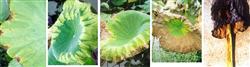
In recent years, some farmers in China have converted some low-lying fields to growing lotus root, which has a higher output value. According to surveys, lotus blight (also known as rot disease) occurs in some lotus fields and is the main disease of lotus root. Generally, diseased fields suffer a 20% reduction in yield, and in severe cases 60%-80%. 1. Damage symptoms: Lotus blight mainly damages the underground stem, causing it to turn brown and rot, first...
 Traditional lotus root cultivation habitually uses the lotus root body as seed, with the amount of lotus root used reaching as high as 300 kg per mu, making the cost very high. If the terminal buds of the lotus root are used as seed, it not only saves a large amount of lotus root seed but is also simple and easy to carry out.
Seedling raising and land preparation
Choose fertile, deep dry land, and in early spring apply 4000 kg of pig and cattle manure, 25 kg of phosphate fertilizer, 15 kg of potash fertilizer, and 25 kg of ammonium bicarbonate or 10 kg of urea per mu. After raking evenly, make a sunny seedbed 1.5 m wide and of unlimited length. When the temperature rises to 12°C, cut the seed buds with nodes from the lotus root body, about 10 cm long. Dip the cut surface in fresh plant ash, and gently press it into the soil by hand, with the tip of the bud exposed outside. Cover it with a layer of rotted, moist straw, then cover with plastic film, keeping the inside of the film moist. Usually one lotus root can be cut into 7-8 terminal buds with nodes.
Transplanting and planting
In early April, when the lotus seedlings have grown 1-2 true leaves and adventitious roots have sprouted from the terminal bud nodes, they can be transplanted to the field. First put water 15 cm deep into the field, then bury the lotus seedlings 1.5 cm below the ground. When planting, strictly prevent damage to the root system, transplant and plant immediately, with a row spacing of 1.5 m and a plant spacing of 1 m, evenly spaced out. The terminal buds in the first row face the same direction, and the second row faces the opposite direction from the first row. Other management is the same as conventional practice.